
Menu

METALLIC Mo · MoSi₂ · FURNACE COMPONENTS
Compare metallic-molybdenum heaters with separate MoSi₂ W, U and O configurations. Specify the material family, dimensions, connections and furnace conditions for a drawing-based review. Molybdenum heat shields are listed separately below.
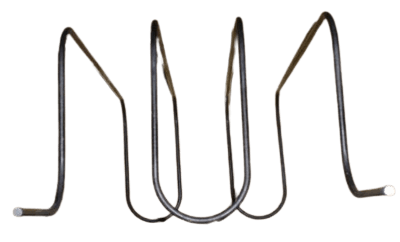
Metallic Mo and molybdenum disilicide have separate material specifications. Use the selected drawing and model when reviewing size, mounting and electrical requirements.
Tailored metallic-Mo shapes are supplied to the requested drawing. Confirm the stock form, grade, material condition and finished geometry.
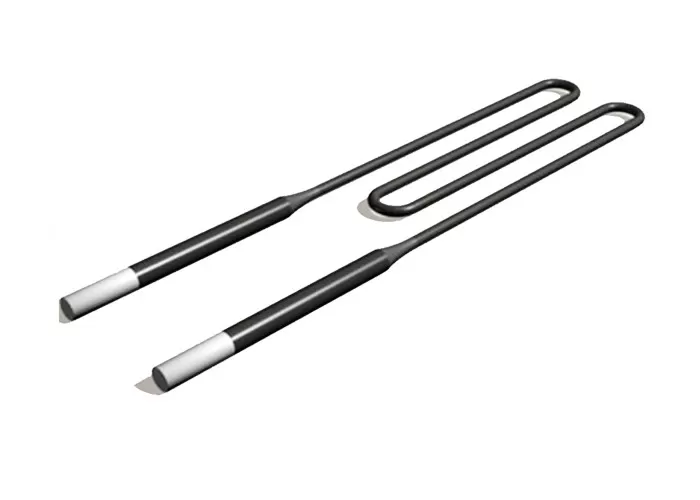
Review the MD-1700 / MD-1800 references, hot-zone diameter and the W-shape geometry and dimension table below.
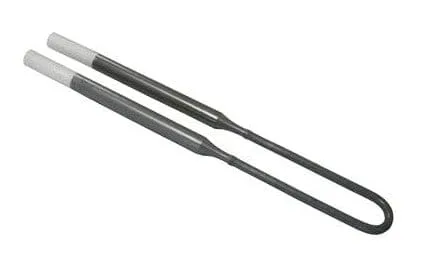
Provide the hot-zone and cold-end dimensions, spacing, connections and selected model. The original U-shape reference is retained below.
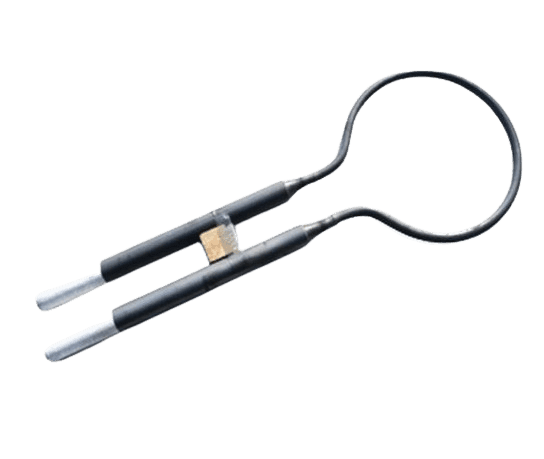
The catalogue lists custom O-shape geometry and MD-1700 / MD-1800 models. Send a complete drawing to confirm the required dimensions and grade.
| Parameter | Catalogue reference / requirement |
|---|---|
| Material references | Metallic molybdenum; catalogue Mo-1 / Mo-2 designations. |
| Published purity | Mo 99.95% minimum; confirm the chemistry and certificate requirements. |
| Density reference | 10–10.2 g/cm³; confirm the offered material state. |
| Diameter reference | 3–12 mm; custom diameter and geometry require review. |
| Shape | Tailored shape, per drawing. |
| Material standard references | ASTM B387 / B387M for bar, rod and wire; ASTM B386 / B386M for flat mill products. Match the standard to the starting form and specify the grade and ordered edition. |
These references apply to metallic Mo, not to MoSi₂. Specify the finished bends, widths, heights, connections, supports and inspection requirements on the drawing.
| Diameter (mm) | Width (mm) | Height (mm) | |||
|---|---|---|---|---|---|
| Size | Tolerance | Size | Tolerance | Size | Tolerance |
| 3 | ±0.1 | <650 | ±5.0 | <1200 | ±10.0 |
| 4 | ±0.1 | <600 | ±5.0 | <1150 | ±10.0 |
| 5 | ±0.1 | <550 | ±5.0 | <1100 | ±10.0 |
| 6 | ±0.2 | <550 | ±5.0 | <1050 | ±10.0 |
| 7 | ±0.2 | <500 | ±5.0 | <1000 | ±10.0 |
| 8 | ±0.2 | <500 | ±5.0 | <950 | ±5.0 |
| 9 | ±0.2 | <450 | ±5.0 | <900 | ±5.0 |
| Parameter | Catalogue reference / requirement |
|---|---|
| Material | Molybdenum disilicide (MoSi₂). |
| Catalogue models | MD-1700 and MD-1800. Confirm the selected grade and its rating for the requested geometry. |
| Listed shapes | W, U and O; custom geometry is defined by drawing. |
| Hot-zone diameter references | 3, 4, 6, 9 and 12 mm. |
| W/U table temperature references | MD-1700: maximum element temperature 1,700°C. MD-1800: maximum element temperature 1,800°C. These are element-temperature references, not furnace-chamber setpoints. |
The W/U tables retain the original dimensions and model references. Confirm the grade, element temperature, atmosphere, mounting and electrical duty for the actual furnace. The O-shape option requires its own drawing and specification review.
Use the original geometry reference and TablePress dimensions to identify the hot zone, cold end and spacing. Confirm the full drawing for the selected model.
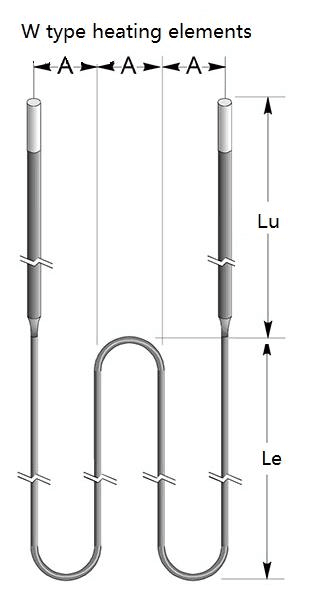
| Model | Hot Zone (Le) | Cold End (Lu) | Distance (A) | |||
|---|---|---|---|---|---|---|
| mm | in | mm | in | mm | in | |
| L36 | 3 | 0.12 | 6 | 0.24 | 25 | 0.98 |
| L48 | 4 | 0.16 | 9 | 0.35 | 25 | 0.98 |
| L612 | 6 | 0.24 | 12 | 0.47 | 50 | 1.97 |
| L918 | 9 | 0.35 | 18 | 0.71 | 60 | 2.36 |
| L1224 | 12 | 0.47 | 24 | 0.94 | 80 | 3.15 |
| All diameters are available in the following grades: | ||||||
| MD -1700 - maximum element temperature 1,700ºC (3,090ºF) | ||||||
| MD -1800 - maximum element temperature 1,800ºC (3,270º) | ||||||
Use the original U-shape drawing and model table as a reference. Provide the finished geometry, spacing, hot-zone length and cold-end length needed for your assembly.
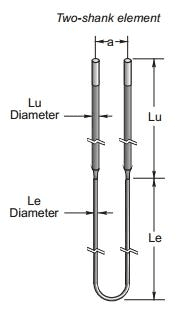
| Model | Hot Zone (Le) | Cold End (Lu) | ||
|---|---|---|---|---|
| mm | in | mm | in | |
| UL36 | 3 | 0.12 | 6 | 0.24 |
| UL48 | 4 | 0.16 | 9 | 0.35 |
| UL612 | 6 | 0.24 | 12 | 0.47 |
| UL918 | 9 | 0.35 | 18 | 0.71 |
| UL1224 | 12 | 0.47 | 24 | 0.94 |
| All diameters are available in the following grades: | ||||
| MD -1700 - maximum element temperature 1,700ºC (3,090ºF) | ||||
| MD -1800 - maximum element temperature 1,800ºC (3,270º) | ||||
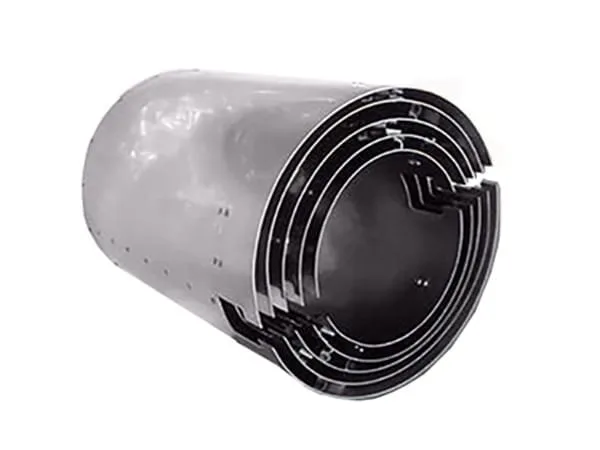
A heat shield is a separate furnace component. Specify shell dimensions, sheet thickness, rivets, mounting and surface requirements for the assembly.
| Parameter | Catalogue reference / requirement |
|---|---|
| Material and purity | Molybdenum (Mo), ≥99.95%. |
| Density reference | 9.8–10.2 g/cm³; confirm the selected material condition. |
| Surface references | Rolled or chemically cleaned. |
| Catalogue construction | Two riveted cylindrical shells of rolled molybdenum, fitted one inside the other. |
| Model | Custom model; provide the complete dimensions and assembly drawing. |
The catalogue discusses resistance furnaces, sapphire-growth furnaces, vacuum-furnace heating and support components, and laboratory equipment. Identify the material family and the exact component role before reviewing the design.
For the catalogue glass-melting context, including daily-use or optical glass, insulation materials and glass fibre, specify the process chemistry, element position, atmosphere and thermal/electrical duty.
The general catalogue description mentions 1,900°C without defining a particular material or grade. Confirm the rating for the selected metallic-Mo element, MoSi₂ model or shield assembly. Furnace operating temperature, maximum element temperature and component service conditions are separate design inputs.
No. The metallic-Mo purity, density and material-standard references do not define MoSi₂. Specify the material family and model first, then supply the drawing and operating requirements.
The existing W/U tables identify maximum element-temperature references of 1,700°C and 1,800°C. A furnace-chamber setpoint requires a separate review of the element, atmosphere, power loading, mounting and operating cycle.
Send a complete drawing showing hot-zone and cold-end dimensions, spacing, diameter, connections and mounting. The catalogue lists tailored shapes; actual model, grade and geometry must be confirmed for the order.
Provide the material family, model or reference drawing, finished dimensions, furnace and atmosphere details, operating cycle, electrical requirements where applicable, quantity and inspection documents. For a shield, include sheet and assembly details.
Review solid and mesh electrode forms when the assembly requires a separate electrode specification.
Review flat mill products when defining the starting material or thickness for a drawn shield component.
Send a drawing for a component-specific material, geometry and inspection review.
Review the role of refractory-metal heaters, shields, supports and drawn components within a vacuum-furnace or crystal-growth assembly.
Application background on molybdenum and tungsten furnace components; confirm the selected material, atmosphere and operating requirements for your furnace.
Heating elements and shields are tagged and externally labelled for identification. Confirm surface protection, packing arrangement, inspection records and transport requirements for the selected geometry.
Send the material family, model or drawing, dimensions, quantity and furnace conditions. Add electrical, connection, surface and inspection requirements for the selected component.