
Menu
MOLYBDENUM · E-BEAM · CUSTOM CRUCIBLES
Compare E-beam models, capacity-based crucibles and cylindrical size ranges. Specify OD, ID, height, wall thickness, lid requirements, quantity and operating conditions for a drawing-based review.

Choose a catalogue model or provide a drawing for a custom geometry. Specify pure molybdenum or TZM, material state and the required construction.
Compare the complete ECMO model table and confirm pocket fit, charge compatibility and required capacity.

Review capacity-based models and cylindrical size bands, then confirm the selected dimensions and construction.
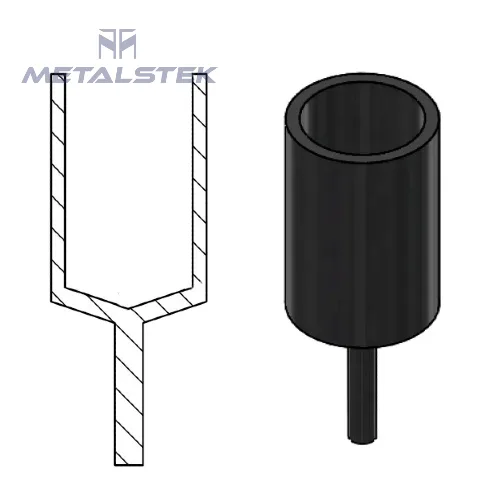
Specify OD, ID, height, wall and base thickness, lid or spout details, material grade and a drawing.
Catalogue model: send the ECMO or MoC code and quantity. Custom crucible: send OD, ID, height, wall and base thickness, lid/spout requirements, material purity or grade, quantity and a drawing.
Include charge material, peak temperature, dwell, vacuum or gas conditions, heating/cooling cycle, supports, cleanliness and inspection requirements. Sintered/forged size envelopes and cylindrical size bands describe different configurations; confirm the selected dimensions.
| Construction / route | What to confirm |
|---|---|
| Machined from forged or worked stock | Grade, stock condition, grain orientation, wall/base transitions and drawing |
| Pressed and sintered | Selected density, porosity, surface condition and acceptance criteria |
| Spin-formed or welded construction | Starting sheet/plate state, seam design, forming limits and inspection |
| Pure Mo or TZM | Exact chemistry and condition; performance and material standards are not interchangeable |
| Parameter | Published option / requirement |
|---|---|
| Material: | Molybdenum (Mo) |
| Purity: | Mo≥99.95% for the published pure-Mo option; confirm certificate. |
| Published density span: | 9.8–10.2 g/cm³ across different material states; confirm the selected route. |
| Material standard scope: | ASTM B387/B387M covers bar, rod and wire; ASTM B386/B386M covers flat mill products. Neither by itself specifies a finished crucible. Confirm starting form, grade, ordered edition and drawing/inspection criteria. |
| Size Range: | Sintered Type Dia. 10~500mm * Height 10~600mm |
| Forged Type | Dia.10~130mm * Height 10~200mm |
| Type: | Milled Type, Spin-formed Type, Pressed and Sintered Type, Welded Type |
| Parameter | Published option / requirement |
|---|---|
| Material: | Molybdenum (Mo) |
| Purity: | Mo≥99.95% for the published pure-Mo option; confirm certificate. |
| Published density span: | 9.8–10.2 g/cm³ across different material states; confirm the selected route. |
| Material standard scope: | ASTM B387/B387M covers bar, rod and wire; ASTM B386/B386M covers flat mill products. Neither by itself specifies a finished crucible. Confirm starting form, grade, ordered edition and drawing/inspection criteria. |
| Size Range: | Sintered Type Dia. 10~500mm * Height 10~600mm |
| Forged Type | Dia.10~130mm * Height 10~200mm |
| Type: | Straight-Wall Type, Milled Type, Spin-formed Type, Pressed and Sintered Type, Welded Type |
| Parameter | Published option / requirement |
|---|---|
| Material: | Molybdenum (Mo) or separately specified TZM; other materials require an independent specification |
| Material standard scope: | ASTM B387/B387M covers bar, rod and wire; ASTM B386/B386M covers flat mill products. Neither by itself specifies a finished crucible. Confirm starting form, grade, ordered edition and drawing/inspection criteria. |
| Size Range: | Sintered Type Dia. 10~500mm * Height 10~600mm |
| Forged Type | Dia.10~130mm * Height 10~200mm |
| Type: | Straight-Wall Type, Milled Type, Spin-formed Type, Pressed and Sintered Type, Welded Type |
Use the ECMO code and confirmed drawing when specifying a model. A, B and C refer to the geometry illustration; dimensions must be checked against your source pocket.
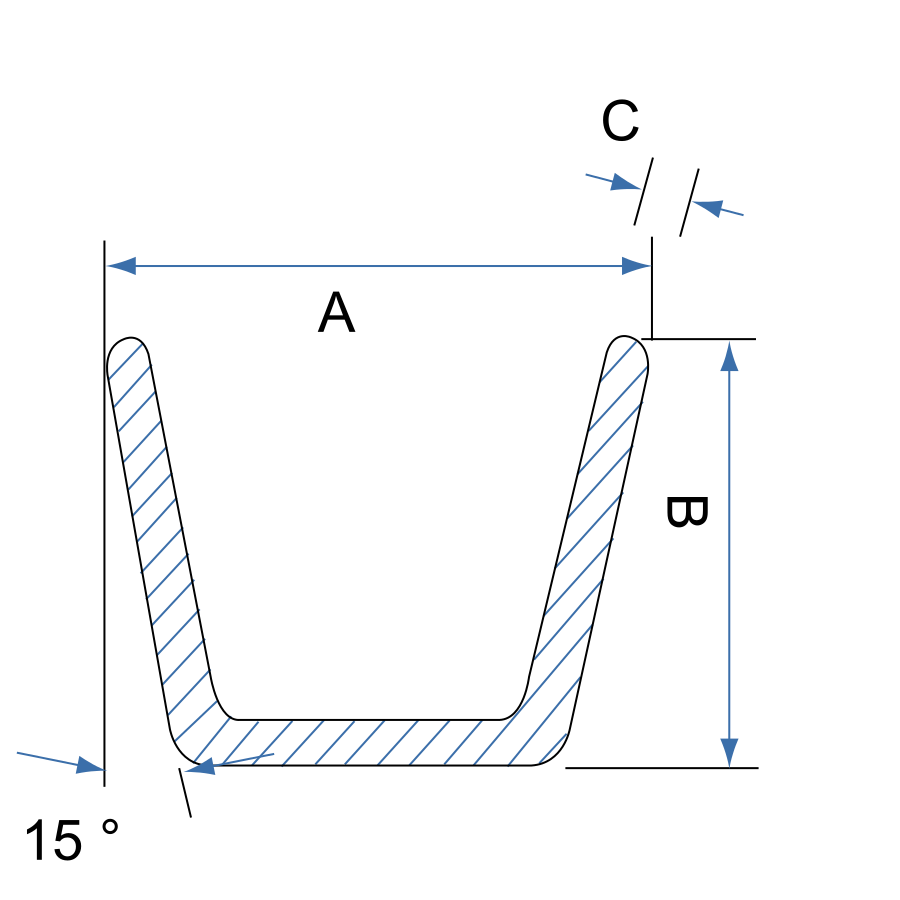
| Model | Capacity (mL) | Outside Diameter (mm) | Depth (mm) |
|---|---|---|---|
| MoC-1000 | 1000 | 127 | 89 |
| MoC-100 | 100 | 59 | 45 |
| MoC-10 | 10 | 27 | 22 |
| MoC-15 | 15 | 33 | 22 |
| MoC-20 | 20 | 33 | 29 |
| MoC-25 | 25 | 45 | 22 |
| MoC-35 | 35 | 46 | 29 |
| MoC-45 | 45 | 46 | 34 |
| MoC-55 | 55 | 47 | 41 |
| MoC-5 | 5 | 21 | 18 |
| MoC-75 | 75 | 51 | 41 |

The illustration is a cylindrical geometry reference. Use the molybdenum model table and confirmed drawing for dimensions. Size bands describe available configurations; they are not a guarantee that every dimension combination is manufacturable.
| Item No. | Outer Diameter (mm) | Wall Thickness (mm) | Height (mm) |
|---|---|---|---|
| MOC-01 | 10 ~ 30 | 1.0 ~ 3 | 20 ~ 50 |
| MOC-02 | 30 ~ 50 | 2~ 10 | 20 ~ 100 |
| MOC-03 | 50 ~ 100 | 3 ~ 15 | 30 ~ 150 |
| MOC-04 | 100 ~ 150 | 3 ~ 15 | 30 ~ 500 |
| MOC-05 | 150 ~ 200 | 5 ~ 20 | 30 ~ 500 |
| MOC-06 | 200 ~ 300 | 8 ~ 20 | 30 ~ 500 |
| MOC-07 | 300 ~ 400 | 8 ~ 30 | 40 ~ 500 |
| MOC-08 | 400 ~ 450 | 8 ~ 30 | 50 ~ 500 |
| MOC-09 | 450 ~ 620 | 8~ 30 | 50 ~ 500 |
| Shape and size can be tailored. Rectangular Molybdenum crucible is available. | |||
Sintered and forged/machined molybdenum have different material states. Catalogue density references are 9.8–10.0 g/cm³ for sintered material and up to 10.2 g/cm³ for forged material. Confirm density and condition for the selected design.
The catalogue application range of 1,100–1,700°C requires review of atmosphere, charge, loading and thermal cycle. Hot molybdenum is susceptible to oxidation; specify vacuum or the exact protective atmosphere, pressure and residual gases.
A Mo-1 powder designation does not establish equivalence to an ASTM grade. Confirm chemistry, purity basis, manufacturing route and inspection requirements in the quotation.
For E-beam selection, use the ECMO model table and confirm pocket fit. For evaporation, crystal growth, sintering or metallurgical processing, review charge compatibility, oxygen exposure, contamination limits and thermal/mechanical loading for the proposed assembly.
Molybdenum crucibles and boats are typically made from high-purity molybdenum or molybdenum alloys. The choice of material depends on the specific requirements of the application.
Molybdenum has a high melting point; the allowable crucible temperature must instead be determined from atmosphere, material state, geometry, support and charge compatibility.
Confirm chemical compatibility with the specific evaporant or charge, including potential reaction, wetting and contamination. Purity of the deposited film depends on the full process, not just the crucible material.
Metals, oxides and other compounds require individual charge/crucible compatibility review; not all evaporation materials are compatible with molybdenum.
Heating distribution depends on geometry, wall thickness, contacts, power delivery and charge loading. Confirm the operating setup rather than assuming identical heating for all crucibles and boats.
Limit thermal shock through an agreed heating/cooling cycle and support design; resistance is not guaranteed across all material states and geometries.
For vacuum service, specify pressure, residual gas, charge chemistry, cleanliness and outgassing requirements for the selected construction.
Select the material, construction and inspection scope for the actual process. No universal lifetime, thermal-shock resistance or operating-temperature rating is implied by these catalog options.
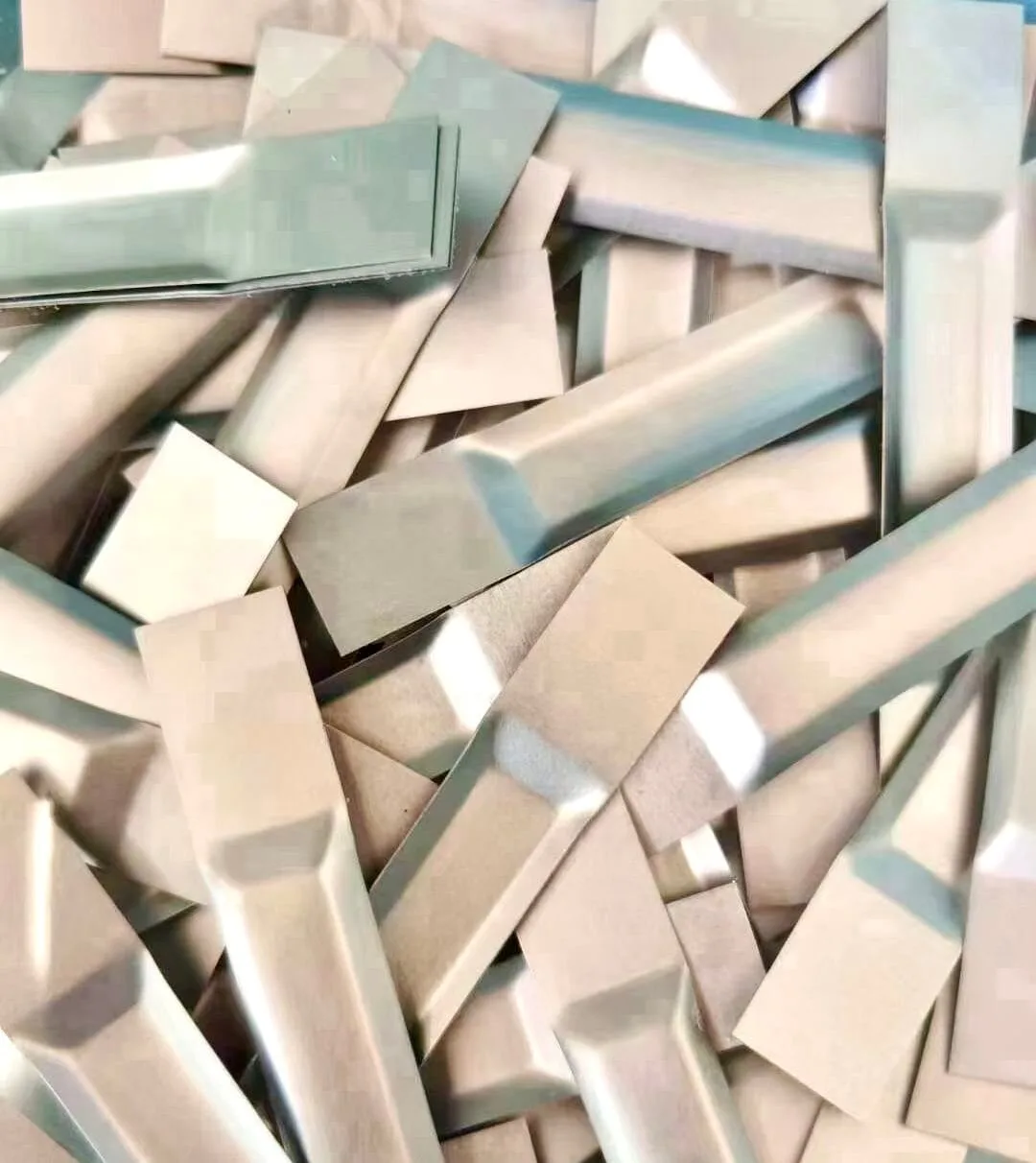
Molybdenum boats may use pure Mo or a specified alloy and may involve cutting, folding, riveting or welding of suitable sheet/plate. Confirm the grade, material state, seam design and process route against the drawing; these operations are not interchangeable.
For evaporation or furnace use, specify the charge, support, atmosphere, temperature cycle and cleanliness requirements. Review oxidation and reaction risks for each application. View Molybdenum Boats.

Product photographs show example configurations. Dimensions, material state and inspection scope are confirmed for the selected order.
Common applications include the deposition of thin films in industries such as electronics, optics, and materials science. Used in research and development settings for studying material properties.
Crucibles and boats can be customized in terms of shape and size to meet specific requirements of different deposition processes.
Parts are tagged and labeled for identification, with protective packaging intended to reduce handling and transport damage. Specify any additional cleanliness, inspection record or packaging requirement in the inquiry.
Source form, deposition method, boat or crucible compatibility, and the details to include in an evaporation-material RFQ.
Explore graphite liners as another material option when reviewing crucible geometry and source compatibility for e-beam deposition.
See where refractory-metal crucibles, supports, rods, and other machined parts fit within vacuum-furnace and crystal-growth assemblies.
Send a catalogue model or drawing with material grade, dimensions, quantity, operating conditions and requested documentation.