
Menu

MOLYBDENUM · MOLY ALLOYS · DRAWING-BASED COMPONENTS
Send your drawing, material grade and operating requirements for a custom molybdenum component. Define the geometry, tolerances and surface condition so the quotation can address the actual part and its acceptance requirements.
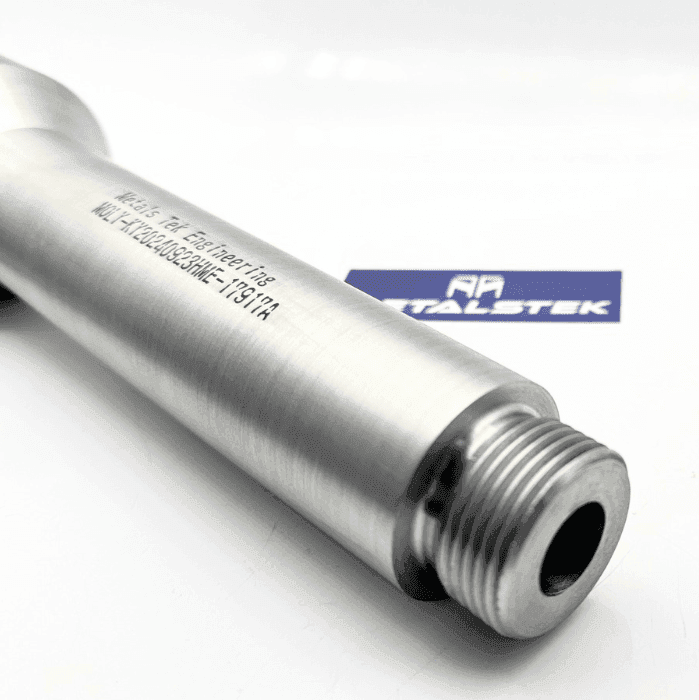
The existing catalogue photographs show several component geometries. They illustrate past product forms; the material, route, dimensions and suitability of your requested part must be confirmed separately.
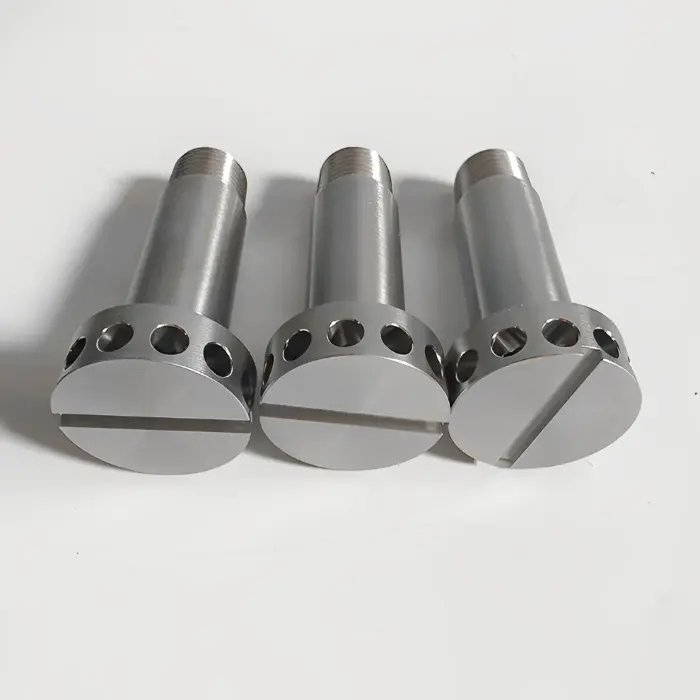
Provide threads, bores, mating dimensions and datums, together with the material grade, surface requirements and drawing revision.
For supports, power-connection parts or other furnace components, include the mounting geometry, electrical or mechanical requirements, atmosphere and thermal cycle.
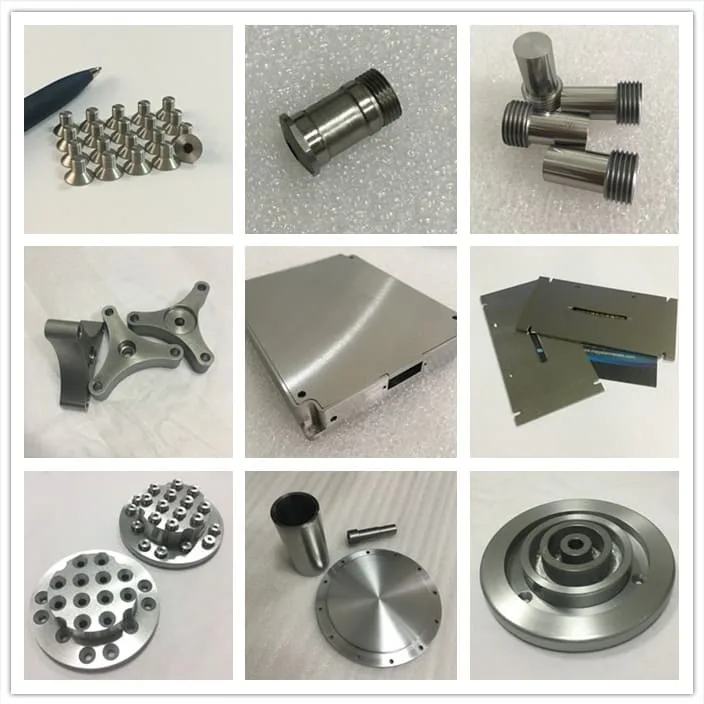
Specify the required alloy chemistry and condition separately from pure-Mo purity. Send the complete geometry, tolerances and any acceptance documents needed.
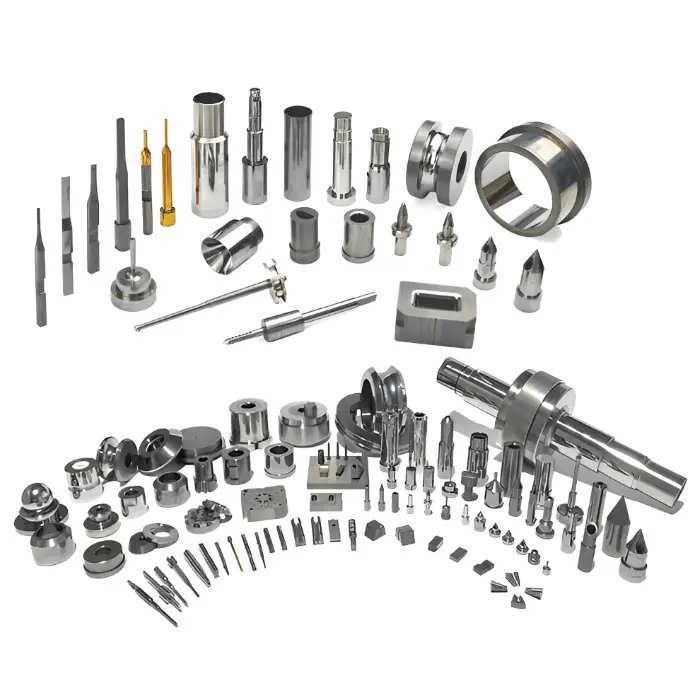
For a nozzle, tip or another tooling geometry, include the full drawing, contact conditions, mating surfaces and material requirements for review.
| Parameter | Published option / enquiry requirement |
|---|---|
| Material family | Pure molybdenum (Mo) or a separately specified molybdenum alloy. |
| Pure-Mo purity | Published Mo ≥99.95%, or a custom purity requirement for review. This is a catalogue option, not a batch result or an alloy-composition definition. |
| Form and geometry | Customised to drawing; the source page also lists rod, sheet, plate and custom-machined forms. |
| Dimensions | Tailored sizes. Provide finished dimensions, tolerances, datums and drawing revision; no numerical manufacturing envelope is stated on this page. |
| Published surface options | Rolled, polished or chemically cleaned. Identify the required surfaces and any quantitative finish or cleanliness acceptance limits. |
| Order and acceptance brief | Quantity, material condition, operating environment, inspection scope and required documentation must be defined for the selected component. |
Drawing-based supply requires a geometry-specific review. The catalogue does not establish a tolerance class, stock status, manufacturing route or inspection result for every requested part.
State pure molybdenum or the selected alloy explicitly. The published ≥99.95% Mo purity must not be used as the definition of TZM or another molybdenum alloy. Specify chemical limits, material condition and the required documentation.
Include drawing revision, units, datums, finished dimensions, tolerances, threads, bores and mating features. Identify the surfaces that require polishing, chemical cleaning or another specified finish.
The old page also mentions coating, plating and custom alloy or compound development. These are requests for review, not established options for every molybdenum component. Define the exact material or treatment and confirm the proposed scope during quotation.
For furnace, heating, electrical or process fixtures, give temperature, dwell, atmosphere, oxygen exposure, loading and thermal cycle. A high melting point does not establish an allowable service temperature, oxidation resistance or component lifetime.
For a part exposed to molten material or a chemically demanding process, identify the medium and contact conditions. The molybdenum name alone does not establish chemical compatibility or suitability for a regulated application.
A custom drawing does not by itself establish a manufacturing route or guarantee that every requested feature is feasible. Confirm the material form, condition, machining or forming scope, surface treatment and dimensional acceptance with the quotation.
State required material reports, chemical verification, dimensional inspection and any additional testing. No measured results, universal inspection programme or certification are supplied by this catalogue page.
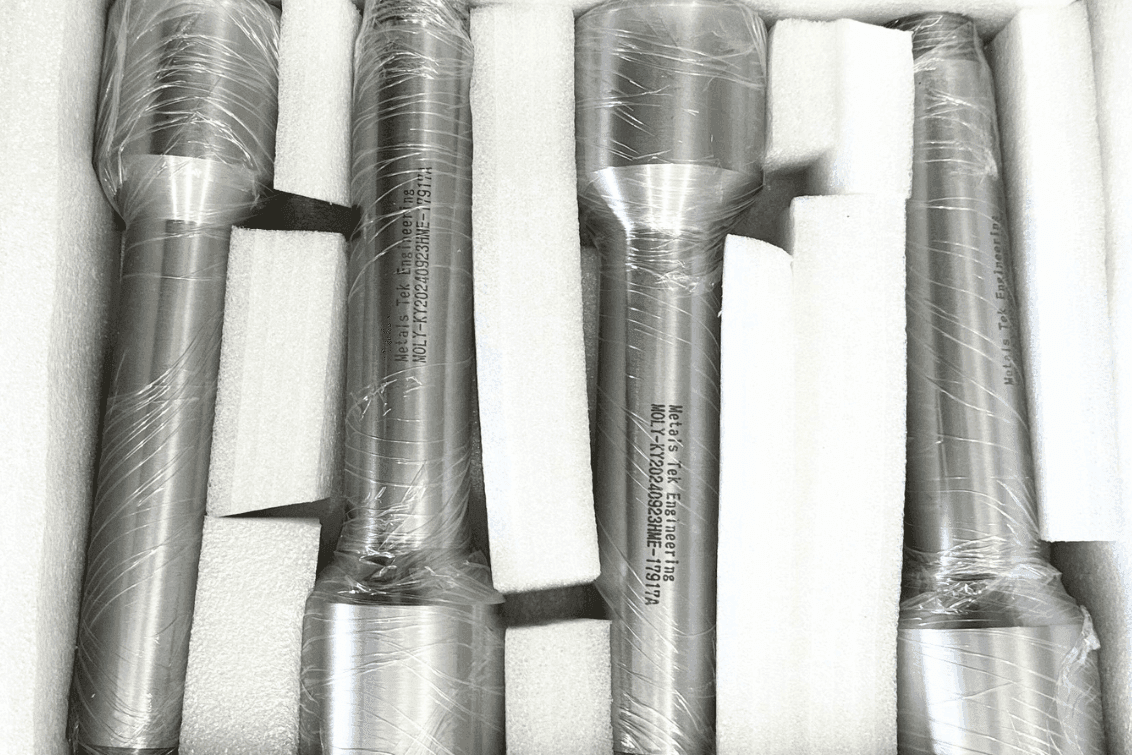
Existing packaging example. Confirm part identification, surface protection, package quantity and transport requirements for the actual geometry.
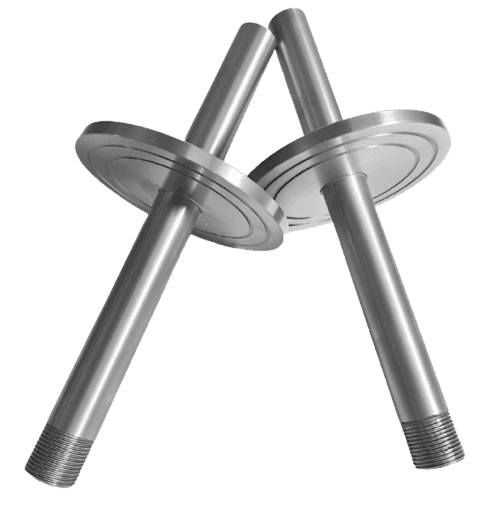
Existing catalogue illustration, not a batch photograph or a dimensioned drawing. Provide the assembly drawing and component acceptance requirements for review.
The existing catalogue supports drawing-based molybdenum and molybdenum-alloy requests. Send the material specification, complete drawing, quantity, surface requirements and acceptance documents so the proposed scope and feasibility can be reviewed.
That published value describes the pure-molybdenum purity option. TZM or another alloy requires a separate composition and material-condition specification. Define the grade and chemical acceptance limits explicitly.
No numerical manufacturing envelope or universal tolerance class is stated here. Define finished dimensions, datums, tolerances and critical features on the drawing; the quotation confirms the agreed scope.
Provide the exact treatment, substrate material, affected surfaces, acceptance criteria and application. The old catalogue mentions such requests, but their feasibility and supply scope must be confirmed for the selected part.
Include the component and assembly drawings, material condition, atmosphere, temperature and thermal cycle, loading or electrical requirements, surface requirements and inspection documents. The catalogue does not provide a universal temperature, corrosion or service-life guarantee.
See where refractory-metal supports, fixtures and other components fit within furnace and crystal-growth equipment. Use the actual drawing and operating conditions for a quotation.
Review the distinction between pure Mo and common alloy designations before defining the chemical and material-condition requirements of your custom part.
Send the material grade, drawing revision, dimensions, tolerances, surface requirements and quantity. Include the operating environment, inspection scope and required documentation.