
Menu
Pure platinum and platinum–iridium tubing for capillaries, thin-wall tubes, rings and precision-cut components. Send alloy composition, OD, ID, wall, length and tolerances with a drawing for review.
Platinum Materials / Tubes & Capillaries
MetalsTek’s existing listing covers pure platinum tubes, Pt–Ir tubes, capillaries, rings and marker-band forms. The procurement information below separates material composition from purity and dimensions from performance requirements.
For a precision assembly or research project, define alloy ratio, OD/ID or wall, axial length, tolerance, end-face and surface requirements, quantity and packaging before quotation. Pt–Rh and other custom platinum alloys require composition and supply confirmation; no blanket medical-device qualification or documentation package is implied.

Laboratory, electrode, sensor and chemical-processing applications require environment-specific review. These pure-Pt values are not Pt–Ir or Pt–Rh acceptance values.
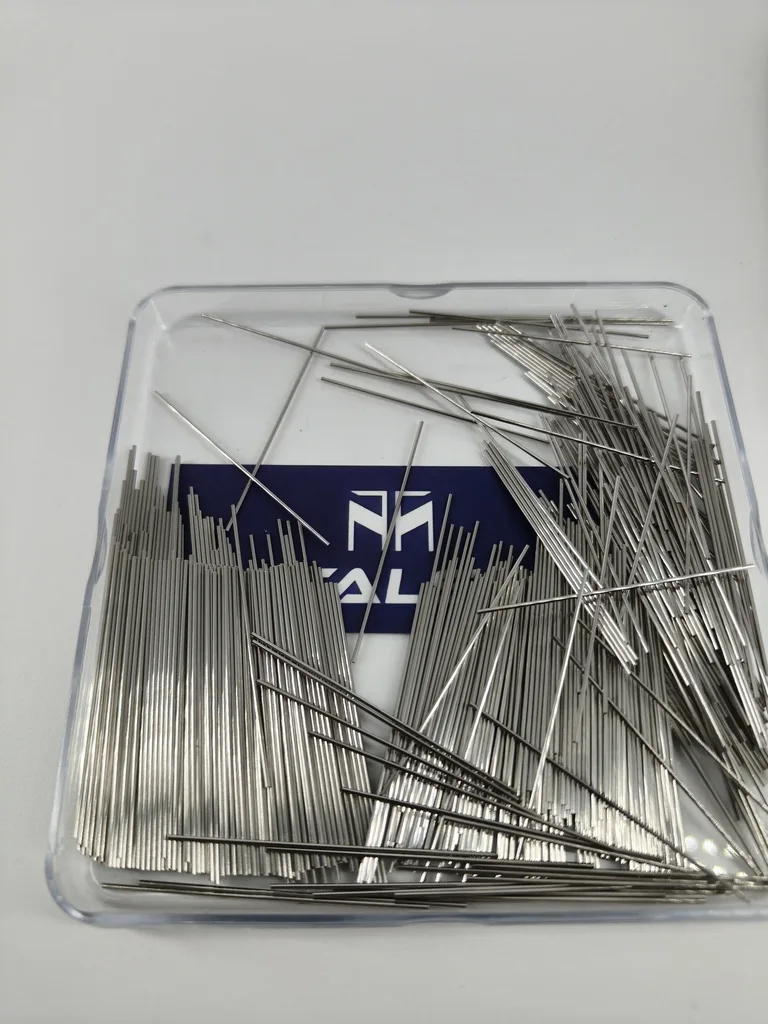
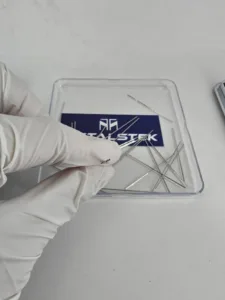
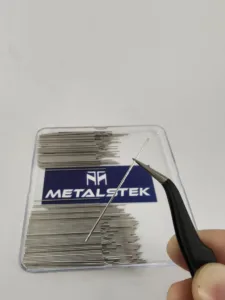
Radiopacity, strength and wear behaviour depend on composition, geometry and condition. State the required tests instead of assuming a performance value or implant/device approval from the alloy name. Burr-controlled cutting and custom geometry must be agreed for the actual part.
| Item | Listed Options / RFQ Confirmation |
|---|---|
| Material | Pure Pt and Pt–Ir listed; Pt–Rh/custom alloys require composition and supply review |
| Purity | Pure Pt:99.95% or99.99%. For Pt–Ir/Pt–Rh, specify alloy composition and impurity limits separately. |
| Pt-Ir Composition | Existing options PtIr90/10 or80/20; percentage basis, condition and exact combination to be confirmed |
| Form | Tube, capillary tube, ring, marker band, end-capped tube, custom component |
| OD / ID | Customized according to project requirements |
| Wall Thickness | Thin-wall requirements reviewed with OD/ID, length, tolerances and material condition |
| Length | Short rings, cut-to-length tubes, longer tubes for customer cutting |
| Tolerance | State required tolerances; acceptance is agreed for the actual geometry and condition |
| Surface Condition | Specify surface cleanliness/finish, burr limits and end-face quality for confirmation |
| Processing | Drawing, cutting, forming, machining or custom fabrication as applicable; confirm the route for the quoted part |
| Documentation | Request required CoA, SDS or compliance documentation; availability/scope must be confirmed for the material and order |
| Packaging | Existing individually protected, labelled shipment; agree fine-part handling requirements |
| Product | Main Advantage | Recommended Use |
|---|---|---|
| Platinum Tube | Pure-Pt chemistry and application-specific chemical compatibility | Laboratory, chemical, electrode and sensor requirements, subject to environment review |
| Platinum Iridium Tube | Select Ir content and condition for required mechanical behaviour/radiopacity | Precision rings, marker-band geometries and micro-components; device suitability requires separate qualification |
| Platinum Rhodium Tube | Composition-specific elevated-temperature behaviour; compare with loading/atmosphere defined | High-temperature/laboratory inquiry route; alloy and supply confirmation required |
| Custom Platinum Alloy Tube | Composition and manufacturability reviewed against the drawing | R&D and custom assemblies; no unspecified alloy is offered as automatically available |

The 29 examples below are transcribed from the existing public size image. Dimensions are in mm; L means axial length/height. They are reference combinations, not a stock list or a tolerance/condition guarantee. For concentric round tubing, wall = (OD − ID) / 2; specify which dimensions control acceptance.
| OD (mm) | ID (mm) | Axial L (mm) |
|---|---|---|
| 0.35 | 0.30 | 0.50 |
| 0.35 | 0.30 | 0.80 |
| 0.42 | 0.24 | 0.40 |
| 0.43 | 0.38 | 0.73 |
| 0.45 | 0.40 | 0.50 |
| 0.49 | 0.28 | 0.35 |
| 0.51 | 0.29 | 0.40 |
| 0.51 | 0.46 | 0.99 |
| 0.52 | 0.48 | 0.99 |
| 0.55 | 0.50 | 0.50 |
| 0.60 | 0.36 | 0.35 |
| 0.65 | 0.58 | 1.00 |
| 0.74 | 0.69 | 1.00 |
| 0.80 | 0.60 | 0.50 |
| 0.83 | 0.78 | 1.00 |
| 0.90 | 0.80 | 1.95 |
| 1.06 | 1.01 | 1.00 |
| 1.27 | 1.07 | 1.50 |
| 1.27 | 1.07 | 3.00 |
| 1.37 | 1.29 | 1.20 |
| 1.39 | 1.34 | 1.00 |
| 1.40 | 1.20 | 1.70 |
| 1.58 | 1.45 | 1.00 |
| 1.58 | 1.45 | 2.00 |
| 1.96 | 1.88 | 1.00 |
| 2.05 | 1.95 | 1.20 |
| 2.05 | 1.95 | 2.00 |
| 2.70 | 2.60 | 2.00 |
| 5.40 | 5.30 | 2.50 |
Pt–Ir tubes and rings are requested where radiopacity, chemical compatibility and dimensional control matter, including marker-band geometries and precision assemblies. Material supply and a product photograph do not establish implant or medical-device approval. Confirm alloy/condition, traceability, cleaning, inspection and the customer’s design/regulatory requirements separately.
For laboratory instruments, electrodes, sensors or analytical components, specify chemical exposure, temperature, contamination limits and dimensional requirements. Confirm compatibility for the actual alloy and operating conditions.
Platinum and platinum alloy tubes may be used in electronic components, sensor assemblies, high-purity devices, and semiconductor-related applications where stable precious metal materials are required.
Pure platinum offers excellent resistance to many corrosive environments, making it suitable for selected chemical processing, experimental reactors, and corrosion-resistant components.
For elevated-temperature components, define temperature, time, load, atmosphere and thermal cycles. Pt, Pt–Ir and Pt–Rh have different condition-dependent behaviour. Melting point and a generic alloy comparison do not establish a safe working-temperature or creep-life rating.
MetalsTek supports custom manufacturing based on drawings, samples, or technical specifications. For precision tubing and rings, we recommend confirming the following details before quotation:
| Question | Answer |
|---|---|
| Can you supply platinum-iridium tubes for medical applications? | Pt–Ir tube and ring geometries can be reviewed for precision-device projects. Material supply does not establish implant/device certification; the customer must confirm design, testing, traceability and regulatory requirements. |
| What platinum-iridium alloy ratios are available? | Common Pt-Ir alloy ratios such as PtIr 90/10 and PtIr 80/20 may be available. Customized compositions can also be reviewed according to drawing and quantity. |
| Can you cut platinum-iridium tubes into short rings or marker bands? | Yes. Pt-Ir tubes can be supplied as longer tubes or cut-to-length rings depending on OD, ID, wall thickness, tolerance, and surface requirements. |
| What information is needed for a quotation? | Please provide material, alloy composition, OD, ID, wall thickness, length, tolerance, quantity, surface requirement, and documentation needs. |
| Can you provide CoA or material certification? | State the required CoA or other material documentation in the RFQ. Confirm its scope and availability for the actual material/order; no universal certification package is promised. |
| Can platinum tubes be customized with end caps or special shapes? | Yes. Custom shapes such as end-capped tubes, rings, capillary tubes, and tailored components may be manufactured according to drawings. |
| What is the difference between platinum tube and platinum-iridium tube? | Pure Pt is an unalloyed-purity selection. Pt–Ir is an explicit alloy-ratio and material-condition selection. Compare required chemical, mechanical and radiopacity behaviour for the actual geometry rather than transferring a pure-Pt property to the alloy. |
| Is there a standard stock size list? | The published size references support specification discussions and are not a live stock list. Request a quotation for the exact alloy, dimensions, condition and quantity. |
| Can you supply small OD capillary tubes? | Yes. Small OD capillary tubes can be reviewed according to material, wall thickness, tolerance, and quantity. |
| Do you support small-batch orders? | State the requested quantity. Small-batch feasibility and any MOQ depend on material, dimensions and processing, and must be confirmed in the quotation. |
Our platinum and platinum-iridium tubes are individually protected, clearly labeled, and packed to reduce deformation, surface damage, and contamination risk during storage and international shipment. For small rings, capillary tubes, or precision-cut parts, additional protective packaging can be arranged according to the size and handling requirements.
Send your alloy ratio, OD, ID or wall thickness, length, tolerances and quantity. Attach a drawing for review of capillaries, thin-wall tubes or precision-cut rings.