
Menu
Home / Rare Metals / Platinum
Source platinum wire, sheet and foil, tube, crucibles, targets, evaporation materials and alloy forms.
Choose the product form and composition, then send dimensions, quantity and your drawing or specification.
Start with these common procurement routes, or explore all eight published product families below.

Specify composition, diameter, length, condition and intended electrical or sensor service.

Define thickness, width, length, composition and surface condition.
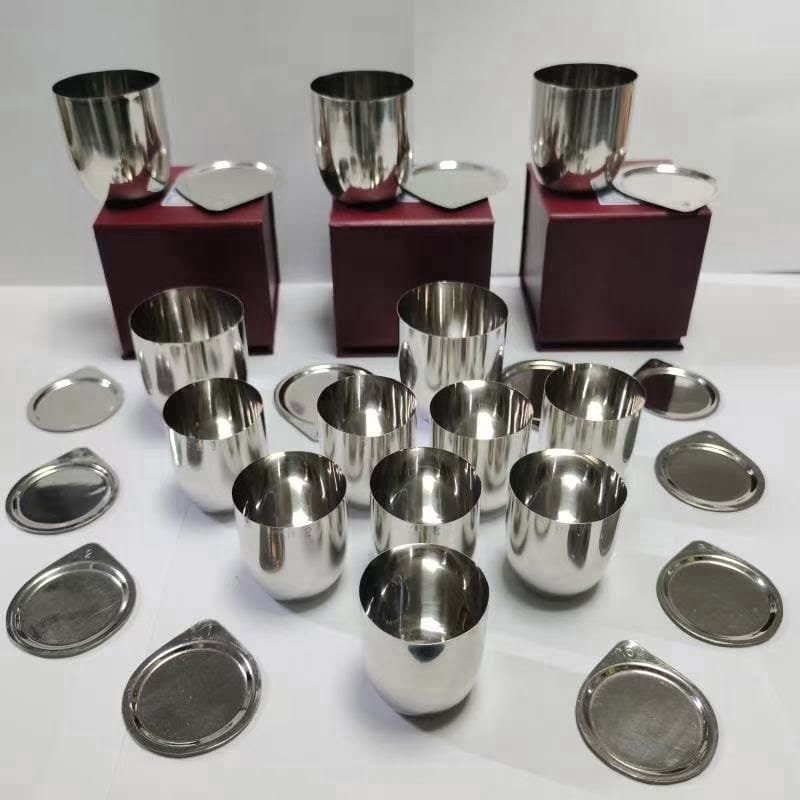
Select the alloy and geometry against the sample, melt or analytical process.

Define Pt or Pt–Ir composition, OD, ID or wall, length and drawing requirements.
All eight existing product families are retained. Pure platinum, platinum alloys and compounds require different specifications; use each product page for form-specific details.

Pellets, granules and source-material shapes; specify purity and source geometry.

Specify composition, target dimensions and backing or bonding requirements.
Select the alloy and geometry against the sample, melt or analytical process.
Specify composition, diameter, length, condition and intended electrical or sensor service.
Define thickness, width, length, composition and surface condition.

Distinguish Pt–Rh, Pt–Ir and other compositions before specifying wire condition.
Define Pt or Pt–Ir composition, OD, ID or wall, length and drawing requirements.
| Material or process | Procurement route | Confirm before ordering |
|---|---|---|
| Pure platinum metal | Wire, sheet/foil, tube and metal feedstock | Specify purity with analysis basis, material condition, dimensions, surface and required documentation. |
| Platinum alloys | Pt–Rh and Pt–Ir wire, tube and crucible routes | State the exact alloy composition and basis; do not transfer pure-platinum hardness, creep or electrical values to an alloy. |
| Crucibles, dishes & analytical shapes | Crucible product page and drawing-based request | Confirm sample or melt chemistry, process temperature, atmosphere, geometry, lid and reuse/cleaning requirements. |
| Deposition source materials | Sputtering targets and evaporation materials | Specify metal or alloy chemistry, source dimensions, backing/bonding and equipment interface. |
| Compounds & supported catalysts | Existing inquiry route for specification review | State chemical identity, support, metal loading and application. Metal purity, metal conductivity and medical suitability do not transfer to compounds. |
A grade name or purity percentage alone does not define a finished component. State any contractual standard and edition, test method, inspection or traceability requirements; this Hub does not claim universal certification or implant qualification.
The original reference data are retained for initial comparison. They describe dense platinum, not every alloy, powder, catalyst or finished part. Mechanical and hardness values without a defined material condition are not purchase acceptance limits.
| Phase At STP | Solid | Electrical Resistivity | 105 nΩ⋅m (20°C) |
| Melting Point | 2,041.4 K (1,768.2°C / 3,214.8°F) | Magnetic Ordering | Paramagnetic |
| Boiling Point | 4,098K (3,825°C/6,917°F) | Young’s modulus | 168 GPa |
| Density (Near R.T.) | 21.45 g/cm3 | Shear Modulus | 61 GPa |
| Tensile strength | Not specified; confirm grade and condition | Bulk Modulus | 230 GPa |
| Heat Of Fusion | 22.17 kJ/mol | Poisson Ratio | 0.38 |
| Heat Of Vaporization | 510 kJ/mol | Mohs Hardness | 3.5 |
| Molar Heat Capacity | 25.86 J/(mol·K) | Vickers Hardness | 400–550 MPa |
| Thermal Expansion | 8.8 µm/(m⋅K) (at 25 °C) | Brinell Hardness | 300–500 MPa |
| Thermal Conductivity | 71.6 W/(m⋅K) | Cas Number | 7440-06-4 |
Melting point is not a maximum operating temperature. Confirm temperature, atmosphere, load, contamination and creep requirements for the actual part. The legacy density value is 21.45 g/cm³; the RSC fact box rounds it to 21.5. CAS and melting-point formatting are corrected against the Royal Society of Chemistry platinum reference.
For crucibles, glass and analytical components, identify alloy, sample chemistry, contamination limits, temperature profile, atmosphere and load. A high melting point does not establish acceptable creep life or compatibility with every melt.
For wire, electrodes and thermocouple-related requests, define composition, condition, geometry and the required electrical or calibration criteria. Pure Pt and Pt–Rh/Pt–Ir are not interchangeable.
Specify the medium, concentration, temperature, contaminants, and whether the request is metal, compound or supported catalyst. Corrosion resistance is environment-dependent.
Provide exact material, drawing, surface and traceability requirements. An application description is not a device approval, implant certification or blanket biocompatibility claim.
Distinguish sputtering from evaporation; state purity basis, composition, source shape, backing and process interface. Bulk-metal reference properties do not predict every film property.
Platinum also appears in automotive, petroleum-refining, jewellery and investment contexts. This Hub routes engineering material requests; confirm the actual composition and form instead of assuming every use is represented by one stock item.
| Family | Specification discussion |
|---|---|
| Metal forms | Original scope includes crucible, mold, combustion boat, dish, part, powder, rod, wire, tool, tube and evaporation material requests. Use the eight published product routes or send a drawing; this is not an inventory commitment. |
| Alloy composition | Existing material discussions include Pt/Rh, Pt/Ir, Pt/Ni, Pt/Cu and Pt/Ru. Confirm composition, product form and analysis for the specific request. |
| Compounds & supported catalysts | Existing scope includes Pt/C, Pt/Pd, Pt/Al₂O₃, Pt/CaCO₃, Pt/BaSO₄ and Pt/SiO₂. Specify chemistry/support and metal loading; no generic purity or universal availability claim applies. |
Use these existing engineering articles as background, then confirm order-specific requirements on the product page and in your RFQ.
Review crucible applications alongside the required alloy, sample and operating conditions.
Compare material-selection considerations; confirm actual composition, condition and order documentation.
Explore tube geometry, creep and manufacturing considerations without treating general examples as product guarantees.
Begin with the required form: wire, sheet/foil, tube, crucible, target, evaporation material or metal feedstock. Then define pure platinum versus an alloy and the relevant dimensions.
No. State the exact material standard, drawing, traceability and acceptance requirements. Suitability and finished-device requirements need a specific engineering and regulatory review.
Include material/composition, product form, purity basis, dimensions or drawing revision, quantity, condition, application, operating environment and documentation requirements. Upload the drawing through the form below.
For your platinum RFQ: identify pure Pt or the exact alloy/compound, product form, purity basis, dimensions or drawing, quantity, material condition, operating environment and required inspection documents.
