Overcoming Material Failure in Extreme Engineering
In advanced engineering sectors such as aerospace, medical device manufacturing, and semiconductor fabrication, material failure is not an option. Engineers frequently encounter severe operational challenges: high-temperature oxidation, thermal stress deformation, lack of radiopacity in fluoroscopy, or mechanical fatigue under continuous cyclic loading. While pure platinum offers exceptional chemical inertness and biocompatibility, its inherently low tensile strength and susceptibility to deformation under extreme mechanical stress often render it inadequate for rigorous structural applications.
The solution lies in alloying platinum with iridium. By introducing iridium, the resulting Platinum Iridium wire gains significantly enhanced mechanical robustness while retaining the noble properties of pure platinum. This guide provides a comprehensive thermodynamic and mechanical analysis to help structural engineers and advanced procurement managers select the ideal material for high-reliability applications.
What is Platinum Iridium (Pt-Ir) Wire?
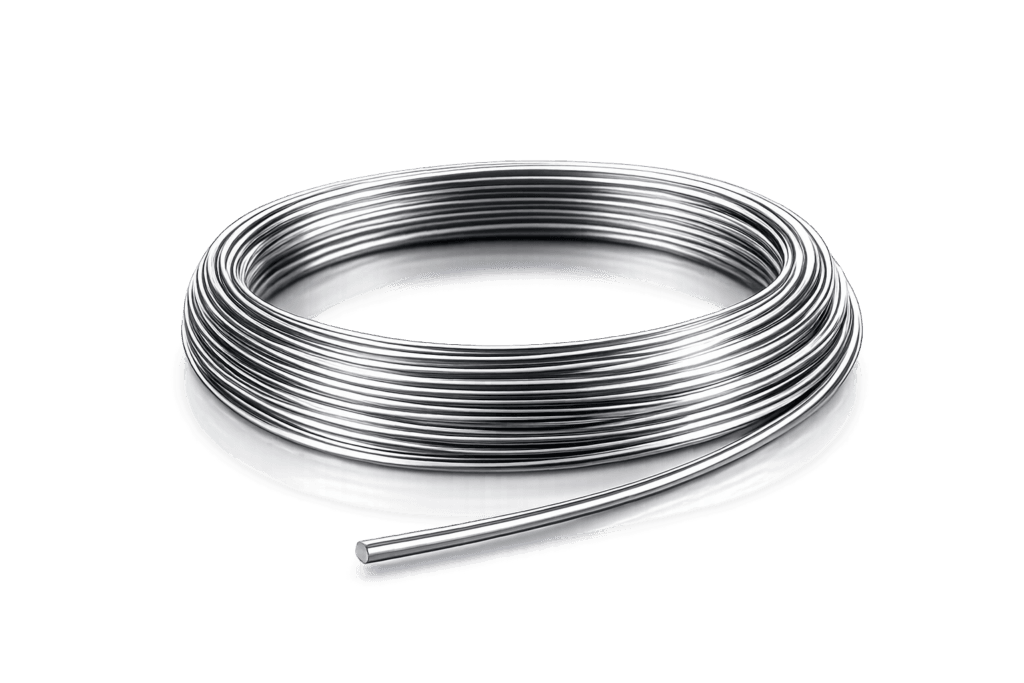
Platinum Iridium is a solid-solution alloy combining the exceptional corrosion resistance of platinum with the profound hardness and high melting point of iridium. In environments demanding high-temperature stability, low Coefficient of Thermal Expansion (CTE), and superior wear resistance, this alloy outperforms standard noble metals.
The addition of iridium dramatically increases the hardness, tensile strength, and high-temperature creep resistance of the material, making it an ideal choice for micro-machining and fine wire drawing.
Key Thermodynamic and Mechanical Properties
Different alloy compositions yield vastly different performance metrics. The concentration of iridium typically ranges from 10% to 30%, depending on the required balance between ductility and rigidity.
Table 1: Physical and Mechanical Properties of Standard Pt-Ir Alloys
| Property | Pt-10% Ir | Pt-20% Ir | Pt-30% Ir |
| Density ($g/cm^3$) | 21.56 | 21.61 | 21.69 |
| Melting Point (°C) | 1800 | 1850 | 1900 |
| Electrical Resistivity ($\mu\Omega \cdot cm$) | 24.5 | 32.0 | 33.5 |
| Tensile Strength (Annealed, MPa) | 380 | 650 | 900 |
| Vickers Hardness (HV) | 130 | 200 | 280 |
Platinum Iridium vs. Pure Platinum: A Horizontal Product Comparison
Choosing between pure platinum and a Pt-Ir alloy dictates the longevity and reliability of your final component. Below is a horizontal comparison to guide material selection based on core engineering requirements.
Table 2: Horizontal Comparison – Pure Platinum vs. Platinum Iridium Alloys
| Evaluation Criteria | Pure Platinum (99.99%) | Platinum Iridium (Pt-10Ir / Pt-20Ir) | Optimal Use Case |
| Mechanical Strength | Low; highly ductile and prone to deformation. | Exceptional; high tensile strength and wear resistance. | Pt-Ir for structural rigidity; Pure Pt for maximum malleability. |
| Corrosion Resistance | Ultimate inertness to almost all acids. | Extremely high, but slightly less oxidation resistant at >1000°C than pure Pt. | Pure Pt for extreme chemical environments; Pt-Ir for combined mechanical/chemical stress. |
| Electrical Conductivity | Superior (approx. 10.6 $\mu\Omega \cdot cm$). | Moderate (increases with Ir content). | Pure Pt for low-resistance contacts; Pt-Ir for durable wiper contacts. |
| Radiopacity | High. | Extremely High (Iridium increases density). | Pt-Ir for medical stents, marker bands, and guide wires. |
| Machinability | Gummy, difficult to precision machine without tearing. | Excellent; iridium hardens the alloy, allowing for cleaner cuts. | Pt-Ir for complex micro-machined components. |
Industry-Specific Applications and Challenges
The unique thermophysical properties of Pt-Ir alloys make them indispensable across several cutting-edge industries.
Medical Devices and Neuromodulation
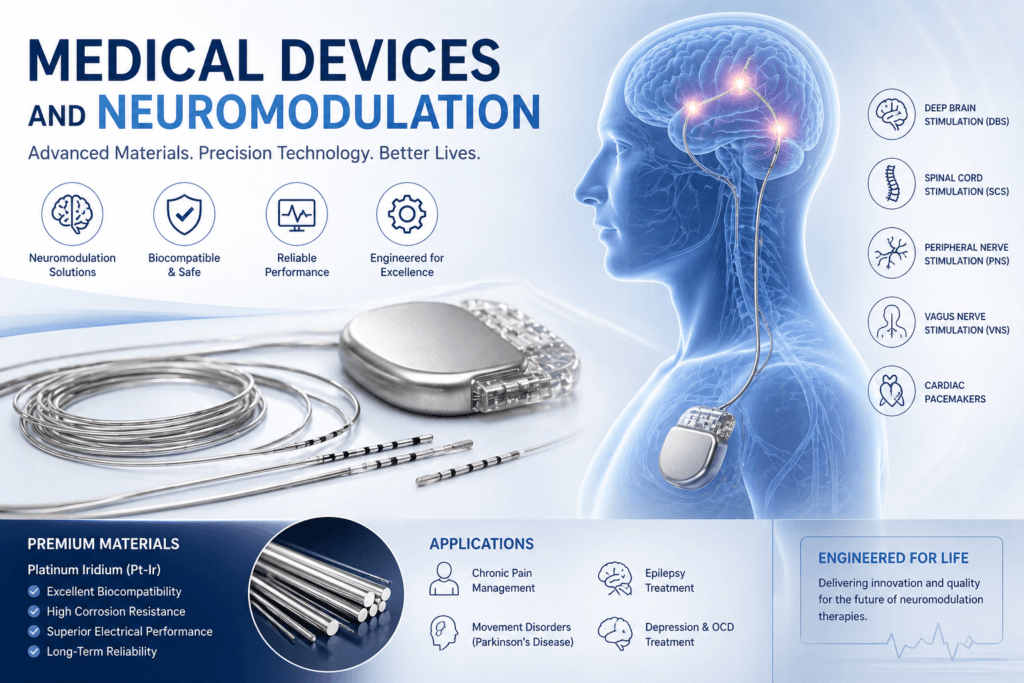
In the medical sector, materials must be strictly biocompatible and highly radiopaque under X-ray imaging. Pt-Ir wire is the gold standard for pacemaker leads, neuromodulation electrodes, and electrophysiology catheters. The iridium content provides the stiffness required to navigate complex vascular pathways without compromising the electrical signaling capabilities needed for pacing or sensing.
Aerospace and Deep-Space Exploration
Aerospace components face rapid thermal cycling and extreme vibration. Pt-Ir alloys exhibit exceptional high-temperature creep resistance, making them perfect for aircraft spark plug electrodes, igniters, and high-temperature gas sensors.
Table 3: Application Matrix for Pt-Ir Wire Configurations
| Industry | Primary Application | Recommended Alloy | Key Performance Requirement |
| Medical Devices | Guide wires, pacing leads | Pt-10Ir, Pt-20Ir | Radiopacity, Biocompatibility, Fatigue Resistance |
| Aerospace | Igniters, high-temp probes | Pt-20Ir, Pt-30Ir | High melting point, Oxidation resistance |
| Semiconductors | Wafer testing probes | Pt-20Ir | High stiffness, low contact resistance, durability |
| Precision Instruments | Potentiometer wipers | Pt-10Ir | Wear resistance, stable electrical noise |
The Metalstek Advantage in Precious & Refractory Metals
When dealing with mission-critical applications, material purity and dimensional precision are paramount. As a leading manufacturer of high-purity metals and refractory metals, Metalstek delivers unparalleled quality to the global B2B market.
- Ultra-High Purity: We guarantee material purity up to 4N/5N (99.99% – 99.999%), ensuring zero trace contaminants that could cause signal degradation or structural embrittlement.
- Advanced Powder Metallurgy & Machining: Our state-of-the-art facilities utilize Hot Isostatic Pressing (HIP) and advanced wire drawing techniques. We excel in the precision machining capabilities required to process challenging, high-iridium content custom precision alloys down to micro-tolerances.
- Strict Quality Control: Every spool of wire and machined component undergoes rigorous metallurgical testing, backed by fully traceable documentation and material certifications (MTRs).
Conclusion & Call to Action
Selecting between pure platinum and Platinum Iridium wire fundamentally comes down to the balance of mechanical rigidity, electrical properties, and environmental extremes. By leveraging the tailored properties of Pt-Ir alloys, engineers can design smaller, stronger, and more reliable components for the world’s most demanding applications.
Partner with Metalstek to secure the highest-grade materials for your next project.
Ready to elevate your product performance? Contact our technical sales team to request material specifications, or Submit a CAD Drawing for a comprehensive engineering evaluation and custom quote.
Top 10 Frequently Asked Questions (FAQs) About Platinum Iridium Wire
1. What is the standard purity of Metalstek’s Platinum Iridium wire?
We manufacture our noble metal alloys using 99.99% (4N) or higher purity starting materials to ensure optimal performance and biocompatibility.
2. Can Iridium content be customized beyond standard 10% or 20%?
Yes. Metalstek offers custom alloying services. We can adjust the Iridium content anywhere from 5% to 30% based on your specific stiffness and resistivity requirements.
3. Is Platinum Iridium wire weldable?
Yes, Pt-Ir alloys can be micro-welded using laser welding or resistance welding techniques, though higher Iridium content requires precise control of thermal parameters.
4. How does Iridium content affect the radiopacity of the wire?
Because Iridium is denser than Platinum, increasing the Iridium content slightly increases the overall density of the alloy, thereby enhancing its radiopacity under fluoroscopy.
5. What is the smallest diameter wire Metalstek can produce?
Through our advanced wire drawing capabilities, we can produce ultra-fine Pt-Ir wires down to a few microns in diameter, ideal for neuromodulation devices.
6. Does Platinum Iridium oxidize at high temperatures?
While highly stable, at extreme temperatures (above 1000°C in air), the Iridium component can form volatile oxides. However, it performs exceptionally well compared to non-noble metals.
7. How do the tensile properties of Pt-20Ir compare to pure Titanium?
Cold-worked Pt-20Ir can achieve tensile strengths comparable to commercial purity titanium, but with significantly higher density, radiopacity, and electrical conductivity.
8. What certifications does Metalstek provide with its products?
We provide complete Material Test Reports (MTRs), including chemical composition analysis, mechanical property testing, and dimensional inspection reports for full traceability.
9. Why is Pt-Ir preferred over pure Platinum for machining?
Pure platinum is highly ductile and “gummy,” making it prone to tearing during machining. The addition of iridium increases hardness, allowing for precise, clean cuts and tighter tolerances.
10. What is the typical lead time for a custom Pt-Ir wire order?
Lead times vary based on the required diameter and alloy composition. Standard configurations often ship within weeks, while custom melts and specific wire drawing requirements are evaluated upon quoting.