
Menu
Platinum Hub / Platinum Wire
Pure Pt wire in round, flat and square profiles. Specify purity, dimensions, length and quantity for a quotation.
Platinum wire (Pt) is listed in 99.95% and 99.99% purity, with round, flat and square profiles. Specify the required diameter or cross-section, cut length or total length, and quantity by pieces or mass for an engineering quotation.
For platinum–iridium (Pt–Ir) or platinum–rhodium (Pt–Rh), select the alloy composition separately. Alloy content is not the same as pure-platinum purity. Browse the Platinum product family or compare platinum alloy wire.
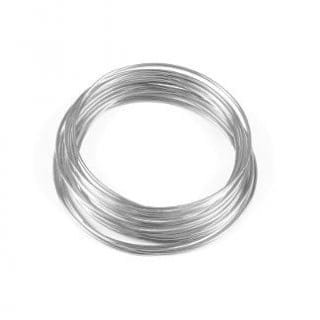
Diameter availability, material condition and packaging are confirmed against the requested specification; no single tolerance applies to every size.
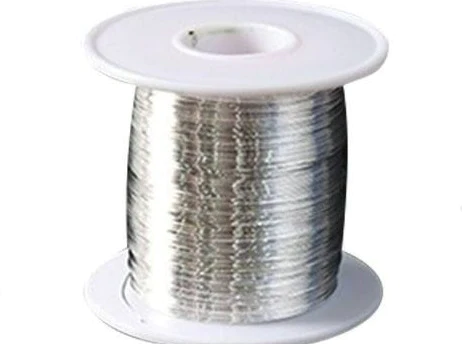
The existing source guide lists tungsten boats/coils/baskets and carbon crucibles. Confirm source compatibility for your evaporant, equipment and process; this is not a universal compatibility guarantee. See platinum evaporation materials.
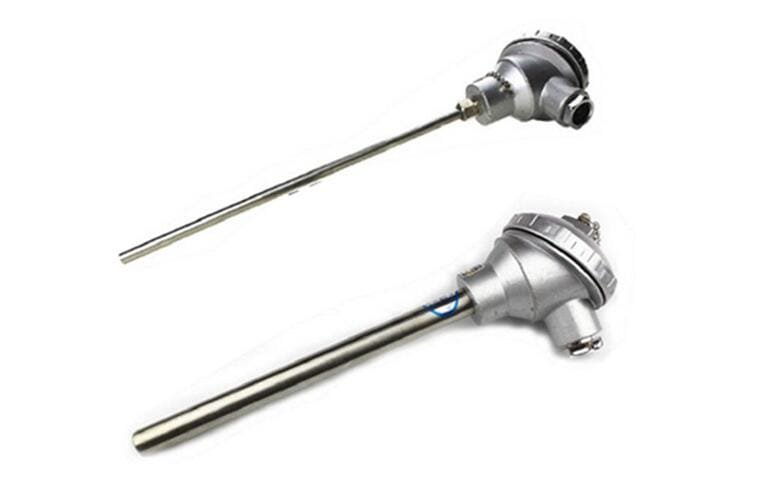
The earlier constituent-purity entries (Pt ≥99.95%, Au/Ir/Rh ≥99.99%) do not define the final alloy composition. Specify the alloy designation and percentage basis separately. Exact composition, diameter and condition require confirmation; the listed ranges do not imply every combination is available. Continue to platinum alloy wire specifications.
Type letters describe a conductor pair. Type B is not pure Pt paired with Pt–30% Rh. Use the pairing guide below; pair availability and calibration requirements must be confirmed in the quotation.
Type S pairs Pt–10% Rh with Pt; Type R pairs Pt–13% Rh with Pt; Type B pairs Pt–30% Rh with Pt–6% Rh. These are reference pair definitions, not a claim that every pair or calibration class is supplied. See the NIST thermocouple composition reference.
Existing listed nominal diameters (mm): 0.03 / 0.05 / 0.08 / 0.13 / 0.20 / 0.25 / 0.38 / 0.51 / 0.64 / 0.81. Specify the metric diameter; inch equivalents are approximate.
Operating conditions: state working temperature, duration, atmosphere, protective sheath and contamination sources. Reducing atmospheres and metallic or non-metallic vapours require application review. Do not infer a safe operating temperature from melting point or a generic thermocouple reference range.
Matched pairs and extension wire: identify required pair matching, calibration/error limits, insulation and extension-wire requirements in the RFQ. These are separate requirements to confirm, not automatic properties of all Pt–Rh wire.
Mechanical properties, resistance ratio and resistivity depend on composition, condition and temperature. Request the applicable data for the proposed wire rather than applying pure-Pt values to all alloys.
For round wire, state the diameter in mm and the required length per piece, per coil or in total. For flat wire, state width × thickness; for square wire, state side length. A diameter alone does not define an order quantity.
For a preliminary pure-Pt mass estimate, use density ≈21.45 g/cm³: mass (g) ≈16.85 × diameter² (mm²) × length (m). For example, 1 m of 0.10 mm round pure-Pt wire is approximately 0.169 g. This is a geometric estimate, not a delivered-weight or price guarantee. Use the alloy-specific density for Pt–Ir or Pt–Rh.
State whether the purchase quantity is a total mass, total length or piece count. Ask for confirmation of material condition, dimensional tolerance, surface requirements and packaging before ordering. No minimum order, fixed length or stock availability is implied.
Pure Pt reference values: density approximately 21.45 g/cm³; electrical resistivity approximately 10.6 µΩ·cm at 20°C; thermal conductivity approximately 71.6 W/(m·K) near 300 K. These are material reference values, not lot-specific acceptance limits or values for every platinum alloy.
Resistance sensing: specify the required temperature coefficient of resistance (TCR), resistance ratio R100/R0, calibration and applicable sensor requirements. Chemical purity alone does not establish IEC 60751 sensor conformity. TCR is a relative change per degree, not an absolute resistance in Ω/°C.
Heating and thermal expansion: provide current, geometry, temperature, thermal cycles, atmosphere and contamination exposure. Resistivity and thermal expansion vary with temperature and material condition; request data for the actual interval. Melting point is not a maximum service-temperature rating.
Thermoelectric use: output depends on the conductor pair and temperature difference. Use the Type S/R/B pair definitions above rather than assigning a single Seebeck coefficient to every Pt wire.
Platinum wire is used in laboratory electrodes, electrical contacts, resistance-sensing elements and thermocouple systems. For a flame-test loop, electrode or heater, specify the wire profile and operating conditions rather than selecting on purity alone.
Pure Pt, Pt–Ir and Pt–Rh are separate materials: Pt–Ir selection requires an explicit Ir content and condition; Pt–Rh thermocouples require the correct conductor pair. A wire listing does not establish medical-implant approval, aerospace qualification or a completed sensor’s calibration. Platinum-coated base-metal wire is also different from solid Pt wire; specify construction explicitly.
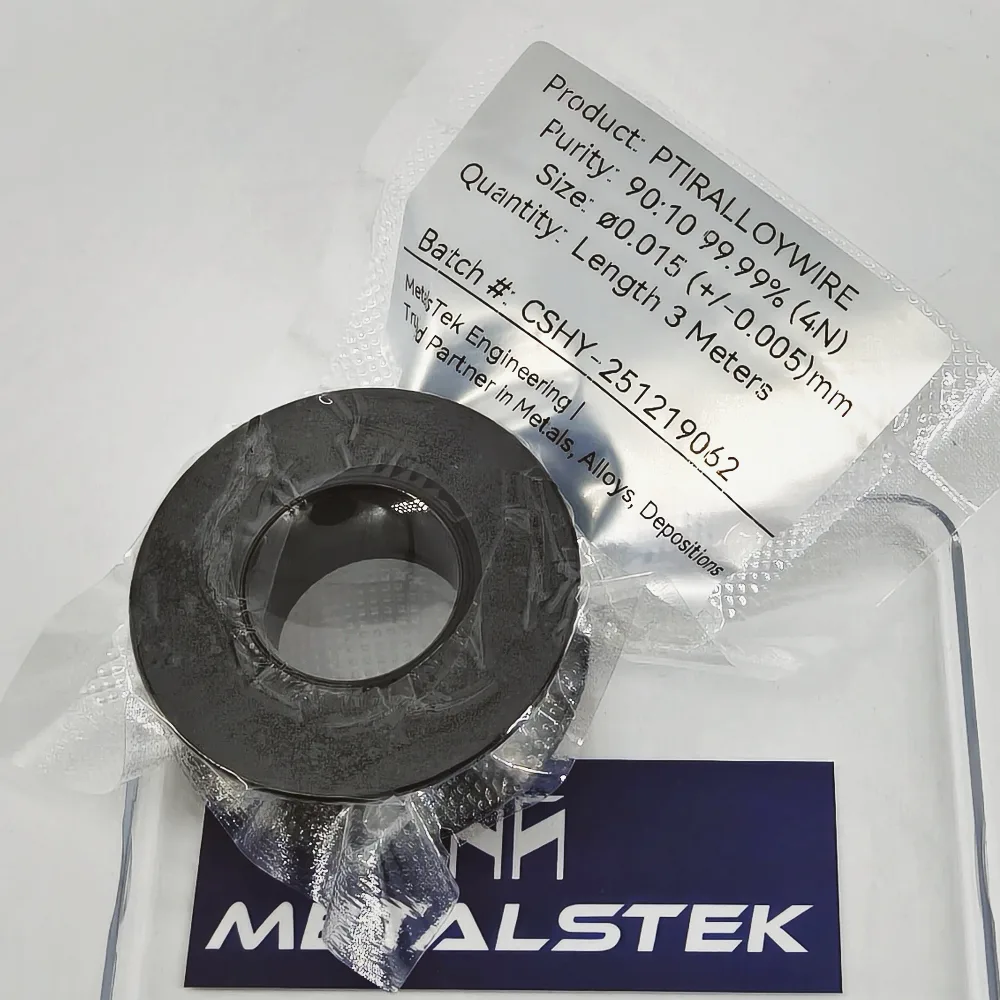
Existing wire packaging is externally labelled for identification and protected during transport. State whether you need coils, spools or cut lengths, the required length per unit, handling requirements and any label or documentation requirements; the quotation confirms the proposed arrangement.
Include in your RFQ: pure-Pt purity or alloy composition; diameter/profile and tolerance; length; total mass or piece count; material condition; application and environment; and a drawing if needed. The quote buttons use the existing inquiry mechanism to prefill the product context in Project Details. Complete the Product / Material field as required.
Browse the Platinum Hub, compare Pt–Ir and Pt–Rh alloy wire, or view platinum sheet and foil.
Related reading: Platinum–iridium wire vs. pure platinum. Use the comparison as selection context; confirm requirements against the actual offered wire.
Send purity or alloy composition, diameter/profile, length and total quantity or mass. Add material condition, packaging and application requirements. Price is quoted for the confirmed specification; no fixed price is published here.
Round, flat and square pure-Pt profiles are listed. For a custom profile, provide width, thickness or side dimensions, tolerance and length. Exact dimensions and supply feasibility are confirmed in the RFQ.
No. Specify pure Pt or an explicit Pt–Ir/Pt–Rh composition. Alloy percentage, constituent purity and finished-wire condition are different requirements.
State length per piece or coil and total length, mass or piece count. Use the pure-Pt estimate above only for preliminary planning; final quantity and packaging are confirmed in the quotation.