Menu
Drawing-based graphite heaters, shields, supports, carriers and other hot-zone parts for vacuum furnaces, crystal-growth equipment and heat-treatment systems. MetalsTek reviews drawings and operating conditions with manufacturing partners before quotation.
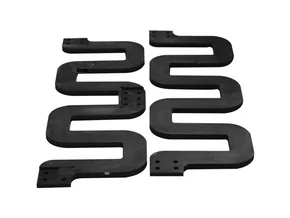
Specify the component by its function, drawing and furnace duty. The photographed examples below come from an authorized manufacturing partner and show product forms available for project review; they do not establish universal dimensions, material grades or performance limits.
Heater geometries and electrical connections are reviewed against power, current path, mounting and process conditions.
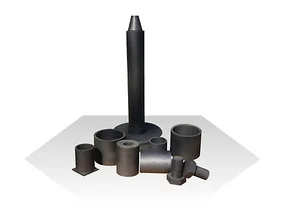
Drawing-based supports and interfaces for electrical components; provide connection and fit requirements.
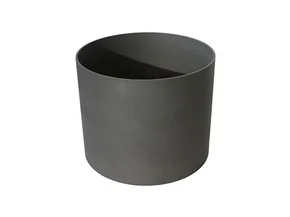
Hot-zone cylinders and support components; confirm insulating-system layout, atmosphere and thermal cycle.
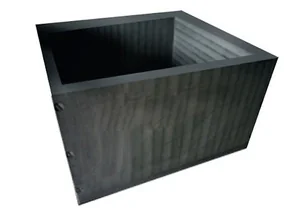
Protective or shielding plates with cutouts and mounting details defined by the assembly drawing.
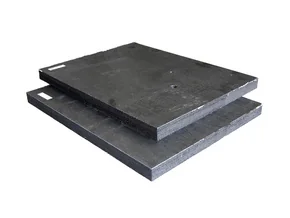
Bases and structural plates for furnace or crystal-growth assemblies, subject to load and fit review.
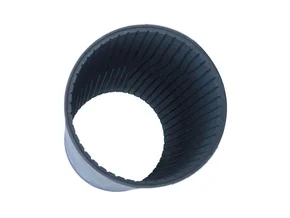
Other drawing-based hot-zone fixtures, carriers and accessories evaluated for the specific equipment.
Graphite grade selection depends on the component function and actual process conditions. Use the Carbon Hub grade reference to identify candidates, then confirm suitability with the drawing and operating specification; no MT/WX/Red grade equivalence is assumed.
For heaters, describe the electrical duty, current path, target process temperature and cycling. For other parts, describe heat flow and dimensional stability needs.
Provide loads, unsupported spans, wall thicknesses, holes, threads and interfaces. These details affect grade selection and machining review.
State vacuum level or gas atmosphere, exposure to reactive species and any contamination limits. Suitability must be confirmed for the actual process.
Mark critical dimensions, surface finish and acceptance records on the drawing. Inspection methods and achievable tolerances are confirmed per project.
Send the component drawing, equipment context, material requirement, atmosphere, temperatures, quantity and any replacement-part reference.
MetalsTek reviews grade choice, geometry, machining route and project-specific requirements with manufacturing partners before quoting.
Identify critical features and required material or dimensional records. The inspection plan and documentation are confirmed for the order.
Maximum temperature, service life, grade, tolerance, size and furnace compatibility cannot be guaranteed from a generic product description. Final requirements and acceptance criteria are agreed for the specific part.
This real product photo illustrates a graphite furnace accessory from an authorized manufacturing partner. Components may be reviewed for vacuum furnaces, crystal-growth equipment and heat-treatment hot zones when drawings, atmosphere, loads and thermal cycle are supplied. It is a product example, not a performance test or customer project claim.
Yes. Send the drawing and operating conditions. MetalsTek reviews material and manufacturing feasibility with its partners before quotation.
It depends on electrical duty, atmosphere, temperature cycle, load and geometry. If your grade is already qualified, name it; otherwise provide the duty conditions for candidate review. See the Carbon Hub grade reference for listed material data.
No. The allowable duty depends on grade, atmosphere, geometry and service conditions. A project-specific review is needed before any performance commitment.
A replacement part can be evaluated from a drawing or sufficiently detailed sample information. Include mating dimensions, OEM or equipment context and any material or inspection requirements.
Provide the drawing or sample dimensions, component function, grade if specified, atmosphere, temperature cycle, quantity, critical tolerances and required inspection records.
For the complete grade-performance reference and graphite portfolio, visit the Carbon & Graphite Materials hub. For machining blanks, see Carbon Materials & Stock Shapes. For general drawing-based parts, visit Custom Machined Graphite Parts. For process context, see Graphite Applications.
Include a PDF or CAD drawing, component function, equipment type, graphite grade if specified, operating atmosphere, temperature cycle, quantity, critical dimensions and required inspection records. MetalsTek will review the request with manufacturing partners and confirm project-specific feasibility.