
Menu
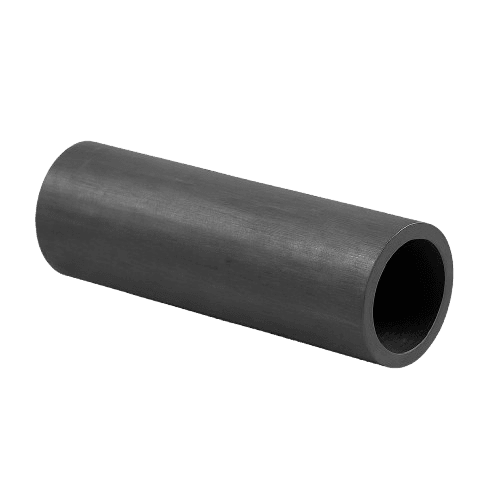
Material: Carbon (High-Purity Graphite)
Purity: ≥99.9% (Higher Purity Available)
Form: Tube / Hollow Rod / Customized Machined Tubes
Size: Customized Dimensions (OD, ID, Length)
Applications: Semiconductor Processing, Vacuum Systems, Thermal Management, Furnace Components, Precision Machining, High-Temperature Industrial Equipment
Carbon Tubes are essential structural materials widely used in high-temperature, vacuum, and precision engineering applications. Manufactured from high-purity graphite or engineered carbon materials, carbon tubes provide excellent thermal stability, chemical inertness, and mechanical reliability, making them well suited for demanding industrial environments.
With a sublimation temperature above 3,600 °C (for graphite) and a typical density range of 1.8–2.2 g/cc, carbon tubes exhibit outstanding resistance to extreme heat, thermal shock, and rapid temperature cycling. Their stable crystalline structure and anisotropic properties allow precise machining and predictable performance under vacuum, inert gas, or reactive atmospheres.
Carbon tubes are widely used in applications including:
Semiconductor processing equipment and tubular fixtures
Vacuum systems and ultra-high-vacuum assemblies
Thermal management and heat-transfer components
Furnace tubes, liners, and protective sleeves
PVD / CVD tooling and gas-flow channels
Wear-resistant and chemically stable hollow structural parts
In advanced manufacturing, high-purity carbon tubes are valued for their low impurity levels, excellent electrical and thermal conductivity, and compatibility with high-temperature and vacuum processes. They are commonly used as heater tubes, shielding sleeves, support structures, and precision-machined components in semiconductor, optics, energy, and high-temperature industrial systems.
Overall, carbon tubes are indispensable materials for next-generation high-temperature and vacuum technologies, enabling reliable structural performance, thermal stability, and dimensional consistency across industries such as semiconductors, electronics, aerospace, energy storage, metallurgy, and precision manufacturing.
| Material Type | Carbon (Graphite) |
|---|---|
| Symbol | C |
| Atomic Weight | 12.011 |
| Atomic Number | 6 |
| Appearance | Black / Dark Gray, Matte or Crystalline (Graphite) |
| Thermal Conductivity | ~120–200 W/m·K (Graphite, depending on grade) |
| Melting / Sublimation Point | Sublimes at ~3,642 °C |
| Coefficient of Thermal Expansion | ~4–8 × 10⁻⁶ /K (orientation dependent) |
| Theoretical Density | 2.0–2.26 g/cc (graphite density range) |
| Z Ratio | ~1.00 |
| E-Beam | Excellent (stable, clean evaporation) |
Carbon (C) and carbon-based tube materials—including graphite tubes, amorphous carbon tubes, and carbide-based tubes such as SiC, B₄C, WC, TiC, and Mo₂C—are widely used across advanced industrial and engineering sectors. Their excellent thermal stability, chemical inertness, mechanical strength, and controllable electrical properties make carbon tubes indispensable in high-temperature, vacuum, and precision applications where hollow or tubular structures are required.
Carbon tubes are widely used in semiconductor and electronics manufacturing as functional and structural components. Typical applications include process tubes, gas delivery channels, heater tubes, shielding sleeves, and support structures in wafer processing equipment. High-purity graphite tubes are especially valued for their dimensional stability, cleanliness, and compatibility with vacuum and high-temperature semiconductor environments.
Carbon-based tubes play an important role in optical and photonic systems. Boron carbide (B₄C) and silicon carbide (SiC) tubes are commonly used in X-ray optics, synchrotron facilities, and EUV systems as structural supports, beamline components, and radiation-resistant housings. Their stability under high photon flux and thermal load makes them suitable for high-energy scientific instruments.
Carbon and carbide tubes provide excellent resistance to chemical corrosion, mechanical wear, abrasion, and high-temperature oxidation. They are widely used as protective sleeves, liners, bushings, and hollow wear components in pumps, mechanical systems, and industrial equipment operating in harsh environments.
In aerospace and automotive applications, carbon tubes are used where lightweight structures, high thermal resistance, and mechanical reliability are required. Typical uses include thermal protection tubes, structural sleeves, heat shields, tribological components, and EMI shielding elements. SiC, B₄C, and WC tubes are particularly suitable for components exposed to extreme heat, vibration, and mechanical stress.
Carbon tubes support semiconductor device infrastructure by providing stable tubular components for high-temperature processing, conductive or anti-static housings, and protective barriers. Carbide-based tubes such as WC, TiC, and SiC are also applied in specialized electronic systems requiring enhanced strength, wear resistance, and thermal stability.
Carbon tube materials are widely used in energy-related systems to enhance electrical conductivity, thermal stability, and long-term operational reliability. Applications include tubular current collectors, structural housings, thermal management channels, and protective sleeves. Carbide tubes such as Mo₂C and WC are also used in catalytic and hydrogen-related energy conversion systems.
Carbon-based tubes, especially high-density and polished graphite tubes, are used in biomedical applications due to their biocompatibility, chemical inertness, and wear resistance. They are commonly applied in medical tooling, precision fixtures, laboratory equipment, and specialized biomedical device components.
Carbon and carbide tubes such as B₄C, SiC, and WC are among the hardest engineered materials available. They are used in armor-related systems, neutron shielding assemblies, high-hardness structural tubes, and aerospace-grade protective components designed for extreme thermal, mechanical, and chemical conditions.
Carbon tubes are essential components in metallurgical and high-temperature processing industries. Typical uses include furnace tubes, protective liners, thermocouple protection tubes, and structural elements in vacuum and inert-atmosphere furnaces. Carbide-reinforced tubes further enhance wear resistance and mechanical strength in demanding thermal environments.
Carbon and carbide tube materials are widely used in chemical processing systems as corrosion-resistant reaction tubes, catalyst housings, and high-temperature process channels. Carbide tubes such as WC and Mo₂C are particularly suitable for catalytic, reforming, and reactive chemical environments due to their excellent thermal stability and chemical durability.