Article Introduction
Tantalum capillary tubes are used in projects where small-diameter tubing must perform reliably under demanding conditions such as corrosive media, elevated temperature, vacuum environments or high-purity material processing.
As part of the broader family of tantalum materials, tantalum capillary tubing is usually selected when conventional stainless steel, titanium or nickel-based tubing may not provide sufficient corrosion resistance, thermal stability or contamination control. For buyers comparing different refractory metal tube options, refractory metal tubes can also be reviewed together with tantalum, niobium, molybdenum and tungsten products.
Compared with standard tantalum tube, a tantalum capillary tube is typically specified with smaller OD, controlled ID, thin wall thickness and more application-sensitive tolerance requirements.
What Is a Tantalum Capillary Tube?
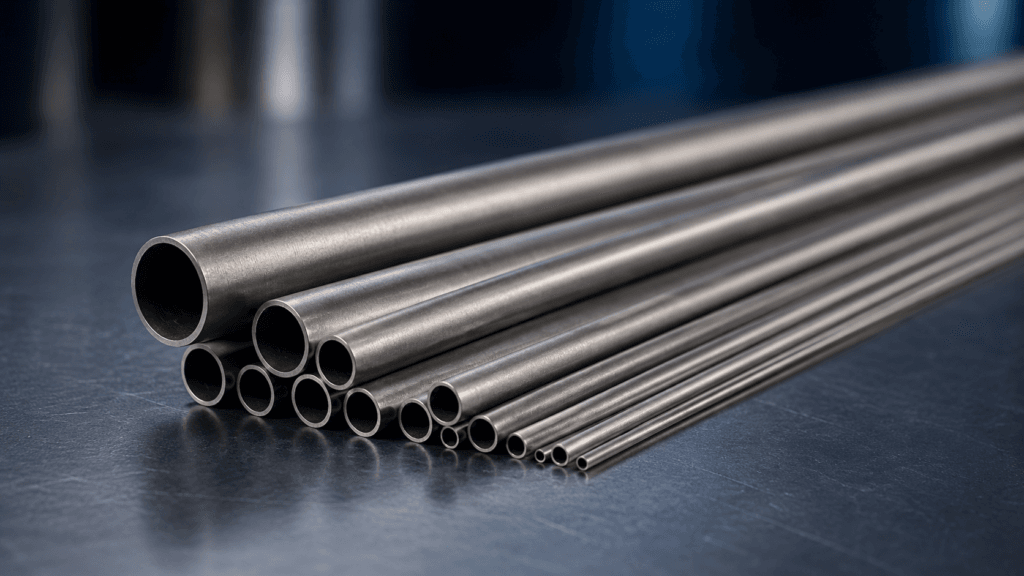
A tantalum capillary tube is a small-diameter tube made from tantalum metal. It is sometimes also called:
- tantalum micro tube
- Ta capillary tube
- tantalum small-diameter tube
- high-purity tantalum tubing
- precision tantalum tube
- custom tantalum capillary tubing
The word “capillary” usually refers to tubing with a very small internal diameter, although the exact size range depends on the application and manufacturing method. Buyers who need larger sizes or general-purpose tantalum tubing can review tantalum tube specifications, while projects requiring alternative refractory metals may also compare niobium tube, capillary and ring options.
For basic material reference, tantalum is identified by the symbol Ta and atomic number 73, as listed by NIST and PubChem.
- corrosion resistance
- high-temperature stability
- vacuum compatibility
- controlled material purity
- small-diameter precision
- custom geometry
- reliable material documentation
Why Tantalum Is Used for Capillary Tubes

Tantalum is a refractory metal known for its high melting point, chemical resistance and stability in demanding environments. These characteristics make it useful for applications where ordinary metals may not provide enough reliability.
For capillary tube applications, tantalum is not usually chosen because it is the cheapest option. It is selected when the project requires a material that may help reduce corrosion-related failure, contamination risk or premature replacement in demanding operating conditions.
For readers who want a neutral material background, the Royal Society of Chemistry provides a general overview of tantalum as an element, while USGS tracks niobium and tantalum mineral statistics and supply information.
1. Corrosion Resistance in Demanding Media
Tantalum is often considered for environments where corrosion resistance is a major concern. In many chemical processing and laboratory applications, tantalum may provide better resistance than common stainless steels or some other engineering metals.
This is one of the most important reasons engineers evaluate tantalum capillary tubing for precision fluid handling, chemical exposure or analytical equipment.
However, chemical compatibility should always be reviewed based on the actual medium, concentration, temperature and operating conditions.
2. High-Temperature Stability
As a refractory metal, tantalum is suitable for applications involving elevated temperatures. For small tube components used near heaters, furnaces, high-temperature reactors or thermal processing equipment, tantalum capillary tubes may provide better thermal stability than lower-melting-point materials.
In high-temperature and vacuum deposition systems, buyers may also need related components such as tantalum box heaters or other refractory metal evaporation sources. The final material choice should consider temperature, atmosphere, surrounding materials and whether the part will be used in vacuum, inert gas, oxidizing conditions or reactive media.
3. Vacuum and High-Purity Applications
Tantalum capillary tubes may be used in vacuum-related components, thin film processing systems and high-purity material environments. In these applications, material purity, surface condition, cleaning and packaging may be as important as tube size.
For projects involving deposition materials, related products such as tantalum sputtering targets and tantalum evaporation materials may also be relevant. If the application involves tantalum-based compounds rather than pure tantalum metal, buyers can also review tantalum compounds such as TaN, TaS₂ and TaSi₂.
A properly specified tantalum capillary tube can support projects requiring controlled contamination risk, stable material behavior and reliable documentation.
4. Precision Small-Diameter Customization
Many tantalum capillary tube applications are not standard catalog purchases. Buyers often require special OD, ID, wall thickness, short lengths, cut pieces or drawing-based components.
This makes supplier communication important. A good inquiry should include not only the material name, but also the required dimensions, tolerance, quantity, application and document requirements.
Typical Applications of Tantalum Capillary Tubes
Tantalum capillary tubes are commonly considered in applications where material reliability is more important than low material cost.
1. Chemical and Corrosion-Resistant Equipment
In chemical environments, small-diameter tubing may be used for fluid transfer, sampling, dosing, reaction systems or analytical equipment. If the fluid is corrosive or contamination-sensitive, tantalum may be evaluated as an alternative to stainless steel, titanium or nickel-based tubing.
A typical case is that engineers need a small tube that can withstand aggressive media while maintaining dimensional stability and reducing corrosion-related maintenance risk.
2. Laboratory and R&D Systems
University laboratories, research institutes and pilot-scale facilities may need small quantities of tantalum capillary tubing for experimental setups. These projects often require non-standard sizes, short lengths and documentation support rather than large-volume production.
For laboratory users, small-batch availability and flexible customization are often more important than standard industrial stock sizes.
3. Vacuum and High-Temperature Components
Tantalum capillary tubes may be used in vacuum equipment, furnace systems or thermal processing assemblies where small metal tubes must tolerate elevated temperatures and controlled atmospheres.
In these applications, users should confirm surface cleanliness, tube straightness, packaging and compatibility with the surrounding assembly.
4. Electronic Materials and Thin Film Research
In electronic materials research, thin film deposition, high-purity processing or specialty equipment design, tantalum tubing may be used where contamination control and material compatibility are important.
Although the capillary tube itself may be a small component, choosing the wrong material can create process uncertainty or increase replacement cost.
5. Custom Precision Components
Some buyers use tantalum capillary tubes as blanks for further processing, including cutting, welding, sealing, bending or assembly into special components. In this case, the buyer should clarify downstream processing requirements before placing an order.
Tantalum Capillary Tube vs. Other Metal Capillary Tubes
| Material | Main Advantages | Limitations | Typical Selection Scenario |
|---|---|---|---|
| Tantalum Capillary Tube | Excellent corrosion resistance in many demanding environments, high-temperature stability, high-purity material option | Higher cost, more specialized processing | Corrosive, high-temperature, vacuum or high-purity applications |
| Stainless Steel Capillary Tube | Cost-effective, widely available, easy to process | May not be suitable for highly corrosive or contamination-sensitive applications | General laboratory and industrial tubing |
| Titanium Capillary Tube | Lightweight, good general corrosion resistance | May not match tantalum in some aggressive media | Chemical, aerospace, medical-related or lightweight applications |
| Niobium Capillary Tube | Refractory metal option, useful in specialized research | Less commonly selected than tantalum for corrosion-driven applications | Vacuum, superconducting, research and electronic applications |
| Nickel Capillary Tube | Good thermal and electrical properties, useful in specific environments | Corrosion resistance depends on medium | Battery, electronic and industrial applications |
The choice should be based on actual operating conditions, not only on material reputation. For example, tantalum may be a strong candidate for corrosion-sensitive environments, but stainless steel may still be more practical for general-purpose low-risk tubing.
Key Specifications Buyers Should Confirm
When requesting a quotation for tantalum capillary tubes, incomplete specifications often lead to delays, wrong pricing or unsuitable material selection. Buyers should confirm the following points before sending an inquiry.
1. Outside Diameter
The outside diameter affects assembly fit, sealing, fixture design and compatibility with surrounding equipment. For capillary tubing, even small dimensional differences may affect installation.
Buyers should specify OD clearly, preferably with tolerance if the tube must fit into a precision assembly.
2. Inside Diameter
The inside diameter affects flow rate, pressure behavior, sampling accuracy and cleaning difficulty. For very small IDs, manufacturing feasibility and inspection method should be reviewed.
If the tube will be used for fluid transfer or analytical systems, ID is often more critical than OD.
3. Wall Thickness
Wall thickness affects strength, flexibility, pressure tolerance, heat transfer and processing difficulty. Thin-wall tantalum capillary tubes may require special manufacturing review.
If the wall is too thin, handling and shipment risks may increase. If the wall is too thick, the internal flow path may not meet the design requirement.
4. Length
Buyers should confirm whether they need long straight tubes, short cut pieces or precision cut-to-length components.
For short capillary tube pieces, end condition may also matter. Some projects may require clean-cut ends, deburring, polishing or special inspection.
5. Purity
Tantalum capillary tubes can be supplied in different purity levels depending on availability and application requirements.
For high-purity chemical, electronic, vacuum or research applications, buyers should specify the required purity and whether a certificate of analysis or material certificate is needed.
If the exact purity requirement is not yet fixed, it is better to describe the application so the supplier can help check suitable options.
6. Tolerance
Tolerance is especially important for capillary tubes used in precision assemblies. Loose tolerances may be acceptable for general research use, while tight tolerances may be required for equipment integration.
Buyers should not assume that all tantalum capillary tubes have the same tolerance. The tolerance depends on size, wall thickness, production route and inspection capability.
7. Surface Condition
Surface condition can affect cleaning, welding, sealing, vacuum performance and corrosion behavior. Available surface conditions may include as-drawn, cleaned, polished or customized finishes.
For vacuum and high-purity applications, surface cleanliness and packaging should be discussed before production.
8. Straightness and End Condition
Small-diameter tubes can be sensitive to bending and deformation. If the tube needs to be inserted into a device, aligned with a fixture or used in a precision assembly, straightness should be confirmed.
End condition may include saw-cut, precision cut, deburred or further processed according to drawing.
9. Documentation
Common documentation requirements may include:
- CoA
- material certificate
- inspection report
- dimensional inspection record
- SDS
- RoHS / REACH support where applicable
Documentation requirements should be stated before order confirmation, not after shipment.
Application-Based Selection Guide
| Application Condition | Recommended Focus | Why It Matters |
|---|---|---|
| Corrosive chemical exposure | Chemical compatibility, purity, surface condition | Helps reduce corrosion and contamination risk |
| High-temperature use | Operating temperature, atmosphere, wall thickness | Supports thermal stability and mechanical reliability |
| Vacuum equipment | Surface cleanliness, packaging, material certificate | Helps reduce contamination and outgassing concerns |
| Laboratory R&D | Small quantity, custom size, documentation | Supports flexible testing and prototype validation |
| Precision fluid transfer | ID, tolerance, end finish, cleanliness | Affects flow behavior and assembly fit |
| Custom equipment assembly | Drawing, OD, length, straightness, processing method | Reduces mismatch risk during installation |
| High-purity material processing | Purity, packaging, CoA, cleaning method | Supports contamination control and batch traceability |
Common Procurement Mistakes
Mistake 1: Only Asking for “Tantalum Capillary Tube” Without Dimensions
The term itself is not enough for quotation. A supplier needs OD, ID, wall thickness and length to evaluate availability and processing feasibility.
A better inquiry would be:
“We need tantalum capillary tubes with OD ___ mm, ID ___ mm, wall thickness ___ mm, length ___ mm, quantity ___ pcs, purity ___, for use in ___ application.”
Mistake 2: Ignoring the Operating Environment
Tantalum has strong performance in many demanding environments, but material suitability still depends on the actual medium, temperature, pressure and atmosphere.
For chemical applications, buyers should describe the chemical media and concentration. For furnace or vacuum applications, atmosphere and temperature should be provided.
Mistake 3: Forgetting Tolerance Requirements
If the tube is used in a precision assembly, tolerance matters. Without a tolerance requirement, the supplier may quote based on standard or achievable production tolerance, which may not match the final installation need.
Mistake 4: Not Confirming Surface and Cleaning Requirements
For high-purity and vacuum applications, surface condition may directly affect usability. Buyers should clarify whether standard cleaning is enough or whether special cleaning and packaging are needed.
Mistake 5: Requesting Unrealistic Thin-Wall or Micro-ID Sizes Without Review
Very small ID or very thin wall tantalum tubing may require technical feasibility confirmation. Buyers should provide drawings and allow the supplier to review possible alternatives if the requested size is difficult to produce.
Suggested Inquiry Information for Faster Quotation
To receive a more accurate quotation for tantalum capillary tubes, buyers can provide the following information:
| Required Information | Example |
|---|---|
| Material | Tantalum / Ta |
| Purity | 99.9%, 99.95%, 99.99%, or available upon request |
| Outside Diameter | ___ mm |
| Inside Diameter | ___ mm |
| Wall Thickness | ___ mm |
| Length | ___ mm or custom cut length |
| Quantity | ___ pcs / meters |
| Tolerance | Standard or drawing-based |
| Surface Condition | As-drawn, cleaned, polished or customized |
| Application | Chemical, vacuum, high-temperature, R&D, etc. |
| Operating Conditions | Temperature, atmosphere, chemical media, pressure |
| Documentation | CoA, material certificate, inspection report |
| Drawing | Recommended for custom sizes |
This information helps reduce back-and-forth communication and lowers the risk of specification mismatch.
Key Specifications Buyers Should Confirm
A simple dimensional drawing showing OD, ID, wall thickness and length can also help reduce specification ambiguity during procurement.
Handling and Usage Notes
Tantalum capillary tubes should be handled carefully, especially when the tube has a small diameter or thin wall. Improper handling may cause bending, deformation or end damage.
For high-purity, vacuum or chemical applications, users should avoid unnecessary surface contamination during storage and assembly. Clean packaging, sealed bags or protective tubes may be recommended depending on the application.
If the capillary tube will be welded, bent, flared, sealed or inserted into another component, the downstream processing method should be discussed before production. This helps avoid choosing a tube size or wall thickness that is difficult to process later.
You May Also Want to Know
1. What is a tantalum capillary tube used for?
Tantalum capillary tubes are used in applications requiring small-diameter tubing with corrosion resistance, high-temperature stability, vacuum compatibility or controlled purity. Typical uses include laboratory systems, chemical equipment, high-temperature assemblies, vacuum components and custom R&D devices.
2. Why choose tantalum instead of stainless steel capillary tubing?
Tantalum is usually selected when stainless steel may not provide sufficient corrosion resistance or when the application requires higher material stability in demanding environments. Stainless steel is more cost-effective for general use, but tantalum may be more suitable for corrosive, high-purity or high-temperature conditions.
3. Can tantalum capillary tubes be customized?
Yes. OD, ID, wall thickness, length, tolerance, surface finish and end condition can be customized according to project requirements. For non-standard sizes, drawings are recommended.
4. What purity is available for tantalum capillary tubing?
Purity options depend on material availability and processing requirements. Common high-purity requirements can be reviewed upon request. Buyers should specify the required purity and documentation needs before quotation.
5. Is tantalum capillary tube suitable for acid environments?
Tantalum has excellent corrosion resistance in many aggressive media, but suitability depends on the exact acid type, concentration, temperature and exposure conditions. Buyers should provide operating details for compatibility review.
6. Can tantalum capillary tubes be used in vacuum systems?
Tantalum is often considered for vacuum and high-temperature applications. For vacuum use, surface condition, cleaning, packaging and material documentation should be confirmed.
7. What information is needed to quote tantalum capillary tubes?
A complete inquiry should include OD, ID, wall thickness, length, quantity, purity, tolerance, surface finish, application, operating conditions and documentation requirements.
8. Are small quantities available for laboratory research?
Small-batch supply may be available depending on size, material stock and processing route. This is especially useful for university labs, R&D projects and prototype equipment.
9. What is the difference between tantalum tube and tantalum capillary tube?
A tantalum capillary tube usually refers to a very small-diameter tube with a controlled internal diameter. A regular tantalum tube may have a larger diameter and is often used for structural, furnace or chemical equipment components.
10. Can tantalum capillary tubes be cut to short lengths?
Yes, cut-to-length supply may be available. If the end condition matters, buyers should specify whether they need clean-cut ends, deburring, polishing or special inspection.
11. Is tantalum capillary tubing easy to bend?
Bending feasibility depends on tube size, wall thickness, bend radius and material condition. For thin-wall or small-diameter tubing, bending should be reviewed carefully to avoid deformation or cracking.
12. What documents can be provided with tantalum capillary tubes?
Depending on the order and requirements, documents such as CoA, material certificate, inspection report, SDS, RoHS or REACH support may be available upon request.
Related Tantalum and Refractory Metal Products
Recommended related pages for further product selection:
- Tantalum Tube
- Tantalum Materials
- Refractory Metal Tubes
- Niobium Tube, Capillary and Ring
- Tantalum Wire
- Tantalum Sputtering Targets
- Tantalum Evaporation Materials
- Tantalum Compounds
- Tantalum Box Heaters
To Sum Up
Choosing the right tantalum capillary tube depends on more than the material name. For most projects, the key is to match tube dimensions, purity, surface condition and documentation with the actual operating environment.
If your project requires custom OD, ID, wall thickness, short cut lengths or drawing-based parts, you can start from the tantalum tube page or compare other refractory metal tubes for material selection. For thin film, vacuum or electronic material projects, related tantalum sputtering targets and tantalum evaporation materials may also help engineers evaluate the broader material system.
For custom tantalum capillary tubes, share your required OD, ID, wall thickness, length, quantity, application conditions and documentation needs through the MetalsTek contact page. This helps confirm material availability, processing feasibility, lead time and quotation details before production.