
Some China-origin advanced materials require export-control screening before shipment. A match to an HS code can be a useful warning, but it does not by itself determine whether a product is controlled. The decisive question is whether the product's actual composition, purity, dimensions, particle size, geometry, performance and intended use meet a current control entry.
For buyers, this creates an important scheduling distinction: production lead time is not always the same as export lead time. If a license is required, technical classification and customer documentation should begin during the quotation and order-review stage, not after the material is finished.
Buyer takeaway: Send the complete specification, final end user, destination and intended application with the RFQ. If licensing may apply, start the End User and End Use Certificate early and plan the compliance timeline separately from manufacturing.
Why the HS code is only the starting point
China's Ministry of Commerce and General Administration of Customs publish an annual Catalogue for the Administration of Import and Export Licenses for Dual-Use Items and Technologies. The catalogue includes control codes, item descriptions, reference commodity names, customs commodity numbers and units.
MOFCOM describes the catalogue as a compliance reference that helps businesses identify relevant commodity names and customs codes. The catalogue also states that the controlling laws, regulations, control list and official announcements prevail if a catalogue description differs from the underlying control text. In practice, exporters must compare the proposed shipment with the complete technical description of the applicable entry.
The useful question is therefore not only "What is the HS code?" It is also:
Does this exact material, specification, form and intended use meet every condition of a current control entry?
This is why two products with the same broad material name may follow different export routes.
Materials buyers should screen early
The following table is a screening guide, not a list of products that automatically require a license.
| MetalsTek product area | Examples | Parameters that may affect classification |
|---|---|---|
| Tungsten and tungsten alloys | Plate, tube, crucible, W-Cu, W-Ni alloys, carbide | Composition, dimensions, geometry, weight, form and intended use |
| Molybdenum and metal powders | Mo powder, W powder, Ni powder and other fine powders | Purity, particle size, morphology, quantity and intended use |
| Tantalum products | Crucibles, liners and machined components | Purity, capacity, construction, coating and dimensions |
| Hafnium and zirconium | Metals, alloys, compounds and fabricated products | Element content, Hf-to-Zr ratio, thickness and product form |
| Graphite products | Blocks, crucibles and furnace components | Purity, density, strength, thermal properties and end use |
| Rare-earth materials | Metals, targets, oxides, alloys and powders | Exact element, composition, form, destination, end user and end use |
Country-specific measures, temporary controls and entity-based restrictions can also apply. A current check is necessary for each transaction, even when an earlier shipment of a similar product did not require the same route.
Tungsten shows why exact specifications matter
The 2026 catalogue contains multiple tungsten-related entries with different conditions.
For example, control code 1C117.c covers certain solid tungsten materials used for manufacturing missile components. Its criteria include composition and minimum machinable dimensions for cylinders, tubes or blocks. A separate entry, 1C226, covers tungsten, tungsten carbide and alloys containing more than 90% tungsten only when they have a defined hollow cylindrical geometry and weigh more than 20 kg. That entry also includes stated exclusions.
The catalogue separately lists ammonium paratungstate, tungsten oxide and certain tungsten carbide under 1C117.d. Other current announcements may impose additional controls on specified tungsten-related items.
These products should not be classified from the word "tungsten" alone:
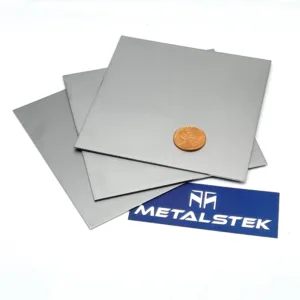
- a small tungsten plate;
- a fine tungsten powder;
- a W-Cu block;
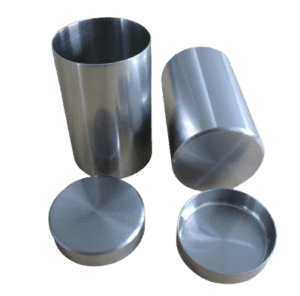
- a tungsten crucible;
- a large hollow tungsten component.
Composition, dimensions, form, weight and intended use allow the exporter to assess the relevant entries much earlier.
Fine metal powders need complete particle data
Powders are especially specification-sensitive. One catalogue entry, 1C117.b, covers molybdenum or molybdenum-alloy particles with at least 97% molybdenum and a particle size of 50 micrometres or below when used for the stated controlled application. Other powder entries use different combinations of purity, particle size, morphology or application.
An RFQ that says only "nickel powder, 99.9%, 1 kg" may not contain enough information for screening. A better request would include:
Nickel powder, 99.9%, D50 5 micrometres, spherical, 1 kg, for laboratory-scale additive-manufacturing research.
For powder orders, provide the measurement basis where available, not only a nominal size. Purity, particle-size distribution, morphology, quantity and final application may all be relevant.
Tantalum crucibles depend on capacity and construction
The catalogue includes specified tantalum crucibles defined by factors such as capacity, tantalum purity, lining and coating. A generic product description is not enough to determine whether an entry applies.
For a tantalum crucible, send:
- capacity or internal volume;
- tantalum grade and purity;
- full dimensions and a drawing;
- whether the crucible is solid, lined or coated;
- coating composition, if any;
- quantity and final application.
Hafnium zirconium and graphite use measurable thresholds
Hafnium and zirconium entries also rely on technical thresholds. The zirconium entry 1C234, for example, refers to the hafnium-to-zirconium ratio, zirconium content and product form, and contains an exclusion for zirconium foil with a thickness of 0.1 mm or less.
Graphite controls can depend on measurable properties rather than a trade name. Entries may refer to density, tensile fracture strain, coefficient of thermal expansion, purity and flexural strength. "High-purity graphite block" is therefore not a complete classification description; a technical datasheet and test values may be required.
How licensing changes the delivery schedule
For a standard shipment, the commercial process may be:
Order → Production → Inspection → Packing → Shipment
If dual-use licensing applies, a parallel compliance process is added:
Classification → Technical documents → End-user documents → Application → Regulatory review → Decision → Export
MOFCOM's current application guide states that, after an application is accepted, a licensing decision is generally made within 45 working days. That period is not the same as 45 working days from purchase order to shipment:
- If the authority requests supplementary materials, the review period starts when a complete and compliant submission is received.
- Time used for technical identification, expert consultation or an on-site check of the exporter or final user is not included in the 45-working-day period.
- Cases with a major impact on national security or national interests are not subject to the normal time limit when higher-level approval is required.
Document preparation, translation, consistency checks and corrections occur before or alongside the formal review. Buyers should therefore treat the licensing schedule as a separate workstream and allow contingency time.
What the overseas customer may need to prepare
The Chinese exporter handles the exporter-side application and regulatory filing. The overseas customer is commonly asked to support two parts of the application.
End User and End Use Certificate
The End User and End Use Certificate, often shortened to EUS, identifies the actual final user and describes how the material will be used. MOFCOM's guidance requires the end-use description to be specific and accurate, with consistent wording across the application documents.
Too vague:
Used for research.
More useful:
Used as a tungsten component in a high-temperature laboratory furnace for materials research.
Or:
Used as molybdenum powder for laboratory-scale powder-metallurgy experiments and subsequent materials characterization.
The current guidance says the original EUS must be signed and stamped by the final user. If the overseas organization does not use a corporate seal, that should be explained. The exporter provides and certifies the Chinese translation.
Do not wait until production is complete to arrange the original. If licensing is expected, the EUS should be prepared in parallel with manufacturing.
Importer and final-user background
The exporter may also request a concise introduction to the importer and final user. For a company, this can include:
- legal entity name and address;
- establishment date and business scope;
- company website;
- principal products or activities;
- approximate operating scale;
- the project and the material's role in it.
For a university or research institute, provide the institution, department or laboratory, research field, website and project background. The information should match the contract, EUS and application.
The avoidable risk is discovering the requirement too late
Consider two orders for the same license-controlled material.
Order A starts compliance after production. The material passes inspection, but only then does the buyer learn that an original signed EUS and end-user background are required. Internal approval, signature, stamping, translation, checking and submission begin while the finished material waits.
Order B starts compliance at the RFQ stage. The potential control issue is identified during quotation review. The buyer confirms the final user and application, technical classification starts early, and the EUS is prepared while the material is manufactured.
The regulatory review still takes time in Order B. The difference is that avoidable waiting between production completion and document preparation has been reduced.
RFQ checklist for faster screening
For China-origin advanced materials that may need additional review, send the following with the RFQ:
- Exact material and composition
- Purity or grade
- Dimensions and product form
- Particle size and morphology for powders
- Drawing for custom components
- Quantity and unit weight
- Final end user
- Destination country
- Specific final application
Example:
Tungsten tube, W at least 99.95%, OD 120 x ID 70 x L 80 mm, two pieces, for use in a high-temperature research furnace at the named company or university.
This gives the supplier enough information to review both manufacturability and the likely export route before the shipment becomes urgent.
How MetalsTek supports the review
For relevant China-origin materials, MetalsTek aims to identify potential requirements during RFQ and order review. Depending on the product, the initial review may include:
- comparing the exact specification with relevant control descriptions;
- identifying missing technical or end-user information;
- coordinating the EUS and supporting documents where required;
- including the expected export route in delivery planning.
An initial screening is not a formal legal determination and does not guarantee that a license will be granted or completed by a particular date. It does give the buyer a clearer view of the information and process likely to be required.
Planning an order? Send MetalsTek the specification, quantity, end user, destination and intended application.
Download the 2026 English reference
MetalsTek has prepared an unofficial English reference edition of the 2026 China Dual-Use Items Import and Export License Administration Catalogue for international customers and materials professionals.
Download the MetalsTek 2026 English Reference PDF
For legal interpretation and classification, always use the current original Chinese text and applicable official announcements.
Official references
- 2026 Catalogue for the Administration of Import and Export Licenses for Dual-Use Items and Technologies, Ministry of Commerce of the People's Republic of China and General Administration of Customs, effective January 1, 2026.
- Guide for Completing Dual-Use Item Export License Applications, MOFCOM Industry Security and Import and Export Control Bureau.
- Dual-Use Items and Technologies Import and Export Approval, MOFCOM government service portal.
This article provides general information for procurement planning. It is not legal advice, a formal classification decision or a guarantee of licensing outcome. Requirements can change, and the current official Chinese control text and transaction-specific facts must be reviewed.