
Introduction
Hafnium wire is a specialized form of hafnium metal processed into a fine, continuous filament, combining exceptional high-temperature stability, corrosion resistance, and unique nuclear properties. Although hafnium is far less common than metals such as tungsten or molybdenum, it occupies a critical niche in advanced engineering fields where extreme environments, precision control, and long-term reliability are required.
From control components in nuclear reactors to high-performance vacuum electronics, thin-film deposition systems, and aerospace research, hafnium wire is valued not for mass consumption, but for performance under conditions where most metals fail. This article provides a comprehensive overview of hafnium wire, covering its intrinsic material properties, manufacturing processes, technical considerations, and its role in modern scientific and industrial applications.
Fundamental Properties of Hafnium Wire
Atomic and Physical Characteristics
Hafnium (Hf, atomic number 72) belongs to the group of refractory transition metals. Its atomic structure and electron configuration contribute to a combination of mechanical robustness and chemical stability that remains effective at elevated temperatures.
Key physical properties include:
- Melting point: ~2233 °C
- Boiling point: ~4603 °C
- Density: ~13.3 g/cm³
- Crystal structure: Hexagonal close-packed (HCP) at room temperature
- Electrical resistivity: Higher than copper, lower than many ceramics
- Thermal conductivity: Moderate, stable across a wide temperature range
When processed into wire form, hafnium retains these intrinsic characteristics while gaining flexibility and usability in electrical, thermal, and structural applications.
Chemical Stability and Oxidation Behavior
One of the most distinctive traits of hafnium wire is its ability to form a dense, adherent oxide layer (HfO₂) when exposed to oxygen at elevated temperatures. This oxide layer:
- Acts as a protective barrier against further oxidation
- Exhibits excellent dielectric properties
- Remains stable under thermal cycling
As a result, hafnium wire shows strong resistance to corrosion in many aggressive chemical and high-temperature environments, especially in vacuum, inert gas, or controlled atmospheres.
Manufacturing of Hafnium Wire
Raw Material Preparation
High-quality hafnium wire begins with high-purity hafnium metal, typically refined through advanced separation processes due to its chemical similarity to zirconium. Achieving low zirconium content is especially important for applications sensitive to neutron absorption or electrical consistency.
Purity levels for hafnium wire commonly range from 99.5% to 99.99%, depending on the end use.
Melting and Primary Forming
The refined hafnium metal is usually melted using:
- Electron beam melting (EBM)
- Vacuum arc melting (VAM)
These methods minimize contamination and ensure chemical homogeneity. The molten hafnium is cast into billets or rods, which serve as the starting material for wire processing.
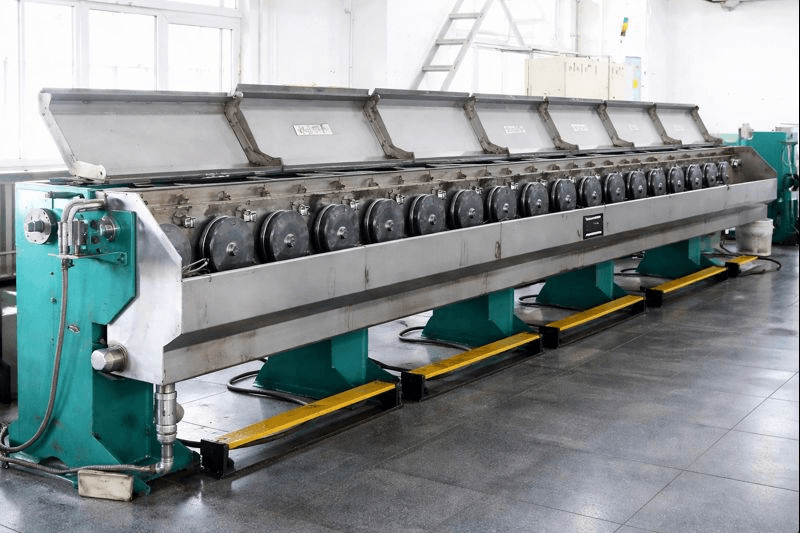
Wire Drawing and Annealing
Producing hafnium wire requires a carefully controlled sequence of mechanical deformation and thermal treatment:
- Hot working: Initial reduction of rod diameter at elevated temperature
- Cold drawing: Progressive diameter reduction through precision dies
- Intermediate annealing: Restores ductility and relieves internal stress
Because hafnium is relatively hard and reactive, wire drawing is typically performed in vacuum or inert atmospheres to prevent surface oxidation and micro-cracking.
Final Surface Treatment
Depending on application requirements, hafnium wire may undergo:
- Chemical cleaning
- Mechanical polishing
- Controlled oxidation or passivation
These steps ensure consistent surface quality, which is critical for electrical, vacuum, and thin-film uses.
Forms and Specifications of Hafnium Wire
Hafnium wire is available in a range of diameters and delivery conditions to meet diverse technical needs.
Typical Wire Dimensions
- Diameter range: ~0.05 mm to several millimeters
- Length: Continuous coils or straightened cut lengths
- Tolerances: Tight dimensional control for precision applications
Supply Conditions
- Annealed (soft) for ease of forming
- As-drawn (hard) for structural stability
- Vacuum-sealed packaging to prevent contamination
Customization is often required, particularly for research institutions or equipment manufacturers working with unique system designs.
Electrical and Thermal Performance
Electrical Characteristics
Hafnium wire is not a high-conductivity metal, but its electrical behavior is stable and predictable across a wide temperature range. This makes it useful in applications where:
- Resistance stability is more important than conductivity
- High-temperature operation is required
- Interaction with oxide layers is beneficial
In vacuum electronics, hafnium wire can serve as a functional element without rapid degradation.
Thermal Stability
Hafnium wire maintains structural integrity at temperatures where conventional metals soften or oxidize rapidly. Under vacuum or inert conditions, it can operate close to its melting point without significant creep or grain growth.
This thermal robustness supports its use in:
- High-temperature heaters
- Electron beam environments
- Research furnaces and experimental apparatus
Applications of Hafnium Wire
Nuclear Technology
Hafnium is well known for its extremely high neutron absorption cross-section. In wire form, it is used in specialized nuclear components where precise geometry and controlled material volume are required.
Typical uses include:
- Control and regulating elements
- Experimental reactor instrumentation
- Research-scale neutron absorption devices
The mechanical flexibility of wire allows for designs not possible with bulk components.
Thin-Film Deposition and Vacuum Systems
Hafnium wire plays an important role in advanced coating technologies, particularly where hafnium oxide or hafnium-based films are required.
Applications include:
- Electron beam evaporation sources
- Thermal evaporation coils
- Custom evaporation geometries
Hafnium-derived thin films are widely used in optics, semiconductor devices, and protective coatings due to their high refractive index, thermal stability, and chemical resistance.
Aerospace and High-Temperature Research
In aerospace research environments, materials are routinely exposed to extreme thermal gradients, vacuum, and reactive species. Hafnium wire is used in:
- Experimental heating elements
- Sensor leads for high-temperature testing
- Specialized fasteners or reinforcement elements
Its ability to withstand repeated thermal cycling without catastrophic failure is a major advantage.
Electronics and Scientific Instrumentation
Although not a mainstream electronic conductor, hafnium wire is valued in niche electronic and scientific applications where material compatibility and stability are critical.
Examples include:
- Leads in vacuum tubes
- High-temperature measurement devices
- Specialized electrodes in research equipment
The predictable interaction between hafnium and oxygen also enables controlled oxide formation for functional surfaces.
Advantages Compared with Other Refractory Metal Wires
Hafnium vs. Tungsten Wire
- Hafnium forms a stable oxide layer; tungsten oxidizes rapidly in air
- Hafnium has superior neutron absorption properties
- Tungsten offers higher melting point, but less chemical versatility
Hafnium vs. Molybdenum Wire
- Hafnium provides better corrosion resistance in certain environments
- Molybdenum is lighter and easier to process
- Hafnium excels where oxide-based functionality is required
Hafnium vs. Zirconium Wire
- Hafnium has much higher neutron absorption
- Zirconium is preferred for low neutron absorption applications
- Chemical similarity requires careful separation during refining
Handling, Storage, and Safety Considerations
Hafnium wire is generally stable and safe to handle, but best practices should be followed:
- Store in dry, clean environments
- Avoid prolonged exposure to air at high temperature
- Use gloves to prevent surface contamination
Fine hafnium wire should not be mechanically abraded unnecessarily, as freshly exposed surfaces may oxidize more rapidly.
Quality Control and Testing
To ensure reliable performance, hafnium wire is typically subject to:
- Chemical composition analysis
- Dimensional inspection
- Surface quality examination
- Mechanical testing (tensile strength, elongation)
For research and high-end industrial use, traceability and documentation are often essential.
Future Outlook for Hafnium Wire
As advanced technologies continue to push material limits, hafnium wire is expected to see increased demand in:
- Next-generation semiconductor processing
- Advanced optical coatings
- Nuclear research and fusion-related systems
- High-temperature experimental platforms
Its combination of refractory behavior, chemical stability, and functional oxide formation positions hafnium wire as a strategic material rather than a commodity metal.
Conclusion
Hafnium wire is a high-performance refractory material engineered for environments where extreme temperature, chemical stability, and precision matter more than cost or availability. Through controlled refining, advanced melting techniques, and precision wire drawing, hafnium can be transformed into a versatile form that supports nuclear technology, thin-film deposition, aerospace research, and scientific instrumentation.
For engineers and researchers seeking reliability in demanding conditions, hafnium wire offers a balance of mechanical strength, thermal endurance, and chemical functionality that few other metals can match. As material science continues to evolve, hafnium wire will remain a critical enabler for cutting-edge research and advanced industrial applications.