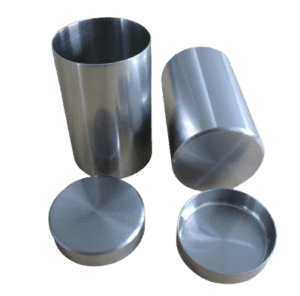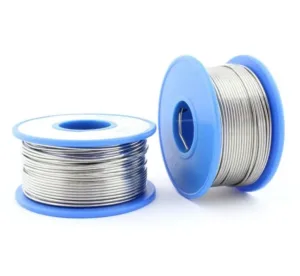
Indium powder is a specialized metal powder used in applications where low melting point, softness, alloying behavior, thermal conductivity, and compatibility with electronic materials are important. Compared with common engineering metal powders such as aluminum, copper, nickel, or iron, indium powder is used in more targeted fields, including low-temperature alloy research, solder and bonding materials, thermal interface materials, electronic pastes, compound synthesis, and advanced materials development.
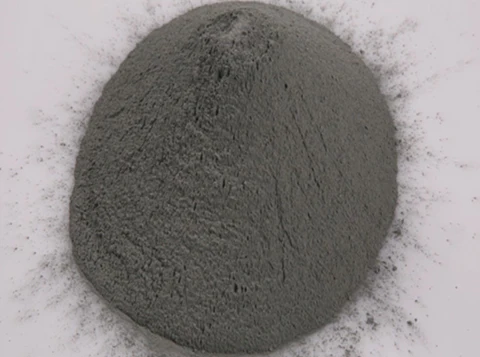
Choosing indium powder is not simply a matter of asking for “high purity indium powder.” Buyers and engineers need to define several practical parameters before ordering: purity, particle size, morphology, oxygen content, surface condition, packaging, storage, and intended processing method. A powder that works well for alloy melting may not be ideal for paste formulation. A fine powder may improve dispersion or reactivity, but it may also oxidize more easily. A coarse powder may be easier to handle, but it may not provide the uniformity needed for electronic or composite applications.
MetalsTek Engineering supplies indium powder and other high-purity metal powders for research, development, and industrial use. Custom particle size, purity, packaging, and documentation requirements can be reviewed based on the application.
This guide explains how to choose indium powder by focusing on three key factors: purity, particle size, and oxidation control.
1. Understanding Indium Powder
Indium is a soft, silvery-white metal known for its low melting point, ductility, and ability to form low-temperature alloys. Its melting point is around 156.6°C, which makes it useful in fusible alloys, low-temperature solders, thermal bonding materials, sealing applications, and electronic materials research.
In powder form, indium offers several advantages compared with ingot, shot, wire, or foil. It can be mixed more easily with other powders, dispersed into formulations, reacted more uniformly in synthesis processes, and used in research where controlled surface area is important. However, powder form also introduces challenges. Fine indium powder has a larger surface area, which can increase oxidation sensitivity and agglomeration. Because indium is soft and ductile, powder particles may also deform during handling, mixing, or packaging.
Typical applications of indium powder include:
- Low-melting-point alloy preparation
- Solder and bonding material research
- Thermal interface material development
- Electronic paste formulation
- Conductive or functional composite materials
- Indium-based compound synthesis
- Indium oxide and related oxide material research
- Laboratory-scale powder metallurgy studies
- Advanced materials R&D
For successful use, buyers should match the powder specification to the process rather than selecting only by price or nominal purity.
2. Why Purity Matters
Purity is usually the first specification buyers ask about. Common indium powder purity levels may include 99.9%, 99.99%, 99.995%, or higher, depending on production method, particle size, and availability. However, purity should not be treated as a simple label. For technical procurement, the more important question is: which impurities matter for your application?
For example, in electronic materials, solder research, or compound synthesis, trace levels of elements such as lead, cadmium, iron, copper, zinc, tin, or alkali metals may affect performance. In alloying applications, impurities can influence melting behavior, wetting, ductility, and mechanical response. In high-purity research, unwanted elements may affect reaction pathways, phase formation, conductivity, or optical properties.
A nominal purity such as 4N, meaning 99.99%, indicates the overall purity level, but it does not automatically define every impurity limit. For critical applications, buyers should request a Certificate of Analysis or impurity data listing relevant elements individually.
| Purity Level | Typical Use Case | Procurement Note |
|---|---|---|
| 99.9% | General alloying, low-temperature melting experiments, non-critical research | Suitable when trace impurities are not the main concern |
| 99.99% | Electronic materials, controlled alloy studies, research-grade applications | Common balance between purity, availability, and cost |
| 99.995% or higher | High-purity compounds, advanced electronic or optical material research | Confirm impurity limits and test method before ordering |
For many applications, 99.99% indium powder is a practical starting point. It offers a good balance of purity and availability. For highly sensitive applications, however, it is better to specify maximum acceptable impurity levels rather than simply requesting “the highest purity available.”
3. Purity Is Not the Same as Surface Cleanliness
One common misunderstanding is assuming that high-purity metal powder automatically has a clean or oxide-free surface. In reality, bulk purity and surface condition are different specifications.
Purity usually refers to the chemical composition of the metal. Surface condition may involve oxide, adsorbed moisture, adsorbed gases, or handling residues. This distinction is especially important for fine indium powder because smaller particles have higher surface area. Even if the metal itself is high purity, the powder surface may still contain a thin oxide layer.
For alloy melting, surface oxide can affect wetting and mixing. For paste formulation, it may affect dispersion, viscosity, bonding behavior, and electrical contact. For compound synthesis, it may influence reaction rate and phase formation. For thermal interface materials, it can affect contact behavior and reliability.
Before ordering, buyers should clarify:
- Is the purity based on metal basis or total powder basis?
- Are only metallic impurities tested, or is oxygen also tested?
- Is the powder packed under vacuum, inert gas, or standard sealed packaging?
- Is the powder freshly prepared or from existing stock?
- Is any sieving, classification, or surface treatment available?
- Is the application sensitive to oxygen or moisture?
For general alloying, a small amount of surface oxidation may be acceptable. For electronic materials, solder research, or sensitive synthesis, oxygen content and packaging should be discussed before purchase.
4. Choosing the Right Particle Size
Particle size strongly affects indium powder performance. It influences flowability, oxidation tendency, melting behavior, mixing uniformity, packing density, reactivity, and handling safety. There is no universal “best” particle size. The correct choice depends on how the powder will be used.
Fine Indium Powder
Fine indium powder provides higher surface area and better potential dispersion. It may be suitable for conductive pastes, compound synthesis, composite materials, and research where uniform reaction or mixing is important. However, fine powder is more sensitive to oxidation, moisture exposure, agglomeration, and dusting. It may require better packaging and more careful handling.
Medium Particle Size Powder
Medium-size indium powder is often a practical compromise. It is easier to handle than very fine powder while still offering better mixing than large granules or shot. It can be used for laboratory alloying, thermal interface research, low-temperature bonding materials, and general R&D work.
Coarse Powder or Granular Form
Coarser indium powder is usually easier to weigh, transfer, and melt. It is less prone to airborne dust and may oxidize more slowly than fine powder because of lower surface area. It can be suitable for low-melting alloy preparation, general melting experiments, and applications where rapid dispersion is not required.
| Application | Suggested Particle Size Direction | Why It Matters |
|---|---|---|
| Low-melting alloy preparation | Medium to coarse powder | Easier handling and melting |
| Solder and bonding research | Fine to medium powder | Improves mixing and contact area |
| Thermal interface materials | Controlled fine or medium powder | Balances packing, softness, and oxidation control |
| Electronic paste formulation | Fine to medium powder | Better dispersion and formulation control |
| Compound synthesis | Fine or controlled micron powder | Improves reaction uniformity |
| General laboratory use | Medium powder | Practical handling and storage |
| Powder blending | Similar size range to other powders | Reduces segregation |
When requesting a quotation, avoid vague terms such as “fine powder” or “small particle size.” A measurable specification is much better. Examples include −100 mesh, −325 mesh, 1–5 μm, 5–20 μm, or another defined particle size range.
5. Particle Size Distribution Matters
Particle size is not only about one number. A powder described as “10 μm” may have a narrow or broad distribution. A broad distribution may include both very fine particles and larger particles. This can affect flow, packing, melting, dispersion, and oxidation behavior.
For technical applications, particle size distribution data may be more useful than a single average value. Common terms include D10, D50, and D90.
| Term | Meaning | Why It Matters |
|---|---|---|
| D10 | 10% of particles are smaller than this size | Indicates fine-particle fraction |
| D50 | Median particle size | Common reference point |
| D90 | 90% of particles are smaller than this size | Indicates large-particle tail |
| Mesh size | Sieve-based classification | Useful for coarser powders |
| Micron range | Particle size in μm | Useful for fine powder selection |
For non-critical melting or alloying, a standard mesh range may be enough. For paste, composite, or electronic materials research, a particle size distribution report may help avoid formulation problems.
6. Morphology: Spherical vs Irregular Indium Powder
Indium powder morphology can be irregular, granular, flake-like, or more spherical depending on the production method. Morphology influences flowability, packing behavior, surface area, and mixing response.
Irregular Indium Powder
Irregular powder is common and suitable for many alloying, laboratory, and general blending applications. It may not flow as well as spherical powder, but it can be practical for many research and industrial processes.
Spherical Indium Powder
Spherical powder usually offers better flowability and more predictable packing. It may be preferred for controlled dispensing, paste formulation, powder feeding, or applications where flow and uniform packing matter. However, spherical indium powder may not be available in every particle size, purity, or quantity.
Flake or Flattened Powder
Because indium is soft, powder particles may deform during processing. Flake-like or flattened particles can provide higher contact area, but they may also have higher oxidation sensitivity. For paste and composite work, this may be useful or problematic depending on the formulation.
When morphology matters, buyers should state it clearly in the RFQ. If morphology is not critical, it is acceptable to state that irregular powder is acceptable.
7. Oxidation Control
Oxidation is one of the most important issues when working with indium powder. Indium can form surface oxide when exposed to air. The finer the powder, the more significant the surface area and the higher the risk of oxidation effects.
For many applications, some surface oxide is expected and manageable. However, for sensitive soldering, bonding, paste, compound synthesis, or electronic materials applications, oxidation control should be part of the purchasing discussion.
Factors that increase oxidation risk include:
- Fine particle size
- High surface area
- Long storage time
- Exposure to air after opening
- Moisture exposure
- Repeated opening and closing of the container
- Warm or humid storage conditions
- Poor sealing after use
To reduce oxidation risk, indium powder should be stored in tightly sealed containers under cool and dry conditions. For sensitive applications, vacuum-sealed packaging or inert gas packaging may be requested. Once opened, the powder should be used as soon as practical or resealed immediately.
| Packaging Method | Suitable For | Benefit |
|---|---|---|
| Sealed bottle | General laboratory use | Easy handling and storage |
| Vacuum-sealed packaging | Oxidation-sensitive powder | Reduces air exposure before opening |
| Inert gas packaging | High-purity or fine powder | Better oxidation control |
| Small divided packages | Repeated small-batch use | Reduces repeated exposure of full batch |
| Export-safe outer packaging | International shipping | Protects containers during transport |
For fine powder, divided packaging can be useful. Instead of opening one large container many times, users can open only the amount needed for each experiment or production run.
8. Oxygen Content and Surface Oxide
If oxidation control is important, buyers should ask whether oxygen content can be tested or reported. Oxygen is not always included in a standard metal impurity analysis. A Certificate of Analysis may list metallic impurities but not oxygen.
Possible oxidation-related requirements include:
- Maximum oxygen content
- Oxygen report required
- Vacuum packaging
- Inert gas packaging
- Fresh production requirement
- Small sealed sub-packages
- Limited storage period before shipment
- Surface oxide information where available
It is important to be realistic. Fine metal powders can have unavoidable surface oxide. A request for “oxide-free indium powder” is usually not practical unless the supplier and buyer define a specific test method and acceptance criterion. A better approach is to define oxygen content, packaging method, and storage requirements.
9. Flowability, Agglomeration, and Handling
Indium is soft and ductile, so indium powder does not behave like harder ceramic powders or gas-atomized stainless steel powders. Fine indium powder may agglomerate, compact, smear, or deform under pressure. This can affect weighing, mixing, dispensing, and formulation consistency.
Agglomeration may be acceptable for some melting applications but problematic for paste, composite, or powder-feeding processes. Mechanical mixing can break some agglomerates, but excessive force may deform particles.
When flowability matters, define:
- Particle size range
- Morphology preference
- Whether spherical powder is required
- Apparent density or tap density, if relevant
- Whether mild agglomeration is acceptable
- Packaging size and handling method
- Intended feeding, blending, or dispensing process
For automated feeding or precise formulation, it is best to test a sample before scaling up.
10. Matching Indium Powder to the Application
Low-Melting Alloy Research
For low-melting alloys, medium or coarse indium powder is often practical. It is easier to handle, weigh, and melt than very fine powder. Purity depends on the alloy system and final application. If the alloy is used in electronics, sealing, or precision devices, impurity limits should be defined.
Important specifications include purity, particle size, alloying elements, oxygen control, and packaging.
Solder and Bonding Materials
Indium powder may be used in low-temperature solder, bonding, and joining research. Surface oxide is especially important because it can affect wetting and bonding behavior. Flux system, atmosphere, particle size, and substrate compatibility should be considered together.
For solder applications, buyers should specify whether the powder will be used in paste, preform development, alloy melting, or thermal bonding research.
Thermal Interface Materials
Indium is valued for softness and thermal behavior. In thermal interface material development, particle size and morphology can affect packing, contact behavior, and mechanical response. Fine powder may improve contact area but can be more oxidation-sensitive. A controlled particle size distribution is usually more useful than an undefined “fine powder.”
Electronic Pastes and Conductive Formulations
Electronic paste development may require controlled particle size, morphology, purity, and oxygen content. Dispersion behavior, binder compatibility, viscosity, curing temperature, and bonding performance should be evaluated through trials. Spherical or controlled morphology powder may be preferred if flow and packing are important.
Compound Synthesis
Indium powder may be used in the synthesis of indium-based compounds, oxides, sulfides, phosphides, or other advanced materials. Fine powder can improve reaction uniformity, but oxygen content and surface oxide must be considered. For sensitive reactions, purity and packaging should be clearly specified.
11. What to Include in an RFQ
A clear RFQ helps avoid delays and mismatched material. Instead of asking only for “indium powder,” buyers should provide the technical requirements that affect production, testing, and packaging.
| RFQ Item | Example |
|---|---|
| Material | Indium powder |
| Purity | 99.99% or specified impurity limits |
| Particle size | −325 mesh, 1–5 μm, 5–20 μm, or custom range |
| Morphology | Irregular, spherical, flake-like, or no preference |
| Quantity | 100 g, 500 g, 1 kg, or production quantity |
| Oxygen requirement | Standard, report required, or maximum limit |
| Packaging | Sealed bottle, vacuum-sealed, inert gas, small divided packs |
| Application | Alloying, solder, paste, thermal interface, compound synthesis |
| Documentation | CoA, particle size report, oxygen report, SEM image if available |
| Delivery location | Country, city, postal code |
Example RFQ
Indium powder, 99.99% purity, particle size 5–20 μm, irregular powder acceptable, quantity 1 kg. Application: low-temperature solder and thermal interface material research. Please quote available particle size range, packaging method, CoA, lead time, and shipping to the United States.
12. Common Mistakes When Buying Indium Powder
A common mistake is choosing the finest available powder without considering oxidation and handling. Fine powder is not always better. It may be useful for dispersion and reaction uniformity, but it can also be harder to store, transfer, and use.
Another mistake is requesting high purity without defining impurity limits. A nominal purity grade may not identify the specific contaminants that matter to the process. For example, electronic materials may be sensitive to different impurities than alloy melting or solder development.
A third mistake is ignoring packaging. Even suitable powder can become difficult to use if it is repeatedly exposed to air and moisture.
Avoid these common issues:
- Requesting “high purity” without defining impurity requirements
- Requesting “fine powder” without a particle size range
- Ignoring oxygen content or surface oxide
- Using one large package for repeated small-batch experiments
- Assuming powder behavior will match ingot, shot, wire, or foil
- Assuming high bulk purity means oxide-free surface
- Forgetting to state the application
- Ignoring morphology and flowability requirements
Good procurement starts with a clear process description. The supplier can then recommend a practical powder grade, particle size, morphology, and packaging method.
13. Storage and Handling Recommendations
Indium powder should be stored in a dry, sealed container and protected from unnecessary exposure to air and moisture. Fine powder should be handled more carefully than coarse powder because of higher surface area and greater oxidation sensitivity.
Recommended handling practices include:
- Keep the container tightly sealed when not in use
- Store in a cool, dry environment
- Avoid repeated opening of large packages
- Use divided packaging for small-batch experiments
- Avoid unnecessary mechanical compression
- Use clean tools to avoid contamination
- Handle fine powder in a controlled area
- Follow appropriate workplace safety procedures for metal powders
For oxidation-sensitive projects, nitrogen or argon handling may be considered. For general alloying or melting applications, standard sealed packaging may be sufficient, depending on process tolerance.
Conclusion
Choosing indium powder requires balancing purity, particle size, morphology, oxidation control, packaging, and application requirements. Fine powder can provide better surface area, dispersion, and reactivity, but it is more sensitive to oxidation and agglomeration. Coarser powder is easier to handle and may be more practical for alloy preparation, melting, and general laboratory use. High purity is valuable, but buyers should still define the impurity elements that matter most to their process.
For low-temperature alloy research, solder development, electronic pastes, thermal interface materials, compound synthesis, or advanced materials testing, the best starting point is a clear RFQ. Include the required purity, particle size range, morphology preference, quantity, oxygen requirement, packaging method, documentation needs, and intended application.
MetalsTek Engineering can review indium powder requirements for laboratory-scale and industrial projects, including custom specifications where available.
For detailed specifications, particle size availability, packaging options, and quotation, please contact sales@metalstek.com.