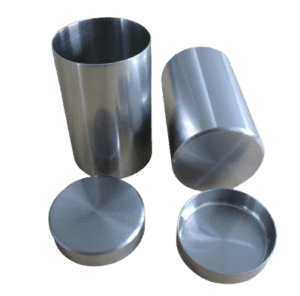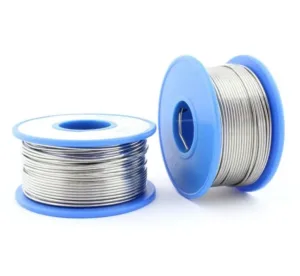
Zirconium foil and titanium foil are both corrosion-resistant reactive-metal products used in demanding industrial, scientific, and high-temperature applications. At first glance, they may appear similar: both develop protective oxide films, offer good chemical stability, and can be supplied as thin sheets, strips, or precision-cut components.
However, zirconium and titanium are not interchangeable.
Titanium foil is generally selected when low weight, strength-to-weight performance, broad availability, and resistance to chlorides or seawater are important. Zirconium foil is more specialized and is often considered for severe chemical environments, high-purity research, vacuum systems, electrochemical equipment, and applications where its distinctive chemical behavior justifies the higher material cost.
This guide compares zirconium foil and titanium foil from an engineering and procurement perspective.
Quick Comparison
| Property | Zirconium Foil | Titanium Foil |
|---|---|---|
| Typical commercial grade | Zirconium 702 / high-purity zirconium | Grade 1, Grade 2, Grade 5, Grade 7 |
| Approximate density | 6.5 g/cm³ | 4.5 g/cm³ |
| Relative weight | Heavier | Lighter |
| Corrosion behavior | Particularly valuable in selected severe chemical environments | Excellent in oxidizing media, chlorides, seawater, and many industrial fluids |
| Strength-to-weight ratio | Moderate | Excellent |
| Formability | Good in suitable annealed conditions | Excellent for commercially pure grades, especially Grade 1 |
| Material availability | More specialized | Widely available |
| Typical cost | Higher | Usually lower |
| Common standards | ASTM B551 for non-nuclear zirconium sheet, strip, and plate | ASTM B265 for titanium and titanium-alloy strip, sheet, and plate |
| Typical uses | Chemical processing, laboratory components, vacuum systems, electrochemical research | Aerospace, marine, chemical equipment, medical components, heat exchangers |
What Is Zirconium Foil?
Zirconium foil is a thin, flat form of zirconium metal supplied as cut sheets, narrow strips, coils, discs, or drawing-specific components. Commercially pure Zirconium 702 is one of the most common industrial grades, while higher-purity material may be requested for laboratory, vacuum, deposition, or contamination-sensitive projects.
Zirconium readily forms a stable oxide layer when exposed to oxygen. This surface film helps protect the underlying metal in many corrosive environments. Its value is not based on one universal claim of superior corrosion resistance, but on its ability to perform particularly well in selected chemical systems where conventional stainless steels, nickel alloys, or even titanium may face limitations.
Common zirconium foil specifications include:
- Zirconium 702 or customer-defined purity
- Annealed or application-specific temper
- Custom thickness, width, and length
- Cut sheets, strips, discs, rings, and shaped parts
- Pickled, cleaned, rolled, or customer-specified surface condition
- Dimensional inspection and material certification
For non-nuclear industrial sheet, strip, and plate, ASTM B551 is a commonly referenced specification.
What Is Titanium Foil?
Titanium foil is a thin form of titanium or titanium alloy valued for its low density, corrosion resistance, mechanical performance, and broad range of commercially available grades.
Commercially pure titanium grades are widely used when formability and corrosion resistance are the main requirements. Titanium Grade 1 offers high ductility and formability, while Grade 2 provides a widely used balance of strength, corrosion resistance, fabrication performance, and cost. Alloyed grades such as Grade 5 provide much higher mechanical strength but are generally less formable than commercially pure titanium foil.
Common titanium foil grades include:
- Grade 1 for maximum formability
- Grade 2 for general industrial and chemical applications
- Grade 5 for higher strength
- Grade 7 for improved performance in selected reducing or crevice-corrosion conditions
- High-purity titanium for laboratory and specialized applications
Titanium sheet, strip, and plate products are commonly specified under ASTM B265.
Density and Weight
One of the clearest differences between zirconium foil and titanium foil is density.
Zirconium has a density of approximately 6.5 g/cm³, while titanium is approximately 4.5 g/cm³. For components with the same length, width, and thickness, zirconium will therefore be substantially heavier.
This difference matters in:
- Aerospace assemblies
- Portable instruments
- Moving components
- Weight-sensitive supports
- Multilayer structures
- Shipping and installation calculations
Titanium is usually the stronger choice when lightweight construction is a primary design objective. Zirconium is more likely to be selected when chemical compatibility or application-specific functional behavior is more important than minimum mass.
Corrosion Resistance
Both zirconium and titanium depend on protective oxide films for corrosion resistance, but they perform differently across chemical environments.
Zirconium foil
Zirconium is often evaluated for severe chemical-processing conditions involving selected acids, alkalis, salts, and high-temperature process streams. It can be particularly valuable where localized corrosion, contamination, or long service life is a concern.
However, zirconium should not be described as resistant to every acid or chemical. Actual performance depends on:
- Chemical concentration
- Temperature
- Pressure
- Dissolved oxygen
- Contaminants
- Flow velocity
- Crevices and joint geometry
- Surface condition
Compatibility should always be confirmed against the real process medium.
Titanium foil
Titanium performs especially well in oxidizing environments and chloride-containing solutions. This is one reason titanium is widely used in seawater equipment, chlor-alkali systems, chemical-processing components, heat exchangers, and marine structures.
Titanium may be vulnerable in some strongly reducing environments or poorly aerated crevices unless an appropriate alloy grade is selected. Grade 7 and other modified titanium grades may be considered when enhanced corrosion performance is needed.
Practical selection rule
Choose zirconium foil when the specified chemical environment has demonstrated zirconium compatibility and the service conditions justify a specialized material.
Choose titanium foil when broad corrosion resistance, chloride resistance, seawater performance, lower density, and established industrial availability are the main priorities.
Mechanical Strength and Formability
Titanium offers a broader range of commercially established strength levels.
Commercially pure titanium grades provide useful ductility and formability, while titanium alloys such as Grade 5 deliver substantially higher strength. This makes titanium suitable for both thin formed parts and load-bearing structures.
Zirconium 702 also offers useful ductility and can be fabricated into thin components, but zirconium foil is generally selected for corrosion behavior or specialized process requirements rather than for maximizing strength-to-weight performance.
For precision foil components, the following factors may be more important than nominal tensile strength alone:
- Minimum bend radius
- Edge quality
- Springback
- Flatness
- Rolling direction
- Grain structure
- Temper
- Thickness tolerance
- Surface defects
A prototype forming trial is recommended for parts with sharp bends, deep draws, narrow ligaments, or closely spaced holes.
Thermal Performance
Zirconium and titanium both have relatively high melting points compared with many common engineering metals, but maximum service temperature cannot be selected from melting point alone.
At elevated temperatures, both metals can react more strongly with oxygen, nitrogen, hydrogen, and other atmospheric species. Oxidation, embrittlement, contamination, mechanical load, and exposure duration may determine the actual operating limit.
For high-temperature foil applications, buyers should specify:
- Maximum continuous temperature
- Peak temperature
- Heating duration
- Vacuum level
- Inert-gas type and purity
- Mechanical stress
- Thermal cycling
- Acceptable oxidation or discoloration
Titanium is widely used in elevated-temperature engineering applications, but the selected grade and atmosphere must be considered. Zirconium may be suitable for specialized high-temperature, vacuum, getter, or process applications, subject to detailed engineering review.
Electrical and Vacuum Applications
Zirconium has a strong affinity for gases at elevated temperatures, which makes zirconium and zirconium-containing materials relevant to getter and vacuum technologies. Thin zirconium foil may also be evaluated for experimental electrodes, reactive interfaces, gas-handling studies, and high-vacuum components.
Titanium is also used in vacuum systems, electrodes, thin-film research, and getter-related applications. Its lower density, easier availability, and wide grade selection can make it more practical for general-purpose components.
For vacuum or ultra-high-vacuum use, material selection should consider:
- Bulk purity
- Surface contamination
- Cleaning method
- Outgassing requirements
- Oxide condition
- Hydrogen content
- Packaging
- Handling after cleaning
A high nominal purity alone does not guarantee suitability for a contamination-sensitive vacuum system.
Typical Applications
Zirconium foil applications
Zirconium foil may be used for:
- Chemical-processing components
- Corrosion-resistant liners and barriers
- Electrochemical research
- Specialized electrodes
- Vacuum and getter-related studies
- High-purity laboratory components
- Heat-resistant shields and separators
- Precision-cut discs, rings, and gaskets
- Research involving reactive metals
- Custom components for severe process environments
Titanium foil applications
Titanium foil is commonly considered for:
- Aerospace shims and lightweight components
- Marine and seawater systems
- Chemical-processing equipment
- Heat-exchanger components
- Medical and biomedical devices
- Battery and electrochemical research
- Flexible corrosion-resistant barriers
- Precision springs and formed components
- Laboratory electrodes
- Decorative and architectural applications
Zirconium Foil vs. Titanium Foil by Application
| Application Requirement | Preferred Starting Point | Reason |
|---|---|---|
| Minimum component weight | Titanium foil | Lower density and strong strength-to-weight performance |
| Seawater or chloride service | Titanium foil | Extensive industrial use in chloride-containing environments |
| Severe process chemistry with proven zirconium compatibility | Zirconium foil | Specialized corrosion performance may justify the higher cost |
| Complex forming and deep drawing | Commercially pure titanium foil | Grade 1 and Grade 2 offer good fabrication characteristics |
| High-strength thin component | Titanium alloy foil | Grades such as Grade 5 provide greater mechanical strength |
| Getter or reactive-metal research | Zirconium foil | Strong affinity for gases at elevated temperature |
| General laboratory metal foil | Titanium foil | More widely available and usually more economical |
| High-purity specialty experiment | Project-dependent | Purity, contamination limits, and surface preparation may matter more than base-metal name |
| Chemical liner or separator | Project-dependent | Actual fluid, temperature, stress, and joining method must be reviewed |
Manufacturing and Processing Considerations
Both materials may be supplied by rolling thicker stock to the required gauge, followed by annealing, surface treatment, slitting, cutting, and inspection.
Thin reactive-metal foil requires careful processing because defects that are insignificant in plate can become critical in thin sections. Buyers should pay attention to:
- Thickness variation
- Edge burrs
- Scratches
- Pinholes
- Residual curvature
- Coil set
- Surface contamination
- Handling marks
- Packaging damage
Cutting
Laser cutting, waterjet cutting, stamping, shearing, and precision machining may be considered depending on thickness, tolerance, edge requirements, and contamination restrictions.
Heat-affected edges may not be acceptable for every application. For laboratory electrodes or high-purity components, the buyer should state whether mechanically cut, etched, laser-cut, or specially cleaned edges are required.
Forming
Annealed foil is generally easier to form than harder tempers. Bend direction relative to the rolling direction can influence cracking risk and springback.
Joining
Titanium and zirconium are reactive during welding. Weld zones must be protected from atmospheric contamination using suitable inert shielding or controlled environments. Poor shielding can cause discoloration, embrittlement, and reduced corrosion performance.
Joining requirements should be discussed before material purchase because surface condition, edge preparation, and filler-metal selection may affect the final specification.
Cost and Availability
Titanium foil is generally easier to source in a broad range of grades, thicknesses, and commercial quantities. It is typically more economical than zirconium foil and benefits from a larger global supply chain.
Zirconium foil is a more specialized material. Price may be influenced by:
- Grade and purity
- Thickness
- Width
- Order quantity
- Rolling and annealing requirements
- Flatness and thickness tolerances
- Surface finish
- Inspection requirements
- Custom cutting
- Certification
- Special packaging
An extremely thin zirconium foil with tight tolerances can cost substantially more per kilogram than standard sheet because the processing difficulty and yield loss become major cost factors.
How to Specify Zirconium or Titanium Foil
A complete request for quotation should include:
| RFQ Item | Information to Provide |
|---|---|
| Material | Zirconium or titanium |
| Grade | Zr 702, high-purity Zr, Ti Grade 1, Ti Grade 2, Ti Grade 5, or another grade |
| Purity | Minimum required purity or maximum impurity limits |
| Thickness | Nominal thickness and tolerance |
| Width and length | Sheet size, strip width, coil dimensions, or custom geometry |
| Temper | Annealed, cold-worked, or drawing-specific condition |
| Surface | As-rolled, pickled, cleaned, polished, or application-specific |
| Edge | Slit, sheared, deburred, rounded, or precision-cut |
| Flatness | State the requirement if critical |
| Quantity | Number of sheets, total area, length, or weight |
| Documentation | CoA, dimensional report, inspection certificate, or traceability requirements |
| Application | Chemical medium, temperature, vacuum level, or forming process |
Providing the application is especially important for corrosion-sensitive projects. A supplier cannot responsibly recommend zirconium or titanium based only on the words “corrosive environment.”
Which Foil Should You Choose?
Choose zirconium foil when:
- The process chemistry has been evaluated and favors zirconium
- Corrosion performance is more important than material cost
- A high-purity or specialized reactive-metal component is required
- The project involves getter, vacuum, electrochemical, or severe-process research
- The additional weight is acceptable
Choose titanium foil when:
- Low weight is important
- The component will be used in seawater or chloride-containing service
- A strong and widely available corrosion-resistant foil is needed
- The part requires substantial forming
- Multiple grades and strength levels are useful
- Cost and lead time are important considerations
Neither material should be selected from a generic comparison table alone. Chemical compatibility, temperature, stress, fabrication, joining, contamination limits, and expected service life must all be reviewed.
Conclusion
Zirconium foil and titanium foil both offer valuable corrosion resistance, but they serve different engineering priorities.
Titanium foil is the more versatile and widely available option for lightweight structures, marine systems, chemical equipment, formed components, and general industrial use. Zirconium foil is a more specialized solution for selected severe chemical environments, high-purity research, vacuum applications, electrochemical projects, and processes where zirconium’s specific behavior provides a meaningful advantage.
For a reliable quotation, provide the required grade, purity, thickness, dimensions, temper, surface condition, tolerance, quantity, and intended application.
For zirconium foil, titanium foil, custom-cut components, and detailed material specifications, please contact us at sales@metalstek.com.