
Introduction
Nickel Iron alloys—often referred to as NiFe or Permalloy—have long been recognized as foundational materials in soft magnetics. As electronic devices continue to shrink in size while demanding higher precision and performance, the importance of magnetic thin films has grown significantly. From magnetic sensors embedded in automotive systems to advanced memory architectures, NiFe thin films are enabling technologies behind many modern innovations.
At the heart of these thin films lies a critical upstream material: Nickel Iron sputtering targets. These targets are not simply raw materials; they are engineered to deliver controlled magnetic properties, uniform film deposition, and high reproducibility across industrial processes. Understanding how NiFe sputtering targets function—and why they are preferred—provides valuable insight into the broader ecosystem of magnetic thin film technologies.
Why Nickel Iron Alloys Are Ideal for Magnetic Thin Films


4
The appeal of Nickel Iron alloys in thin film applications stems from a unique combination of magnetic and physical properties. Unlike hard magnetic materials, NiFe alloys are classified as soft magnetic materials, meaning they can be easily magnetized and demagnetized with minimal energy loss.
One of the most important parameters is magnetic permeability, which describes how readily a material responds to an external magnetic field. NiFe alloys, particularly those with approximately 80% nickel content, exhibit extremely high permeability, making them highly sensitive to weak magnetic signals. This property is essential in applications such as magnetic field sensing and signal amplification.
Another key factor is low coercivity, which ensures that the material does not retain significant magnetization after the external field is removed. This allows for rapid and repeatable magnetic switching—an important requirement in dynamic electronic systems.
In addition, NiFe alloys demonstrate:
- Low magnetostriction, reducing noise and distortion in sensitive devices
- Good thermal stability, maintaining performance across a range of operating conditions
- Compatibility with semiconductor processes, enabling integration into microfabricated devices
These intrinsic advantages make Nickel Iron alloys a preferred choice for thin film deposition, especially when precise magnetic control is required.
The Role of Sputtering Targets in Thin Film Deposition


4
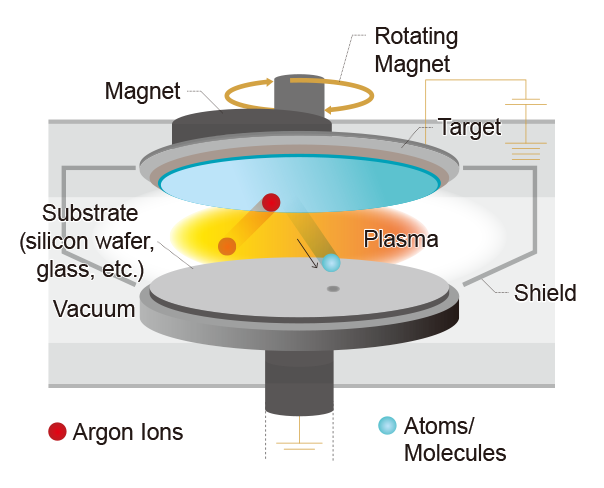
Sputtering is one of the most widely used techniques for depositing thin films in both research and industrial environments. In this process, a solid target material—such as a Nickel Iron alloy—is bombarded with energetic ions (typically argon plasma), causing atoms to be ejected from the target surface and deposited onto a substrate.
The performance of the sputtering target directly influences the quality of the resulting film. For NiFe thin films, several factors are particularly critical:
- Composition uniformity: Even slight variations in Ni/Fe ratio can significantly alter magnetic properties
- Density and microstructure: High-density targets ensure stable sputtering rates and reduce particle generation
- Thermal conductivity: Efficient heat dissipation prevents target cracking and ensures process stability
- Bonding integrity: Backing plates (often copper) improve mechanical support and cooling efficiency
A well-engineered Nickel Iron sputtering target enables the deposition of films with consistent thickness, uniform composition, and controlled magnetic behavior—all of which are essential for high-performance devices.
Key Applications in Magnetic Thin Films and Sensor Technologies


4
Nickel Iron sputtering targets are widely used in industries where magnetic thin films play a central role. Some of the most important applications include:
1. Magnetic Sensors (AMR, GMR, TMR)
NiFe thin films are a core component in anisotropic magnetoresistance (AMR) sensors, where electrical resistance changes in response to an external magnetic field. These sensors are used in automotive systems, industrial automation, and consumer electronics.
In more advanced technologies such as giant magnetoresistance (GMR) and tunneling magnetoresistance (TMR) devices, NiFe layers often serve as soft magnetic reference or sensing layers, enabling extremely high sensitivity.
2. Data Storage and Spintronics
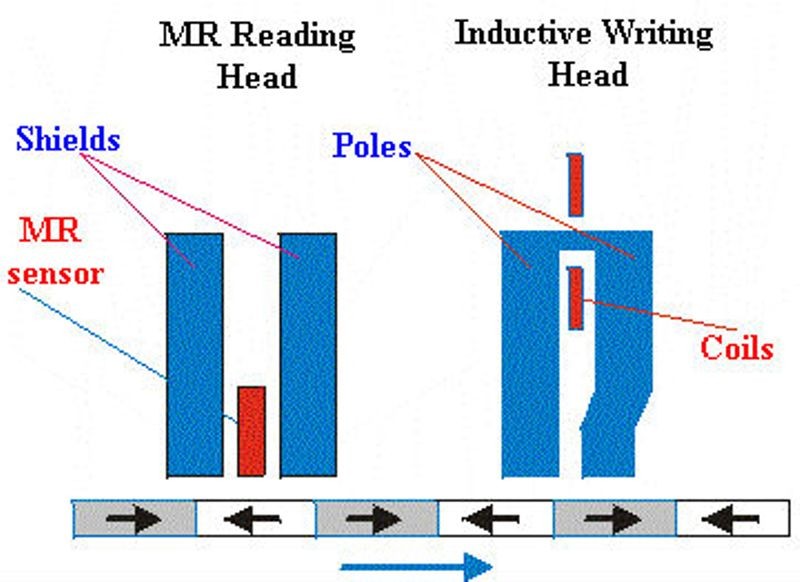
In hard disk drives and emerging memory technologies like MRAM, NiFe thin films contribute to magnetic layer structures that store and manipulate data through electron spin rather than charge. This enables faster, more energy-efficient memory devices.
Spintronic devices rely heavily on precise magnetic properties, making the quality of the sputtering target a decisive factor in device performance.
3. Magnetic Shielding Films
High-permeability NiFe films are widely used for electromagnetic shielding, protecting sensitive components from external magnetic interference. This is especially important in medical devices, aerospace electronics, and precision instrumentation.
4. MEMS and Microelectronics
In microelectromechanical systems (MEMS), NiFe thin films are used for actuators, sensors, and micro-scale inductive components. Their compatibility with standard microfabrication processes allows seamless integration into semiconductor devices.
Composition Engineering: Why Ni Content Matters
The performance of Nickel Iron thin films can be tuned by adjusting the Ni/Fe ratio in the sputtering target.
- Ni₈₀Fe₂₀ (Permalloy 80)
- Extremely high permeability
- Very low coercivity
- Ideal for sensors and shielding
- Ni₅₀Fe₅₀
- Higher saturation magnetization
- Better suited for applications requiring stronger magnetic output
This flexibility allows engineers to tailor materials for specific device requirements, balancing sensitivity, stability, and magnetic strength.
Challenges in NiFe Thin Film Deposition
Despite its advantages, working with Nickel Iron sputtering targets presents several technical challenges:
- Stress sensitivity: Residual stress in thin films can alter magnetic behavior
- Oxidation control: Surface oxidation must be minimized to maintain film purity
- Uniformity over large areas: Critical for industrial-scale production
- Target erosion patterns: Can affect long-term process stability
Addressing these challenges requires not only high-quality target materials but also optimized deposition parameters and equipment design.
Future Trends and Emerging Technologies
As technologies such as artificial intelligence hardware, high-frequency communication, and quantum devices continue to evolve, the demand for advanced magnetic materials is increasing. Nickel Iron alloys remain highly relevant due to their adaptability and proven performance.
Future developments may include:
- Ultra-thin NiFe films for nanoscale devices
- Integration with novel materials in spintronic architectures
- Improved target manufacturing techniques for enhanced purity and consistency
These trends suggest that Nickel Iron sputtering targets will continue to play a vital role in next-generation electronic systems.
Conclusion
Nickel Iron sputtering targets are far more than simple deposition materials—they are enabling components in the fabrication of high-performance magnetic thin films. Their unique combination of high permeability, low coercivity, and compositional flexibility makes them indispensable in sensor technologies, data storage, and advanced electronics.
As device architectures become increasingly complex and performance requirements continue to rise, the demand for reliable, high-quality NiFe sputtering targets will only grow. For engineers and researchers working in magnetic thin film technologies, understanding and selecting the right target material is a key step toward achieving optimal device performance.