
Introduction
Scandium Oxide (Sc₂O₃) powder is a high-value rare earth oxide that plays a critical role in a range of advanced materials and high-technology industries. Although scandium is not the rarest element in the Earth’s crust, economically viable scandium resources are limited, making high-purity scandium oxide both strategically important and technically demanding to produce.
What distinguishes scandium oxide from many other rare earth oxides is its combination of high melting point, excellent thermal stability, favorable ionic radius, and unique electronic structure. These intrinsic properties enable scandium oxide to deliver performance enhancements that cannot be easily replicated by alternative materials, even when used in very small quantities.
Over the past two decades, scandium oxide powder has transitioned from a niche laboratory material into a functional industrial input, particularly in advanced ceramics, solid oxide fuel cells (SOFCs), optical coatings, electronics, and high-performance alloys. This article provides a detailed, application-oriented analysis of scandium oxide powder, focusing on how its material characteristics translate into real-world performance advantages.
1. Advanced Ceramics: Structural Stability and Functional Enhancement
1.1 Scandia-Stabilized Zirconia (ScSZ)
One of the most established and technically significant applications of scandium oxide powder is in scandia-stabilized zirconia (ScSZ) systems. When Sc₂O₃ is added to zirconium dioxide (ZrO₂), it stabilizes the cubic phase of zirconia over a wide temperature range.
From a materials science perspective, this stabilization is crucial. Pure zirconia undergoes phase transformations during heating and cooling that are accompanied by volume changes, leading to cracking and mechanical failure. Scandium oxide suppresses these transformations and introduces a high concentration of oxygen vacancies, dramatically improving ionic conductivity.
Compared with yttria-stabilized zirconia (YSZ), ScSZ exhibits:
- Higher oxygen ion conductivity at intermediate temperatures
- Lower polarization resistance
- Improved performance in electrochemical environments
These characteristics make scandium oxide a preferred stabilizer in applications where efficiency, durability, and thermal cycling stability are critical.
1.2 High-Performance Structural Ceramics
Beyond zirconia systems, scandium oxide powder is also used as a functional additive in various advanced ceramic formulations. In high-temperature structural ceramics, small additions of Sc₂O₃ can improve:
- Grain boundary stability
- Sintering behavior and densification
- Mechanical strength retention at elevated temperatures
Such ceramics are widely applied in aerospace components, thermal insulation systems, wear-resistant parts, and high-temperature seals, where long-term reliability under harsh conditions is essential.
2. Energy Sector Applications: Solid Oxide Fuel Cells (SOFCs)
2.1 Electrolyte Materials for High-Efficiency SOFCs
In the energy field, scandium oxide powder is best known for its role in solid oxide fuel cell electrolytes. SOFCs rely on fast oxygen ion transport through a dense ceramic electrolyte to convert chemical energy into electricity with high efficiency.
Scandia-stabilized zirconia electrolytes outperform conventional YSZ electrolytes, particularly in the 600–900 °C temperature range, which is increasingly favored for next-generation SOFC systems. Lower operating temperatures reduce thermal stress, enable the use of less expensive interconnect materials, and extend system lifetime.
Scandium oxide contributes to:
- Exceptional ionic conductivity
- Reduced activation energy for ion migration
- Enhanced long-term electrochemical stability
2.2 Broader Electrochemical Applications
Beyond fuel cells, scandium oxide-based materials are also investigated for:
- High-temperature oxygen sensors
- Electrochemical reactors
- Advanced membrane systems
In all these applications, the purity and phase consistency of the scandium oxide powder directly influence performance, making material quality control a decisive factor.
3. Optical and Photonic Applications
3.1 Optical Coatings and Thin Films
Scandium oxide exhibits a relatively high refractive index and excellent transparency from the ultraviolet to the visible range. These optical characteristics make it suitable for high-performance optical coatings, particularly where thermal and chemical stability are required.
Typical applications include:
- UV and deep-UV optical coatings
- Protective layers for laser optics
- High-temperature optical interference coatings
In practice, scandium oxide powder is often converted into evaporation materials or sputtering targets for thin-film deposition processes. For optical uses, extremely low impurity levels are essential, as trace contaminants can significantly increase optical absorption or scattering losses.
3.2 Laser and Luminescent Materials
In advanced photonic research, scandium oxide is also explored as:
- A host or modifier in laser materials
- A component in high-temperature luminescent systems
Its thermal robustness and chemical stability allow optical components to operate reliably under high laser power densities.
4. Electronics and Semiconductor Manufacturing
4.1 High-k Dielectric Research
As semiconductor devices continue to scale down, traditional silicon dioxide gate dielectrics face fundamental physical limitations. Scandium oxide has been investigated as a high-dielectric-constant (high-k) material or as a dopant in complex oxide dielectric stacks.
The interest in Sc₂O₃ arises from:
- Its relatively high dielectric constant
- Good thermal stability on silicon substrates
- Potential for improved interface characteristics
Although not yet widely commercialized in mainstream semiconductor production, scandium oxide remains an important research material in advanced microelectronics.
4.2 Functional Oxide Thin Films
Through deposition techniques such as PVD, PLD, and CVD, scandium oxide can be incorporated into functional oxide thin films used in:
- Sensors
- Specialized electronic components
- Research devices exploring novel electrical or magnetic behaviors
Here, powder morphology, stoichiometry, and batch-to-batch consistency play an important role in downstream film quality.
5. Metallurgy and Alloy Engineering
5.1 Aluminum-Scandium Alloys
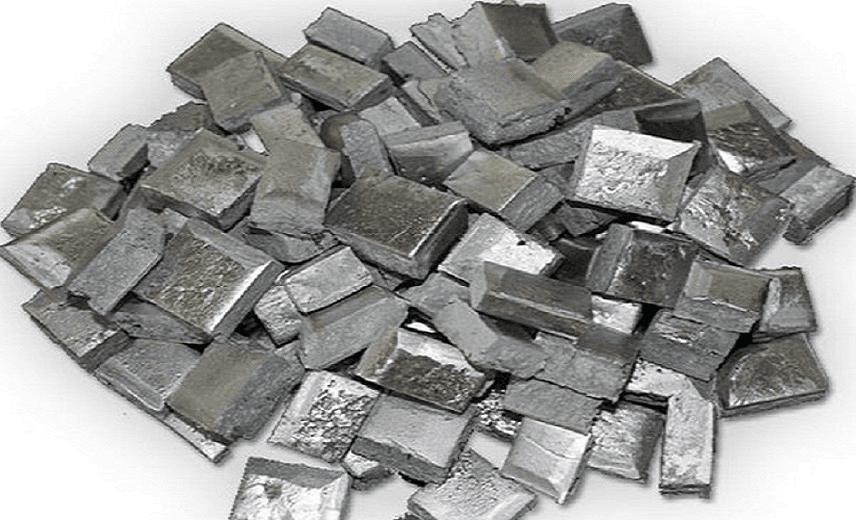
One of the most economically impactful uses of scandium oxide is as a precursor material for producing aluminum-scandium (Al-Sc) alloys. Even at scandium contents below 0.5 wt%, these alloys show remarkable improvements in:
- Strength-to-weight ratio
- Thermal stability
- Weldability and fatigue resistance
The strengthening mechanism is attributed to the formation of fine, coherent Al₃Sc precipitates, which inhibit dislocation motion and grain growth.
Applications of Al-Sc alloys include:
- Aerospace structural components
- High-end sporting goods
- Advanced transportation systems
5.2 Emerging Alloy and Powder Metallurgy Systems
Scandium oxide is also used in research on:
- Powder metallurgy routes for novel alloys
- Additive manufacturing feedstock development
- High-temperature and corrosion-resistant metal systems
These emerging applications highlight the role of scandium oxide as an enabling material for next-generation alloy design.
6. Scientific Research and Emerging Technologies
6.1 Functional Oxide Research
In academic and industrial R&D, scandium oxide is frequently used as a compositional building block in:
- Perovskite oxides
- Multicomponent functional ceramics
- Materials with tailored electrical, magnetic, or optical properties
Its predictable ionic behavior makes it valuable for systematic materials design studies.
6.2 Catalysis and Surface Science
Although not yet a mainstream catalyst, scandium oxide has shown promise in:
- Specialized high-temperature catalytic reactions
- Surface modification and model catalyst studies
Its chemical stability allows it to serve as a reference or support material in fundamental catalysis research.
7. Application-Driven Material Requirements
Different application fields impose distinct requirements on scandium oxide powder:
| Application Area | Key Requirements | Primary Focus |
|---|---|---|
| Advanced ceramics | High purity, controlled particle size | Densification, phase stability |
| SOFC systems | Ultra-high purity, consistency | Ionic conductivity, durability |
| Optical coatings | Extremely low impurities | Optical loss, film uniformity |
| Electronics | Chemical purity, reproducibility | Interface and electrical behavior |
| Alloy production | Composition control | Mechanical performance |
Understanding these requirements is essential for selecting the appropriate grade of scandium oxide powder for a given application.
Conclusion
Scandium oxide powder is not a high-volume commodity material, but its impact across advanced technologies is disproportionally large. From solid oxide fuel cells and high-performance ceramics to optical coatings and lightweight alloys, Sc₂O₃ consistently delivers performance enhancements that are difficult to achieve with alternative materials.
Its value lies in the principle of “small additions, significant performance gains.” As energy systems evolve, advanced manufacturing expands, and materials science pushes toward higher efficiency and reliability, scandium oxide powder is expected to remain a strategically important material with expanding application depth and technological relevance.