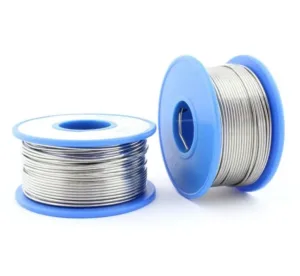
Fine aluminum wire looks like a relatively simple product, but manufacturing it consistently becomes increasingly difficult as the diameter decreases.
For research, electronics, semiconductor packaging, laboratory assemblies, electrical components, and precision manufacturing, customers may require not only a specific nominal diameter but also controlled roundness, smooth surface condition, suitable ductility, stable winding, and clean packaging.
These requirements interact with one another.
Drawing aluminum to a smaller diameter increases deformation and changes the wire’s mechanical condition. Annealing can restore ductility but must be controlled so that the finished wire still meets handling and performance requirements. Surface scratches that are insignificant on a large aluminum rod may become critical defects on fine wire. Even after the wire is manufactured correctly, poor spool tension can introduce bends, crossover points, or local damage.
This case study examines the manufacturing logic behind a representative custom project for fine-diameter high-purity aluminum wire, focusing on diameter control, drawing stability, annealing, surface integrity, inspection, and winding.
For currently available product forms, purity options, and diameter ranges, see MetalsTek’s high-purity aluminum wire page.
1. Project Background
The project involved producing fine aluminum wire for a precision technical application in which the customer required consistent diameter, a clean metallic surface, and stable handling characteristics.
Instead of simply specifying “aluminum wire,” the manufacturing review had to consider several interconnected requirements:
- High-purity aluminum
- Fine and consistent wire diameter
- Controlled dimensional tolerance
- Smooth wire surface
- Limited scratches, dents, and drawing marks
- Suitable ductility
- Stable spool winding
- Controlled handling during inspection
- Protective packaging for transportation
MetalsTek supplies aluminum wire in high-purity aluminum and aluminum-alloy grades, with product dimensions extending from fine wire sizes to substantially larger diameters depending on the material and application.
The primary engineering question was therefore not simply:
Can aluminum be drawn to the requested diameter?
It was:
Can the wire reach that diameter while maintaining usable surface quality, dimensional consistency, mechanical condition, and spool integrity throughout the entire production route?
2. Representative Project Requirements
Because no batch-specific customer drawing is disclosed in this article, the table below represents the type of information that should be established before manufacturing.
| Parameter | Representative Requirement | Manufacturing Importance |
|---|---|---|
| Material | High-purity aluminum | Influences conductivity, forming behavior, and contamination control |
| Purity | Customer specified | Must match application and documentation requirements |
| Product form | Fine aluminum wire | Determines drawing and winding route |
| Diameter | Customer specified | Primary dimensional requirement |
| Diameter tolerance | Drawing / PO requirement | Defines process and inspection difficulty |
| Temper | Hard, intermediate, or annealed as required | Influences strength and ductility |
| Surface condition | Clean metallic surface | Important for handling and downstream processing |
| Length | Coil, spool, or cut length | Affects winding and packaging |
| Spool type | Customer specified where required | Controls final delivery format |
| Inspection | Diameter, surface, winding condition | Defines final acceptance |
| Documentation | As agreed at quotation | May include material and inspection documentation |
Aluminum is attractive for wire applications because of its low density and useful electrical and thermal conductivity. NIST reference data list a density around 2.7 g/cm³ for aluminum and document its thermophysical and electrical properties. NIST aluminum property data
3. Why Fine Aluminum Wire Is More Difficult Than Large-Diameter Wire
Aluminum is ductile and can be processed by wire drawing, but decreasing diameter changes the manufacturing problem.
A fine wire has much less cross-sectional area available to carry drawing force. Local defects that would have limited significance in a large rod can become failure points in fine wire.
Typical risks include:
- Wire breakage during drawing
- Diameter variation
- Loss of roundness
- Surface scoring
- Die marks
- Local necking
- Work hardening
- Reduced elongation
- Coil deformation
- Crossed winding
- Surface contamination
Published research on commercially pure aluminum wire confirms that cold drawing substantially changes the material’s microstructure and mechanical behavior. Multiple-pass drawing introduces significant deformation and can increase strength through work hardening. research on cold-drawn pure aluminum wire
The production process therefore has to control both geometry and material condition.
4. Challenge 1: Reducing Diameter Without Causing Wire Breakage
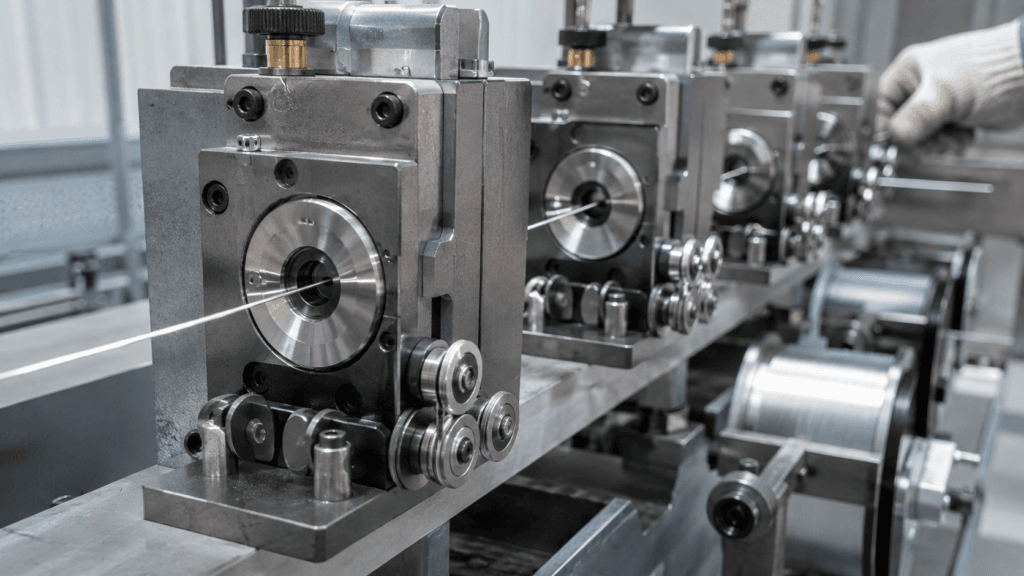
Fine wire is generally not produced by taking a large aluminum rod and forcing it through a single extremely small die.
Diameter reduction is achieved progressively.
Each drawing pass reduces the cross-sectional area, elongates the material, and changes its internal deformation state.
If the reduction strategy is too aggressive, several problems may develop:
- Excessive tensile stress
- Local necking
- Wire breakage
- Surface cracking
- Increased work hardening
- Unstable dimensional control
Solution: Multi-Stage Controlled Wire Drawing
The manufacturing route should divide the overall reduction into appropriate drawing stages.
A representative sequence can include:
Starting aluminum rod → intermediate drawing → diameter verification → additional drawing → conditioning or annealing when required → fine drawing → final diameter inspection
The exact number of passes cannot be standardized for every order. It depends on:
- Starting diameter
- Final diameter
- Aluminum purity or alloy
- Temper
- Drawing equipment
- Die geometry
- Lubrication system
- Surface requirement
- Required mechanical properties
Research into fine commercially pure aluminum wire has similarly demonstrated manufacturing through sequential deformation routes rather than relying on one large reduction step. fine aluminum wire drawing research
MetalsTek can also supply larger-diameter aluminum rod products where rod or larger cylindrical stock is required instead of fine wire.
5. Challenge 2: Maintaining Tight Diameter Control
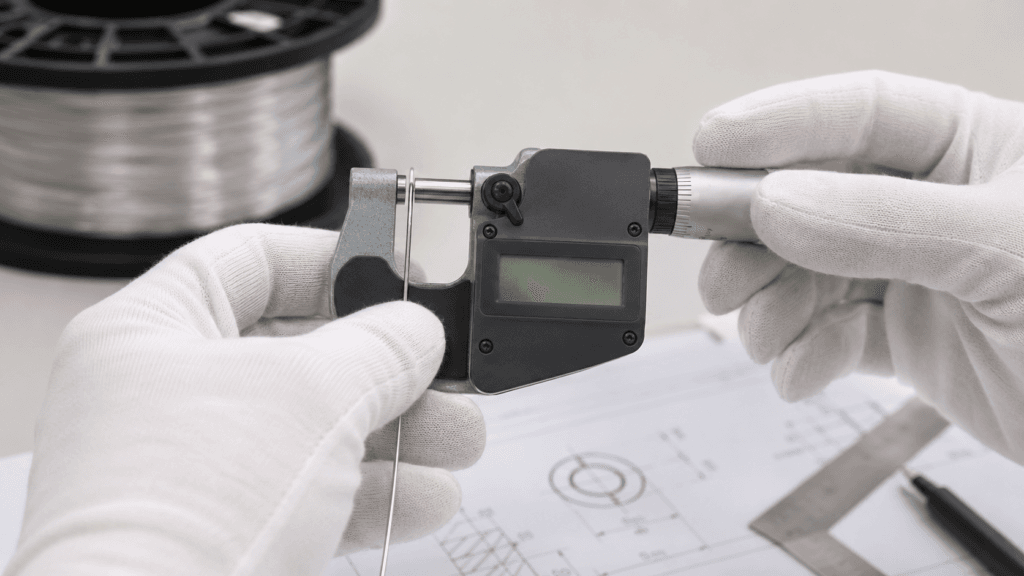
Reaching the nominal wire diameter is only part of the requirement.
For precision applications, the manufacturer also has to consider:
- Diameter variation along the length
- Maximum and minimum diameter
- Roundness
- Die wear
- Drawing stability
- Measurement repeatability
A wire that averages the correct diameter may still contain localized sections outside the customer’s tolerance.
This becomes more important as the wire gets smaller because a seemingly small absolute deviation represents a larger percentage of the total cross section.
Solution: Measure During Production, Not Only at the End
Diameter inspection should be integrated into the process.
A representative control strategy may include:
- Verify incoming rod or intermediate material.
- Measure after key reduction stages.
- Monitor die condition.
- Check diameter before final drawing.
- Measure the final wire at multiple positions.
- Review roundness where required.
- Record results according to the agreed inspection plan.
The principle of evaluating more than one diameter measurement is also reflected in technical standards for aluminum drawing stock. ASTM B233, for example, defines mean diameter in terms of maximum and minimum measurements in the same transverse plane for the drawing-stock products covered by that standard. ASTM B233 aluminum drawing stock specification
That standard should not automatically be applied to every custom fine-wire order, but it illustrates an important engineering principle:
diameter control requires more than a single convenient measurement.
6. Challenge 3: Managing Work Hardening and Ductility
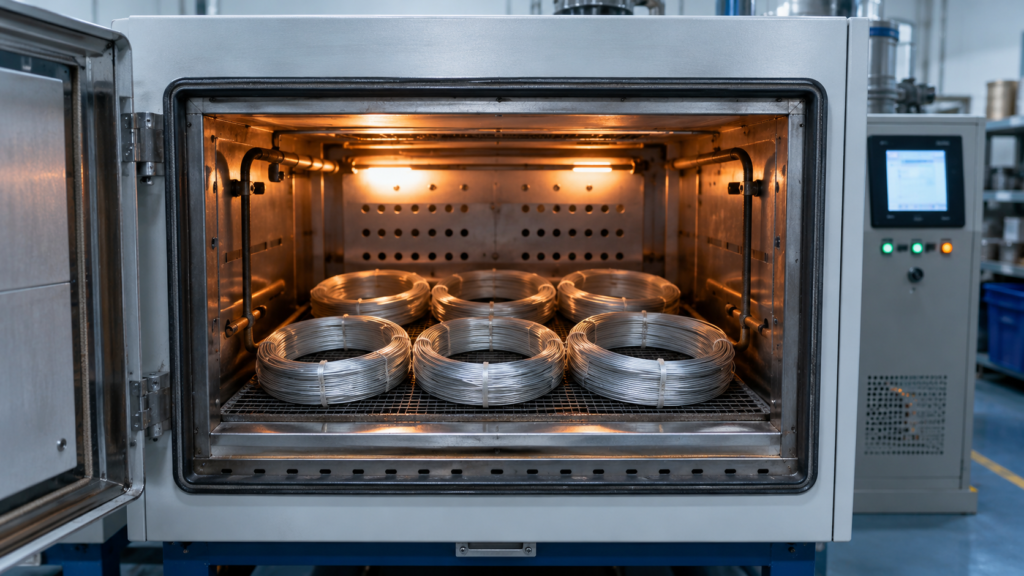
Cold drawing does more than change wire diameter.
It also modifies the microstructure.
As the material experiences repeated plastic deformation, aluminum typically becomes stronger and less ductile. For some applications this may be desirable. For others, particularly where the wire must later be bent, bonded, formed, wound tightly, or manipulated during assembly, excessive work hardening can become a problem.
Possible consequences include:
- Reduced elongation
- Greater sensitivity to bending
- Higher residual stress
- Difficult spool handling
- Wire failure during subsequent forming
Solution: Use Annealing as a Controlled Process Step
When the final application requires a softer condition, annealing may be introduced between drawing stages or after drawing.
The purpose is not simply to “heat the wire.”
Annealing must be considered together with:
- Aluminum grade
- Drawing strain
- Required strength
- Required elongation
- Final diameter
- Electrical requirements
- Surface condition
Recent research on drawn AA1070 aluminum wire showed that annealing temperature significantly changes hardness, strength, elongation, microstructure, and electrical conductivity. The study observed decreasing hardness and strength with increasing annealing temperature, while elongation increased as recovery and recrystallization developed. study of annealing in drawn aluminum wire
This is why MetalsTek treats temper or mechanical condition as an application requirement rather than assuming all fine aluminum wire should be delivered in the same state.
7. Challenge 4: Protecting the Wire Surface
For many customers, diameter receives most of the attention during quotation.
Surface condition can be just as important.
Fine wire has a high surface-area-to-volume ratio, and defects occupy a proportionally larger part of the finished section.
Potential surface issues include:
- Longitudinal scratches
- Drawing lines
- Embedded particles
- Lubricant residue
- Handling marks
- Local flattening
- Die pickup
- Oxide or contamination inconsistent with the customer’s downstream process
Aluminum naturally forms a protective oxide film when exposed to air. Princeton materials-science teaching resources describe this adherent oxide film as a key reason for aluminum’s corrosion resistance and note that it reforms when locally disrupted. aluminum passive oxide film
For a wire manufacturer, the practical implication is important: “clean aluminum surface” does not mean an oxide-free surface under ordinary atmospheric handling.
Where a downstream process requires special oxide control, cleaning, bonding performance, vacuum processing, or unusually sensitive surface chemistry, that requirement should be specified explicitly.
Surface-Control Strategy
A practical manufacturing approach includes:
- Clean drawing dies
- Controlled lubrication
- Inspection for die damage
- Clean intermediate handling
- Separation from incompatible materials
- Limited direct hand contact
- Visual inspection under suitable lighting
- Protected transfer between processes
The goal is to prevent avoidable contamination and mechanical damage, rather than making unsupported claims about an oxide-free surface.
8. Challenge 5: Maintaining Winding Quality
Fine wire can pass every dimensional check and still arrive unusable if it is poorly wound.
Possible spool defects include:
- Crossovers
- Loose loops
- Excessive winding tension
- Local crushing
- Kinks
- Sharp bends
- Telescoping
- Wire trapped underneath adjacent layers
Very fine wire is particularly sensitive to local deformation.
Solution: Controlled Spooling Tension
The winding process should maintain sufficient tension to produce a stable coil without stretching or damaging the wire.
Important variables include:
- Spool dimensions
- Winding speed
- Traverse control
- Wire tension
- Layer distribution
- Coil length
- Start and end fixation
For research or precision assembly applications, a clean, orderly spool can substantially improve usability at the customer’s facility.
9. Manufacturing and Inspection Route
A representative production flow for high-purity fine aluminum wire can be summarized as follows:
| Stage | Main Objective | Primary Risk | Inspection Focus |
| Material review | Confirm aluminum grade | Wrong purity or condition | Material documentation |
| Starting stock preparation | Prepare drawing feedstock | Surface or geometry defects | Diameter and surface |
| Intermediate drawing | Progressive diameter reduction | Breakage, work hardening | Diameter and surface |
| Intermediate inspection | Confirm process stability | Undetected variation | Diameter / roundness |
| Annealing if required | Adjust mechanical condition | Incorrect temper | Process control |
| Fine drawing | Reach final diameter | Breakage or scoring | Diameter |
| Surface review | Verify usable wire condition | Scratch or contamination | Visual inspection |
| Final dimensional inspection | Confirm drawing requirement | Out-of-tolerance wire | Multi-point diameter |
| Spooling | Prepare final delivery form | Kinks and crossovers | Winding condition |
| Packaging | Protect wire in transit | Spool movement or damage | Final package |
The manufacturing route may change depending on purity, diameter, quantity, application, and temper.
10. Electrical Conductivity and Purity Considerations
Electrical conductivity is one reason aluminum is widely used as conductor material.
The National Bureau of Standards’ aluminum wire tables note that very high-purity annealed aluminum can reach approximately 65% IACS, while commercially practical conductor materials are lower because purity, processing, strength, and other requirements must be balanced. NIST aluminum wire tables
This distinction matters for custom wire procurement.
A buyer should not assume that:
higher aluminum purity = guaranteed electrical performance
because conductivity can also depend on:
- Alloying elements
- Impurity content
- Cold deformation
- Annealing
- Microstructure
- Temperature
Where electrical conductivity is a critical acceptance characteristic, the requirement should be stated separately rather than inferred from purity alone.
For broader thermophysical-property research, NIST Alloy Data provides experimental property datasets with information on material purity, processing, uncertainty, and literature sources.
11. Related Aluminum Material Forms
Not every project actually requires wire.
For customers developing a new component, the appropriate starting form should be determined by the final geometry.
MetalsTek supplies a broader range of aluminum materials for technical and industrial applications.
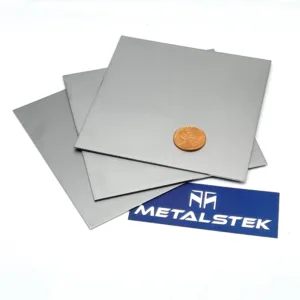
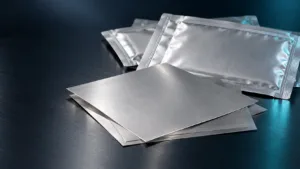
Where a flat geometry is required, aluminum sheet, foil, and plate may be more appropriate.
Where additional strength or application-specific properties are required, buyers can also review available aluminum alloys rather than automatically specifying high-purity aluminum.
12. What Buyers Should Specify Before Requesting a Quote
The most efficient RFQs define more than diameter and quantity.
| Information | Why It Matters |
| Aluminum purity / alloy | Defines starting material |
| Wire diameter | Defines drawing route |
| Diameter tolerance | Determines manufacturing difficulty |
| Temper | Defines strength and ductility |
| Required elongation | Important for forming or bonding |
| Length per spool | Determines winding plan |
| Total quantity | Influences production route |
| Spool dimensions | Important for customer equipment |
| Surface requirement | Defines handling and inspection |
| Electrical requirement | Must be specified separately if critical |
| Application | Helps identify hidden requirements |
| Inspection report | Defines documentation |
| Packaging requirement | Protects fine wire during transport |
For very fine wire, buyers should also identify whether occasional joints are permitted in a spool or whether each spool must contain one continuous length.
That detail can materially influence manufacturability and price.
13. Key Lessons from Fine Aluminum Wire Manufacturing
This case demonstrates several principles that apply broadly to precision aluminum wire.
Diameter alone does not define quality
Roundness, surface condition, ductility, continuity, and winding quality can be equally important.
Drawing and annealing must be considered together
Wire drawing changes mechanical properties. Annealing can modify them again. The correct balance depends on the final application.
Surface quality starts upstream
Scratches introduced during an intermediate drawing stage cannot always be removed later.
Inspection should occur before final completion
Finding a diameter problem before the final drawing stage is much less costly than discovering it after an entire spool has been produced.
Packaging is part of process control
Fine wire can be damaged during shipping even when it left production in acceptable condition.
14. FAQ
How fine can aluminum wire be manufactured?
The achievable diameter depends on material purity or alloy, starting stock, quantity, temper, surface requirements, and tolerance. MetalsTek lists aluminum wire sizes extending into the micrometer-scale range for selected products.
Can high-purity aluminum be drawn into very fine wire?
Yes, but the drawing route must account for material condition, reduction schedule, work hardening, die condition, and final mechanical requirements.
Why does aluminum wire become harder after drawing?
Cold drawing plastically deforms the material and can produce work hardening, increasing strength while reducing ductility.
Can aluminum wire be supplied annealed?
Annealed or other controlled conditions may be available depending on the wire specification. The required temper should be specified during quotation.
How is aluminum wire diameter inspected?
Precision contact or non-contact measurement methods can be used depending on diameter and required tolerance. Multiple locations should be evaluated when dimensional consistency is critical.
Why do scratches appear on drawn aluminum wire?
Potential causes include die condition, trapped particles, lubrication problems, handling, or contact with equipment during drawing and winding.
Does aluminum wire naturally have an oxide layer?
Yes. Aluminum rapidly develops a thin passive oxide film when exposed to ordinary atmospheric conditions.
Can aluminum wire be supplied on custom spools?
Custom spool dimensions, wire lengths, and packaging can be reviewed according to project requirements.
Is high-purity aluminum always better than an aluminum alloy?
No. High purity may be preferred for selected conductivity or contamination-sensitive applications, while an alloy may provide better mechanical strength or other properties.
What information is required for a quotation?
Provide aluminum grade or purity, wire diameter, tolerance, temper, quantity, spool requirement, required length, surface condition, application, inspection requirements, and any electrical or mechanical acceptance criteria.
Need Fine-Diameter Aluminum Wire?
Manufacturing fine aluminum wire is a coordinated process involving material selection, staged drawing, diameter control, work-hardening management, annealing, surface protection, inspection, spooling, and packaging.
A wire that meets only nominal diameter and purity is not necessarily ready for a precision application.
MetalsTek Engineering supplies custom aluminum wire and aluminum bonding wire in high-purity aluminum and selected aluminum alloys, with custom diameter, length, and delivery configurations available according to project requirements.
For technical review and quotation, provide:
- Aluminum purity or alloy
- Required wire diameter
- Diameter tolerance
- Temper or mechanical requirements
- Length per spool
- Quantity
- Surface requirements
- Spool dimensions
- Electrical requirements, if applicable
- Inspection and documentation requirements
- Packaging requirements
A complete specification allows the drawing route and inspection plan to be evaluated before production, reducing unnecessary manufacturing risk and helping ensure that the delivered wire is suitable for its intended use.
Contact MetalsTek Engineering with your aluminum wire specifications or drawing for a manufacturability review and quotation.