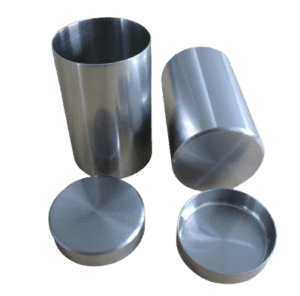
Quick answer: A sputtering target is the source material in a sputter-deposition system. Ions from a plasma strike its surface and release atoms or molecules that form a thin film on a substrate. Selecting a target requires more than choosing an element: composition, target geometry, purity, backing and bonding, and the actual process conditions all matter.
What is a sputtering target?
A sputtering target is a solid source material prepared for use in a physical vapor deposition (PVD) chamber. The target may be a metal, an alloy, a ceramic, or another specified compound. It may be supplied as a planar disc or plate, or in another geometry designed for the cathode assembly. The target is a component of the deposition system; its suitability must be assessed against the equipment design and the required film.
How does sputter deposition work?
In a typical sputtering process, gas is introduced into a vacuum chamber and a plasma is generated. Energetic ions strike the target surface, ejecting target species. Some of that material reaches the substrate and contributes to the growing film. Gas chemistry, power mode, target condition, chamber geometry, substrate conditions and process settings all influence the result. A target specification alone cannot guarantee film composition, deposition rate, adhesion or service life.
Reactive sputtering adds a process gas to form a compound film. In this case, the target composition and the final film composition may differ. The process owner should specify the intended film and operating method when requesting a target.
Choose the material before the shape
Start with the intended film chemistry and the validated process recipe. A metallic target, an alloy target and a ceramic target with related elements are not interchangeable merely because their names look similar. Confirm the target composition, grade or purity, and any critical impurity limits against the film requirements. If the existing process already names a target material, provide that specification or drawing rather than substituting a material on the basis of a generic guide.
The MetalsTek Sputtering Targets Hub provides material-specific product links. For a comparison of metallic and ceramic routes in one material system, see metallic Sn–Sb versus ATO ceramic targets.
Specify geometry, backing and bonding
A useful RFQ identifies the required shape and dimensions, including thickness, diameter or length as applicable. If the target is to fit an existing cathode, provide the assembly drawing and the interface details. State whether a backing plate is required and whether the target must be bonded to it. The backing material, bonding method and tolerances should be reviewed for the particular design; they should not be assumed from another product or chamber.
MetalsTek also lists target bonding as a related service. Send the drawing and operating requirements for a project-specific review.
Questions to resolve before ordering
| Decision | Information to provide | Why it matters |
|---|---|---|
| Material | Element, alloy or compound; intended film | Related chemistries can require different targets and processes. |
| Specification | Composition or grade, purity and critical impurity limits | Acceptance criteria should reflect the actual application. |
| Geometry | Drawing, shape, dimensions and tolerances | The target must fit the cathode assembly. |
| Assembly | Backing plate and bonding requirements | These depend on the target and equipment design. |
| Process | Power mode, gas environment and relevant thermal conditions | Operating conditions inform material and assembly review. |
| Order | Quantity, documentation and delivery destination | These complete the quotation request. |
Frequently asked questions
Does the film always have the same composition as the target?
No universal equivalence should be assumed. Film composition depends on the material system and the deposition conditions, particularly when reactive gases are used. Validate the film with the applicable process and measurement method.
Can a target be ordered without a backing plate?
That depends on the cathode design and target geometry. Provide the assembly drawing or existing part specification so the target and any backing or bonding requirement can be reviewed together.
Which purity should I request?
Use the purity and impurity limits required by the process or specification. A higher headline purity is not a substitute for identifying the particular impurities that matter to the film or application.
Is a planar target interchangeable with a rotary target?
No. Geometry and mounting requirements differ. Identify the chamber and provide the drawing or complete dimensions rather than requesting a substitution by material name alone.
Request a target review
Use the Sputtering Targets RFQ to send the material, composition or grade, drawing, dimensions, backing and bonding requirements, process details and quantity. MetalsTek can review the requested configuration against the available product options.
Related Products
- Tantalum Sputtering Targets — review material and geometry options for tantalum targets.
- Titanium Sputtering Targets — view titanium and related target options.
- Indium Sputtering Targets — browse indium and indium-compound target entries.
Related Resources
- Metallic Sn–Sb Target vs ATO Ceramic Target — compare two material routes for an antimony-containing oxide film.
- Amorphous Carbon vs Graphite Sputtering Targets — consider carbon target selection for DLC-related processes.
- Indium Zinc Oxide Sputtering Target (IZO) — review a compound target example for transparent-conductor applications.